

We’re old. We played the first Serious Sam when it came out in 2001. We’re also big fans of the series and deeply nostalgic. There are certain things we expect from a Serious Sam game: lots of enemies, lots of guns, lots of explosions, and, at some point, probably a very large creature trying to turn us into a stain on the floor.
Serious Sam: Shatterverse does things a bit differently. By taking the familiar run-and-gun formula and twisting it to better suit a roguelite progression system, it might divide the fanbase. But if you approach it with an open mind, what you’ll find here is the same dumb fun wearing a fresh coat of paint.
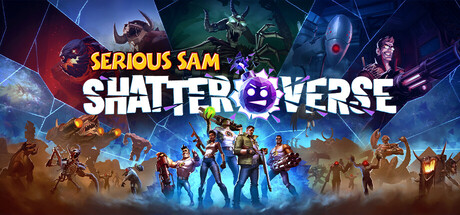
Mental has fractured reality, and Sams from different timelines now have to work together to push back against him. That’s all the story we needed, and when it comes to playing several versions of the same character in one game, we don’t want to nitpick.
Point, Shoot, Survive, Repeat
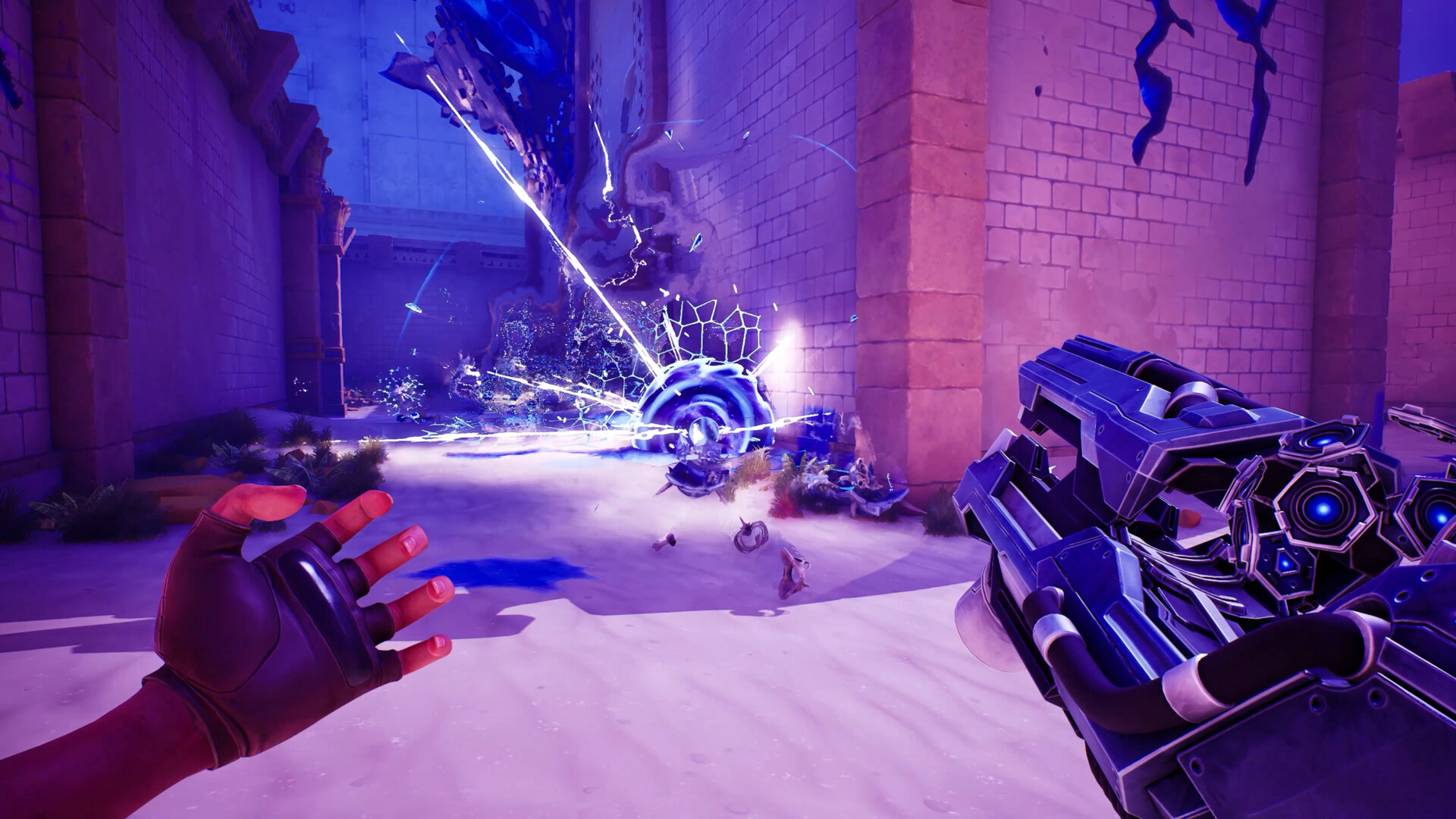
The shooting in Shatterverse feels great. The weapons are nicely designed and animated, and there is real weight behind the shots. Enemies react properly when hit, and there’s something particularly satisfying about landing a headshot and watching your target stagger or lose its head completely.
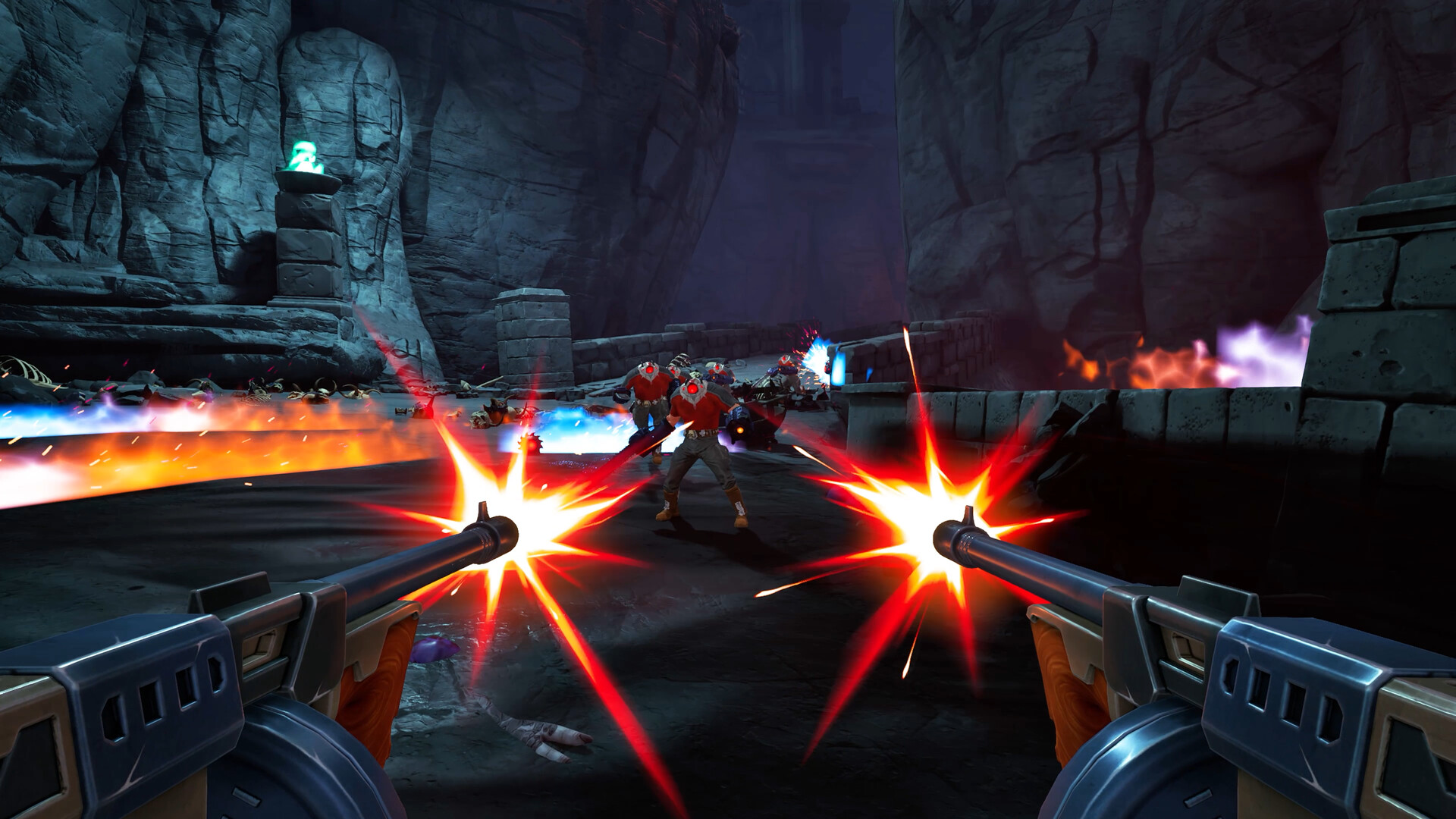
We also quickly learned that using the right weapon for the right enemy makes a huge difference. A shotgun is excellent against some of the bony creatures, while the Tommy Gun is much better suited to dealing with toxic frogs. There are plenty of guns to find, including familiar favorites like the rocket launcher—though returning weapons don’t necessarily feel identical to their previous iterations. Neither do the enemies; they’re familiar, but a tad different. For example, the flying nymphs move more erratically, and rockets from the launcher seem to move at a much faster speed.
There is a catch with the arsenal, though: you can only find weapons you’ve already unlocked, making arsenal growth part of your long-term progression rather than something that happens strictly within a single run. If all else fails, there’s always the good old fist. Once an enemy has taken enough damage, you can finish it off with a melee execution. Apart from being fun to watch, this also restores a small portion of your health. That creates some nice tactical decisions during hectic fights: sometimes it’s worth getting close to a weakened enemy to regain health, even when dozens of other things are trying to kill you.
With decent reflexes, combat becomes a serious adrenaline rush. Damage an enemy, execute it, recover health, dash away, switch weapons, kite enemies around an obstacle, and activate your ultimate when things get out of hand. Then do it all over again. That’s where Shatterverse feels most like the Serious Sam we know.
The Horde Still Knows How to Ruin Your Day
The enemies are a familiar part of the experience, and it was a joy hearing their iconic audio cues again before seeing them charge toward us. The screaming suicide enemy is still one of our favorites. Getting close to one is obviously a bad idea, but there are situations where we deliberately allowed it to get close to other enemies. If it explodes in a crowd, it deals a massive amount of damage—turning one annoying enemy into a useful weapon against the rest of the group. We ended up using this proximity strategy quite often.
The enemies themselves aren’t particularly smart, but they don’t need to be. A few of them aren’t much of a problem, but put several different types together and keeping track of their individual attack patterns becomes a real challenge. Before long, you’re dodging one attack while trying to remember where another threat is coming from.
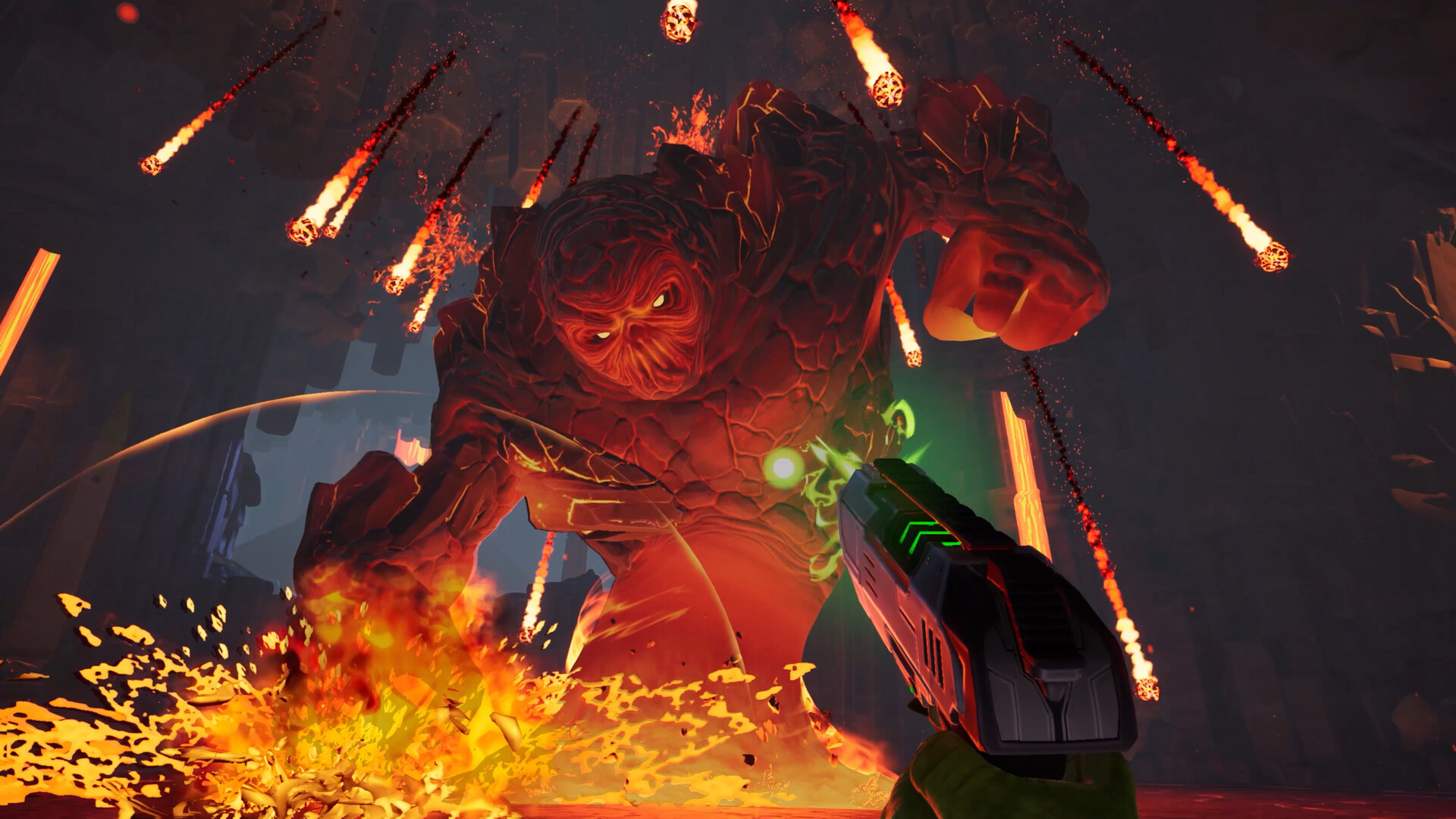
And then the bosses arrive.
These enormous creatures are on another level compared to regular enemies. They can grab and throw you around while unleashing devastating attacks. The jump and dash abilities become extremely important during these fights—standing still and emptying magazines into them isn’t going to get you very far. We usually died when a boss appeared.
Every Death Makes the Next Run a Little Better
Every run gives you opportunities to collect Catalyst Orbs, trinkets, and other upgrades that help you grow stronger over time. Catalyst Orbs serve as one of the primary currencies, used to unlock new Sams, weapons, and other goodies.
Leveling up during a run presents you with three choices. These can include stat boosts like faster firing and reloading or instant health, allowing you to tailor your build based on what the current run throws at you.
Trinkets provide passive bonuses, with rarer ones offering stronger effects. There’s a nice salvaging system attached to them as well: trinkets you don’t need can be broken down into dust, which is then used to upgrade the trinkets you actually want. Sets are also part of the equation—equipping multiple trinkets of the same type unlocks set bonuses.
Most of these effects provide numerical boosts rather than abilities that completely overhaul how you play. They make you stronger, tougher, or more efficient—which definitely helps as the difficulty ramps up—though we occasionally wished a few offered more unusual mechanics. The more interesting abilities are reserved for the Sams themselves.
Different Sams, Different Toys
Each Sam features a unique appearance and ultimate ability, and unlocking a new version can completely alter your approach to combat.
Our first Sam—the retro version—can summon a clone that explodes and takes nearby enemies with it. It’s useful out of the box, but Catalyst Crystals can upgrade it further. The clone can be upgraded to attract enemies from a greater distance, last longer, or even shoot at targets instead of simply waiting to detonate.
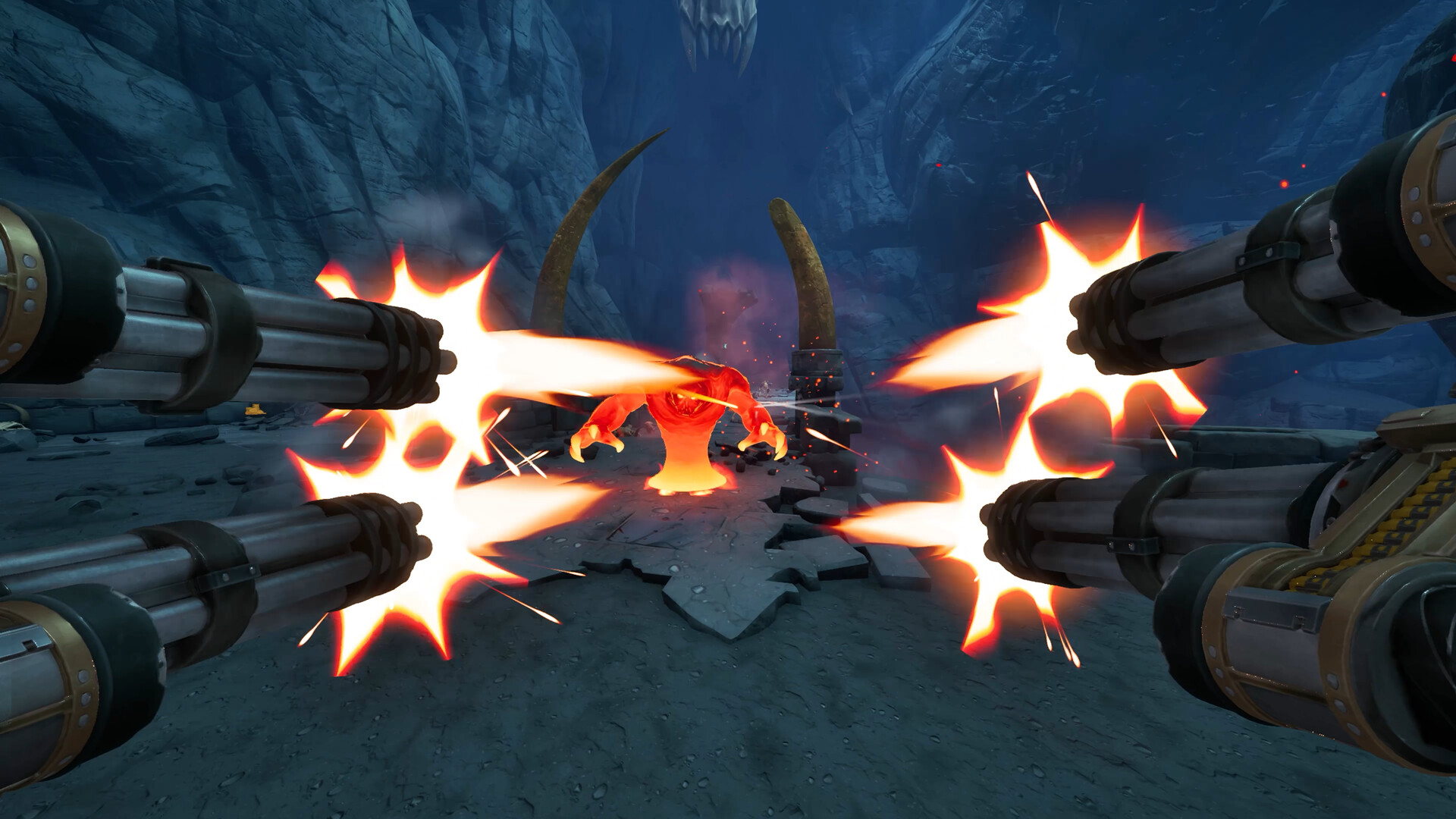
Other Sams offer completely different toolkits. One unleashes a storm of razors, another fires a destructive laser beam, and the alien Sam fires four weapons at once using all four arms. These aren’t just cosmetic differences—they give you genuinely distinct tools to play with, which is exactly what you want from a game built around multiple iterations of the same hero.
Guns Can Get Weird Too
Depending on rarity, weapons can drop with affixes that modify how they perform. These can introduce elemental damage or allow you to keep firing through an overheat condition. The strength of these effects scales with difficulty and progression.
This gives you a reason to keep hunting for loot even after you’ve found a favorite weapon. A synergies-friendly affix can make a gun vastly more interesting, especially when it counters the enemy types giving you trouble.
The Maps Are Surprisingly Good
The environments look great. One moment you’re fighting in a locked arena-style zone, and the next you’re charging blood altars or navigating atmospheric environments that call back to the cultic aesthetics of classic Serious Sam titles. There’s enough variety to keep the levels from feeling like one giant repeated arena.
Traversal is made fluid by jump pads that launch you vertically or horizontally. They’re simple, functional, and keep momentum high when moving between sections.
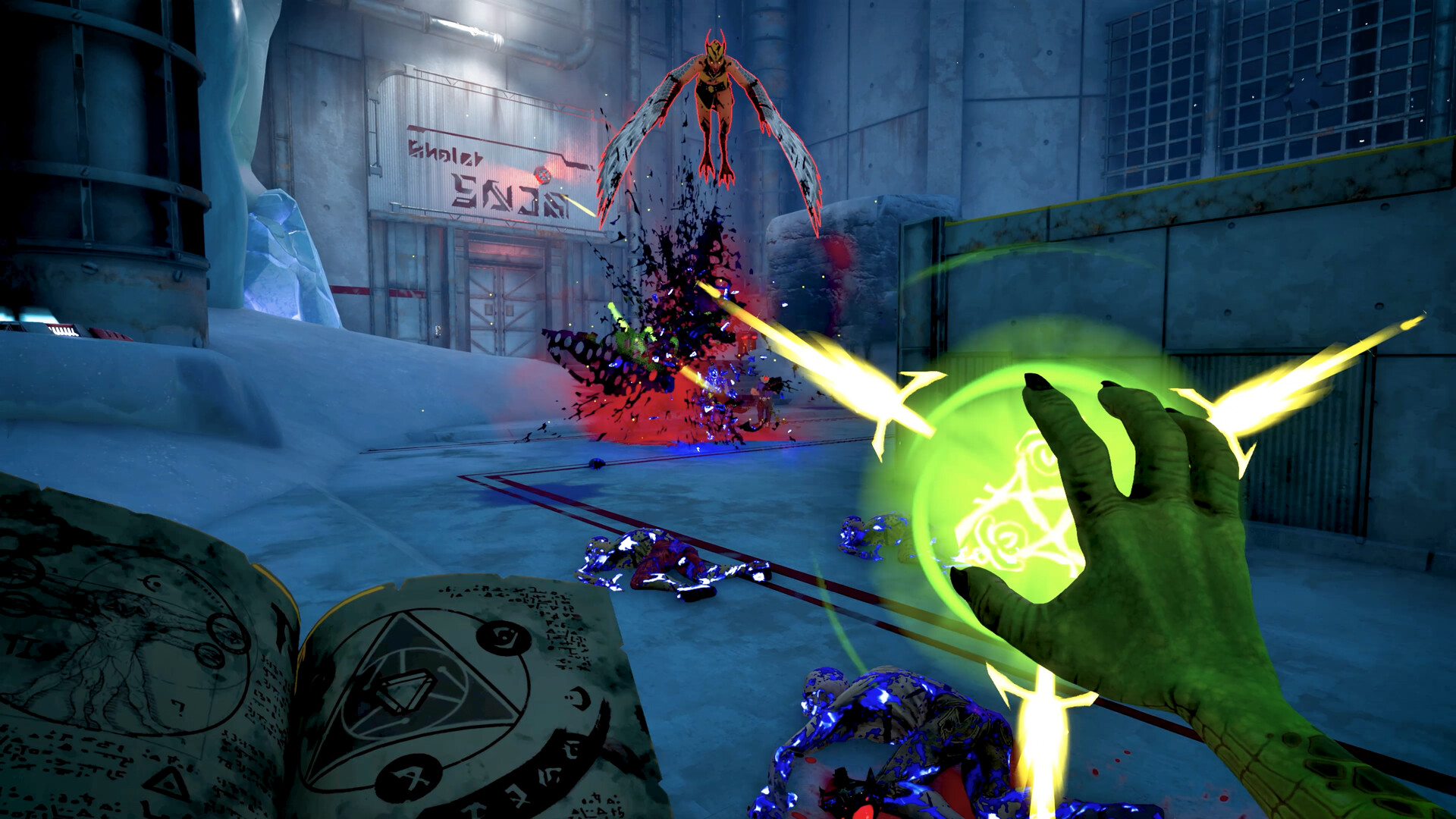
We also routinely encountered challenge portals—short, optional detours requiring you to clear a specific objective for valuable rewards. They’re quick enough that we almost always opted to take the detour rather than bypass it.
Breakrooms during runs offer a moment to slow down, spend gold on healing, check for weapon upgrades, and improve your ultimate. It creates a satisfying gameplay loop: fight, explore, gear up, rest, and plunge back into the chaos.
Don’t Trust the Pointer
There is one issue we ran into repeatedly, and it has nothing to do with combat: objective markers can occasionally be completely unhelpful.
Early on, we needed to climb a tower. The first marker pointed us beneath a bridge, while the second directed us onto it. Once on the bridge, the third marker guided us straight into a dead end. After running in circles, we realized the actual path forward was on the opposite side of the map—completely contrary to where the markers had led us.
A similar issue occurred in several challenge rooms. We could clearly see the exit, yet the objective indicator suggested we stand in a corner and face a wall.
It doesn’t happen often enough to ruin the game, and the maps are linear enough that you won’t stay stuck for long. Still, when it occurs, it makes simple navigation needlessly frustrating. We quickly learned to rely on spatial awareness over the UI.
There Isn’t Much Story, But We Listened Anyway
The narrative is lightweight. The game establishes the core premise—the Shatterverse and multi-timeline Sams uniting against Mental—and then steps back to let the action take center stage.
Instead of cutscenes, lore is delivered via banter between the Sams during missions. They discuss past events, share universe lore, and occasionally gossip.
These dialogues are brief, but we found ourselves actively tuning in. Because they’re spaced out reasonably, they never interrupt the flow of gameplay or feel like intrusive exposition. They add flavor and personality to the roster while providing context to the chaos.
Bring Friends
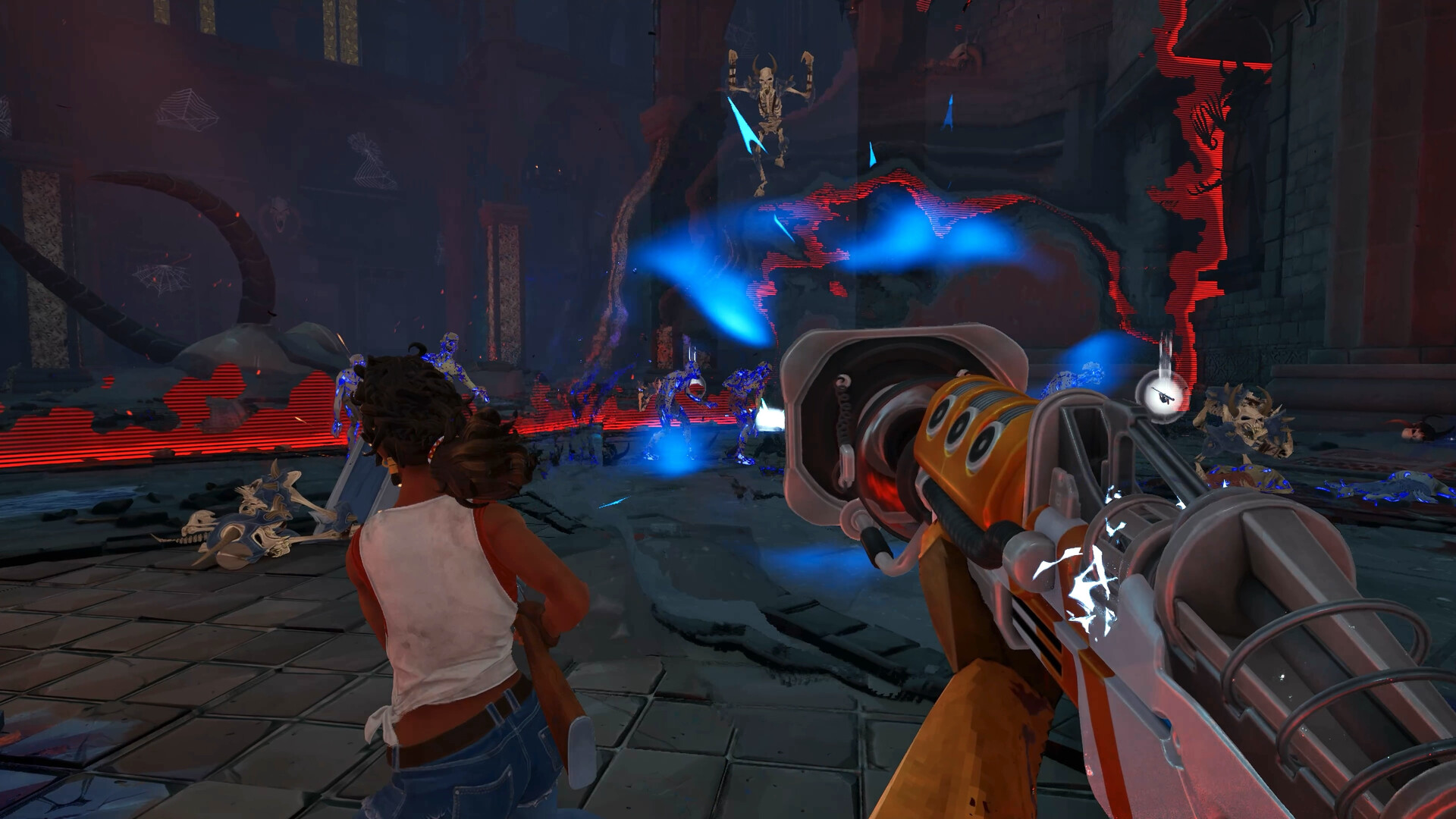
While Shatterverse can be cleared solo, co-op is where the design truly shines.
With support for up to five players, having multiple Sams running around turns combat into a wonderfully chaotic spectacle. Co-op highlights the roguelite mechanics, as complementary builds and ultimate abilities synergize against massive enemy waves.
This is a game best experienced with a crew. And yet, play it alone we did. Don’t be a lonely Sam if you can avoid it!
Still Serious
Serious Sam: Shatterverse is a fantastic title that we, as long-time fans, thoroughly enjoyed. It’s definitely a brave new direction for the franchise, successfully blending classic gunplay with roguelite progression, varied Sam archetypes, weapon affixes, and deep upgrade trees. The result is a complex, chaotic, and deeply satisfying shooter that peaks in multiplayer.
For us, it hit all the right notes. And that’s why we give it:
8/10 – Outstanding!
Developer: Behaviour Interactive Inc.
Publisher: Devolver Digital
Genre: Roguelite FPS / Co-op FPS
Players: 1–5
Platform: PC
Release: 2026
Review platform: PC
Hey, thanks for reading our review. Read our interview as well!


Leave a Reply