
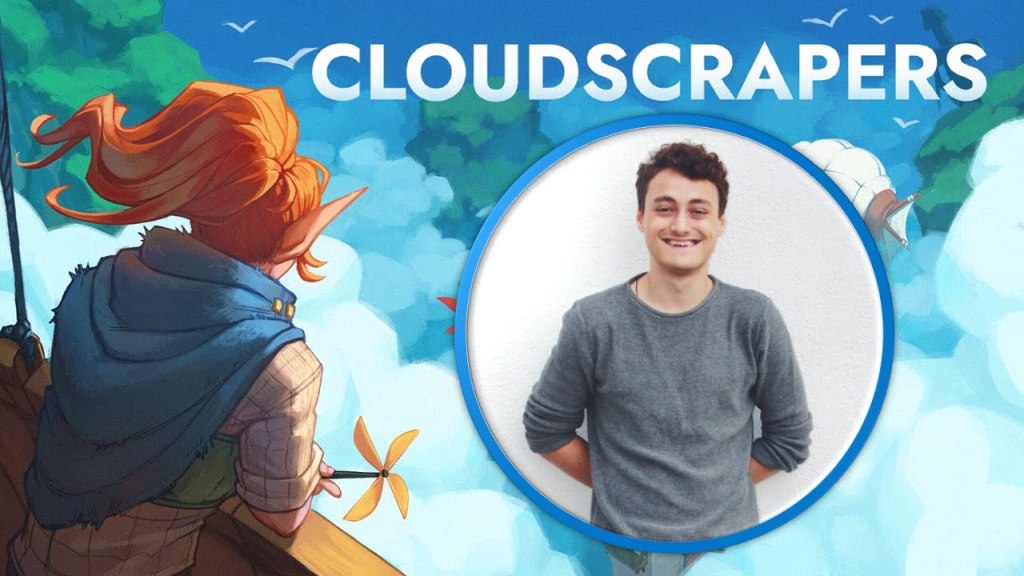
After a sudden crisis nearly closed their studio and scattered the team, Lead Game Designer Sebastian Jantschke and his sole remaining partner had a choice to make. Instead of walking away, they looked up. The result is Cloudscrapers, a minimalist tower-building strategy game that mixes cozy architecture with a looming sense of mystery.
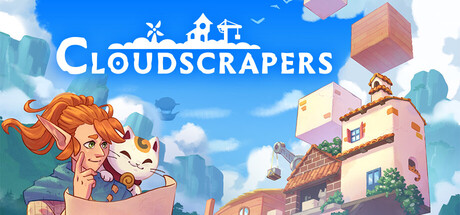
This interview would not have been possible without the wonderful people at Renaissance PR. Many thanks Rebecca Nicol!

Looking Ahead Above!
We talked with Jantschke about their journey. We wanted to know how shrinking to a two-person team completely changed their approach to game development, and where the original concept for this high-altitude builder came from. It quickly became clear that limitations often spark the best ideas.
“We’d had the idea of a tower builder floating around since a game jam several years ago. After our studio almost had to close and we lost the rest of our team, we spent a lot of time hiking in the mountains. Watching the clouds drift across the peaks inspired us to combine that atmosphere with this little game idea we still had in the back of our minds.
With only two people, we had to be especially careful about where we spent our time, so we stripped away almost everything that wasn’t essential to the experience we had in mind. Maintaining that strict focus took some getting used to, and looking back, we probably could have tightened the scope even further to shorten the development cycle.”
Chasing the Clouds
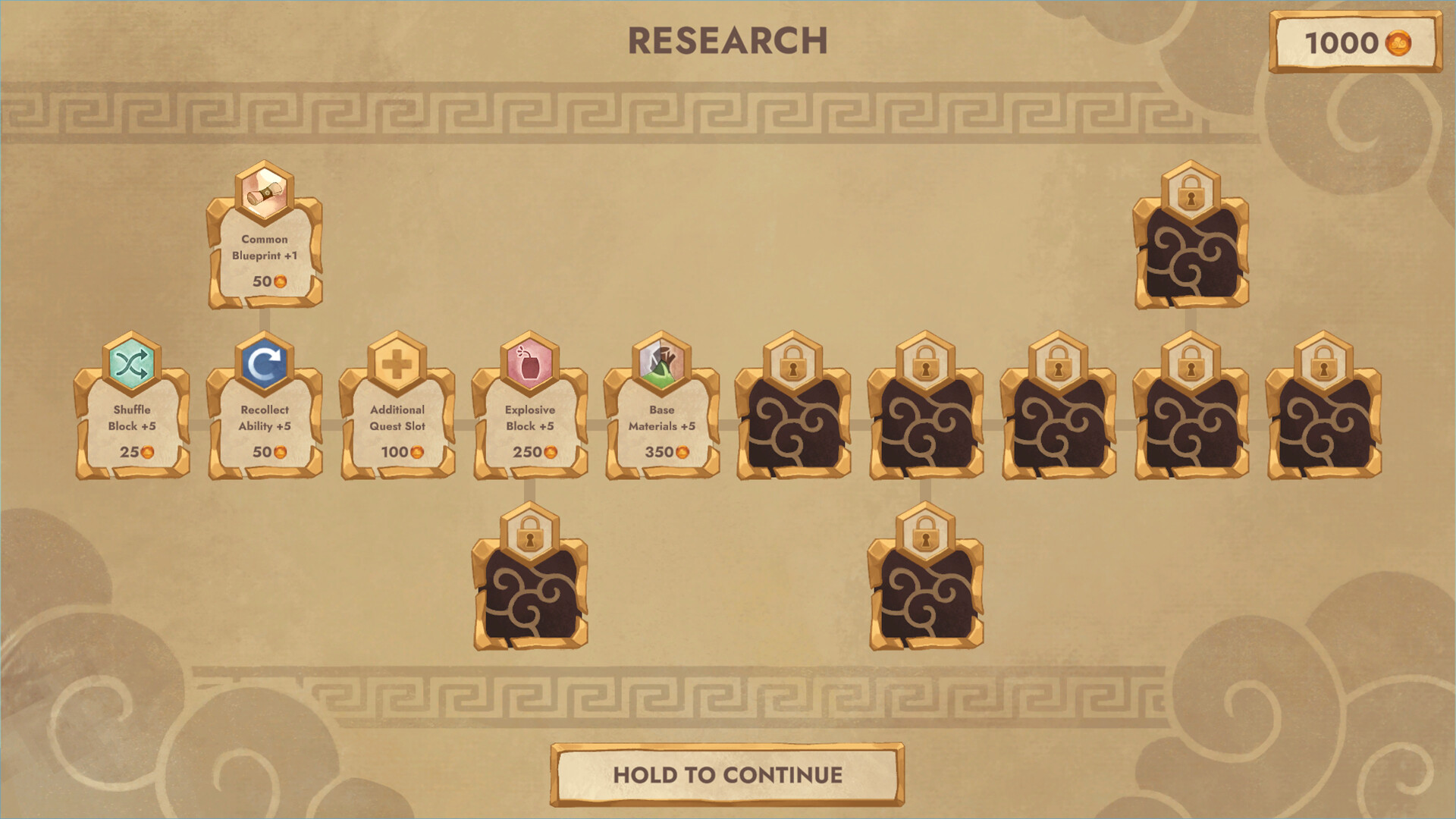
Cloudscrapers relies on a run-based loop where players build, hit a ceiling, unlock permanent upgrades, and start the climb again.
We wondered about this structural shift. Balancing a roguelite loop in a builder requires making sure the early game doesn’t turn into a chore on the twentieth try. Jantschke points out that drawing on unexpected media shaped their progression model.
“From the beginning, it was clear that this wouldn’t be a typical city-builder, so we needed a form of progression that felt satisfying and fit the game’s mechanics. We were inspired by the mysterious atmosphere and different layers of the manga/anime Made in Abyss, as well as games with a run-based structure, and liked the idea of taking that layered progression upwards into the sky.
To keep repeated climbs interesting, we tried to give players something new to unlock after each run, so you’re rarely doing exactly the same thing again. And as you become more familiar with the game, there are surprisingly deep strategies and little tricks to discover. The core loop is deliberately simple, but the way you approach each climb can change quite a bit over time.”
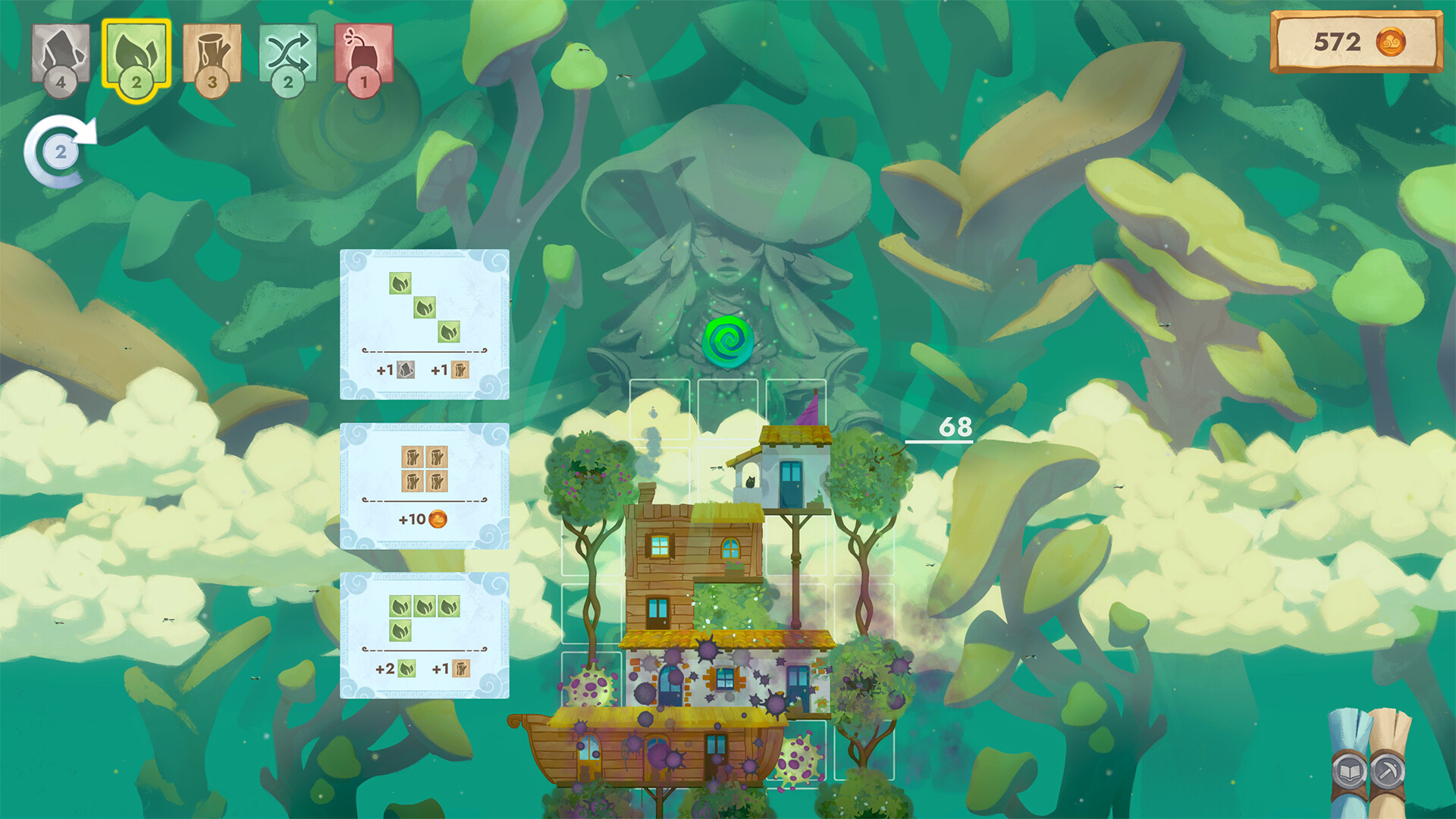
Cloudscrapers hides a surprisingly dark undertone beneath its relaxing, painted visuals. Tucking a story inside a block-stacking game takes some careful planning, but Jantschke notes that contrasting a cozy vibe with quiet mystery gives the game its unique identity.
“The bulk of the story is told through dialogues that are triggered as players reach different heights and milestones on their journey upwards. The higher you build, the more of the story is gradually revealed.
We felt that a slightly mysterious undertone could add another layer to this kind of game. The contrast between a cozy building game and a bigger mystery lingering quietly in the background helped give Cloudscrapers an identity beyond being purely a cozy builder or puzzle game, which was important to us.”
Storms, Spores, and Dynamic Blocks
As the tower goes up, players pass through different hand-painted biomes. Making a tower look like a single, solid structure rather than a random pile of blocks is a tough technical challenge. Throwing weather systems into the mix could easily ruin a relaxing puzzle game.
We asked about handling these visual transitions and whether any darker biomes had to be cut for ruining the zen mood. Jantschke credits a popular indie hit for their block system and emphasizes that environmental hazards demand adaptation, not strict punishment.
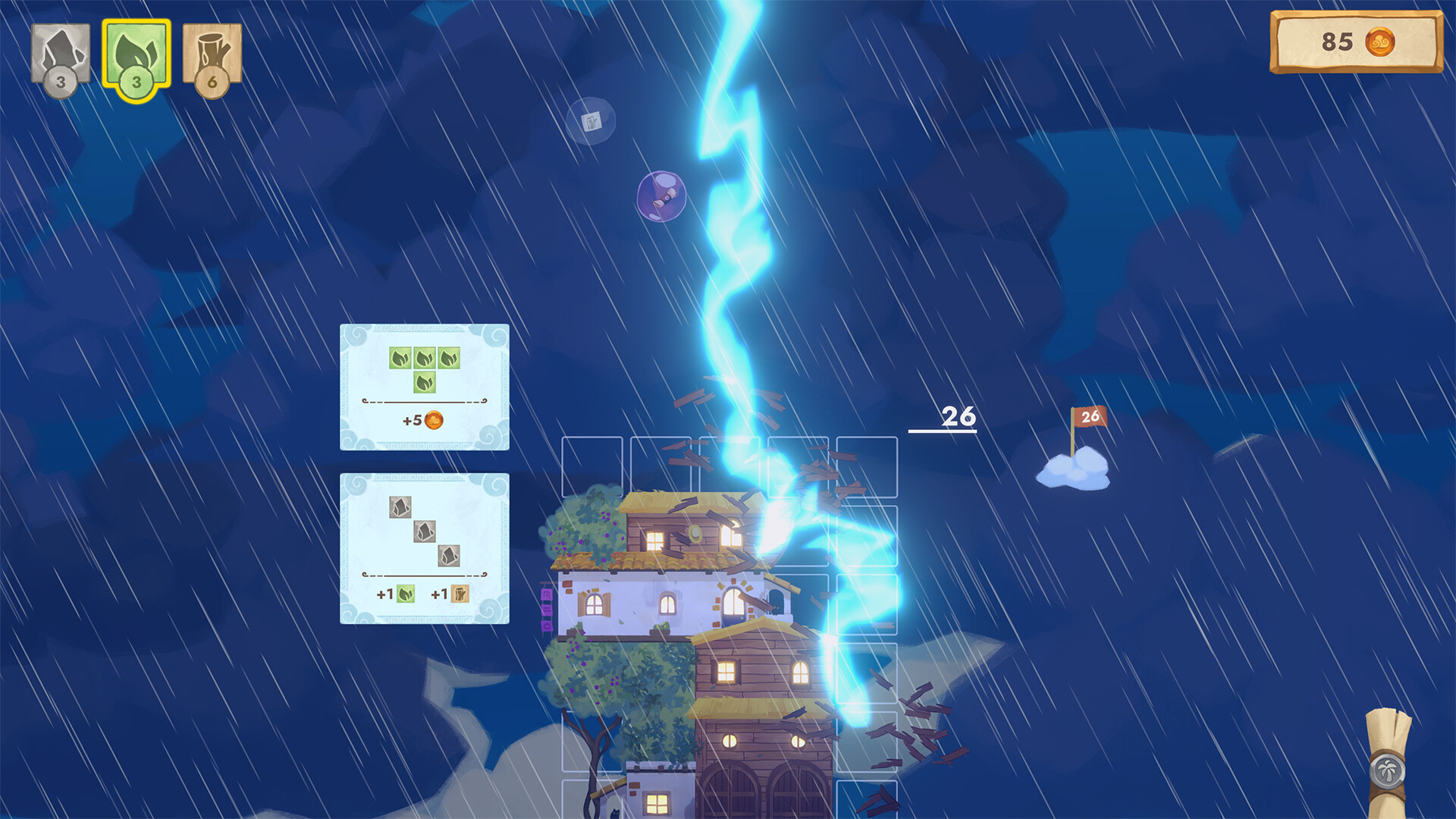
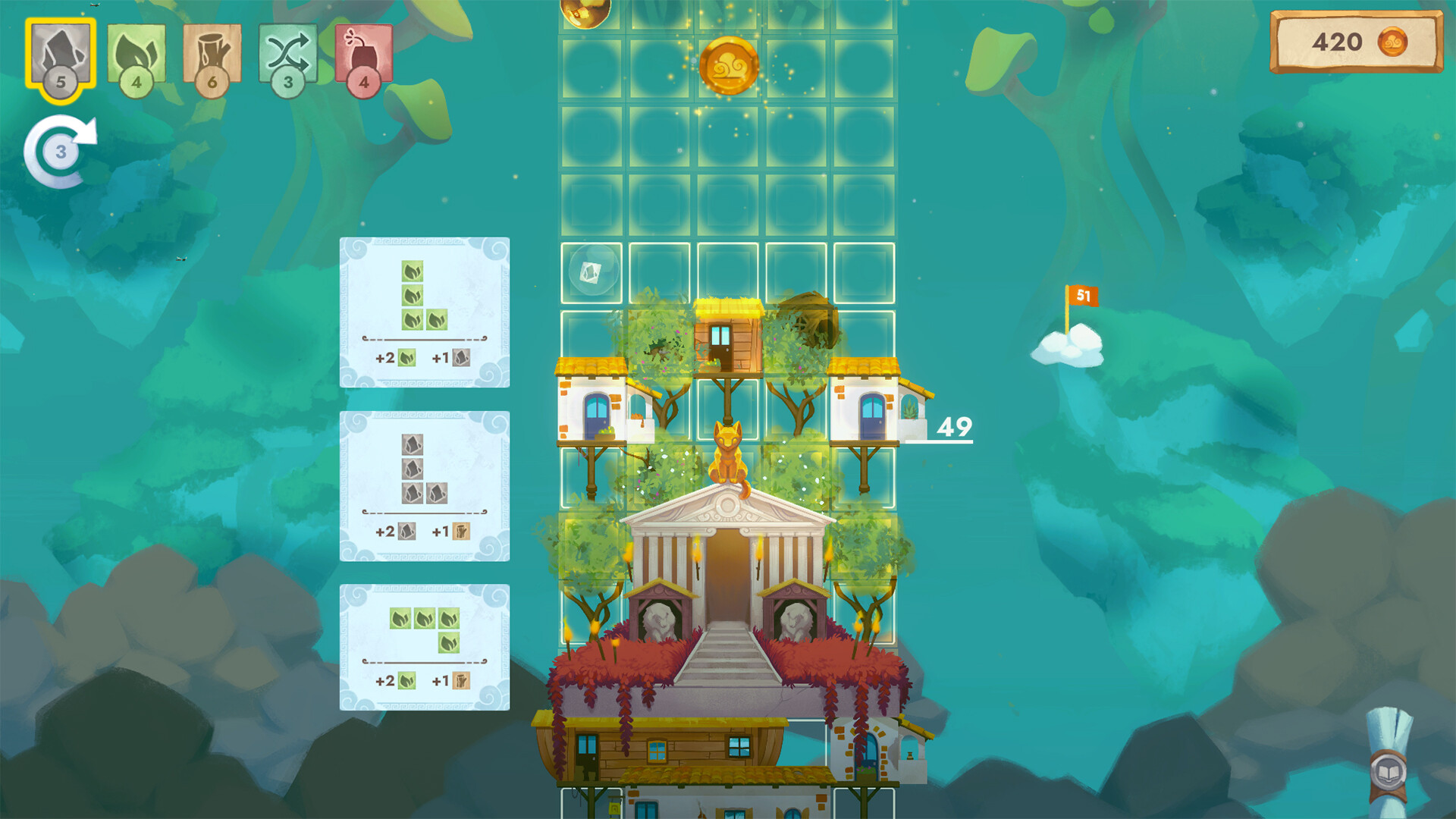
“For the tower itself, we use a system inspired by the game Townscaper. The blocks dynamically change their appearance depending on how they are placed and which blocks surround them. That helps the tower read as one cohesive structure, even as the environment around it changes. The biomes rely a lot on atmospheric lighting and post-processing to give each one its own character. We also put a lot of effort into adding small details, such as the tower windows lighting up in the darker storm biome.
We didn’t really have to scrap any biome concepts because they disrupted the tranquil feel. The relaxing atmosphere was a guiding principle from the start, so even the more unusual or “darker” biomes were designed to feel like they belonged in the same serene world above the clouds.”
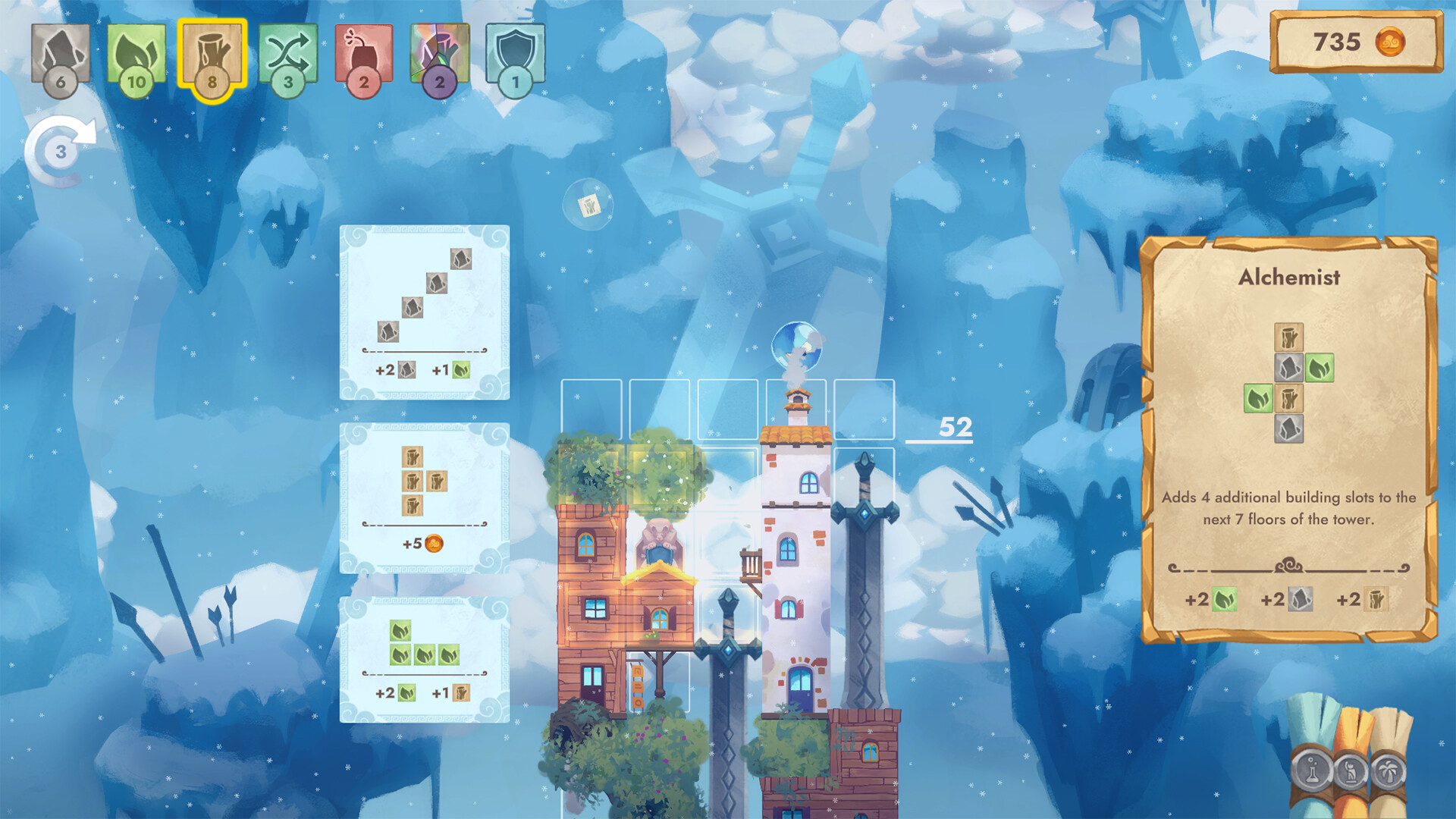
Speaking of those hazards, Jantschke breaks down how the team turned nature’s wrath into interesting puzzles.
“There are several environmental hazards in the game, each tied to a specific biome and with its own gameplay effect. In our floating forest biome, players encounter mushroom spores that explode when built on and infest the surrounding area, making it unusable for construction. In the storm biome, lightning is both a blessing and a curse: it can destroy a structure while you’re building, but it can also clear space and open up new possibilities.
We wanted these hazards to make players adapt rather than simply punish them. That’s why there are ways to deal with or counter them, such as explosive barrels for clearing spores or shields against lightning strikes.”
The Sounds of the Guardians
A game heavily focused on vibes needs to feel right, whether you’re using a mouse or kicking back on the couch. Launching fully optimized for the Steam Deck brought its own headaches. We asked about the toughest UI hurdles they faced.
“The trickiest part was making sure everything behaved smoothly when switching between controller and keyboard/mouse input during the game. That kind of input switching is often a source of small UI and control quirks.
Thankfully, we had a great QA team, which, combined with our own testing, helped us iron out those little issues and make the transition between input methods feel as seamless as possible.”
While the controls are tight, the audio might be the biggest surprise. Getting Mariya Anastasova—known for her incredible vocals in Baldur’s Gate 3—is a huge get for a micro-studio. Jantschke is quick to credit their composer, but his explanation of the music shows how audio mixing works as an invisible storytelling tool.
“All the credit for bringing in Mariya and the other incredible performers goes to one of our composers, Alec Shea. He handled those collaborations directly, so we can’t really take credit for bringing them on board ourselves.
The vocal tracks were especially important to us because the voices represent the Guardians, essentially god-like beings within the game’s lore. As players take their relics and gradually strip them of their power, those voices disappear as well. For that reason, we requested both vocal and instrumental versions of the music. It might be a subtle detail, but for us it was another way to tell the story beyond dialogue.”
Lessons from the Climb
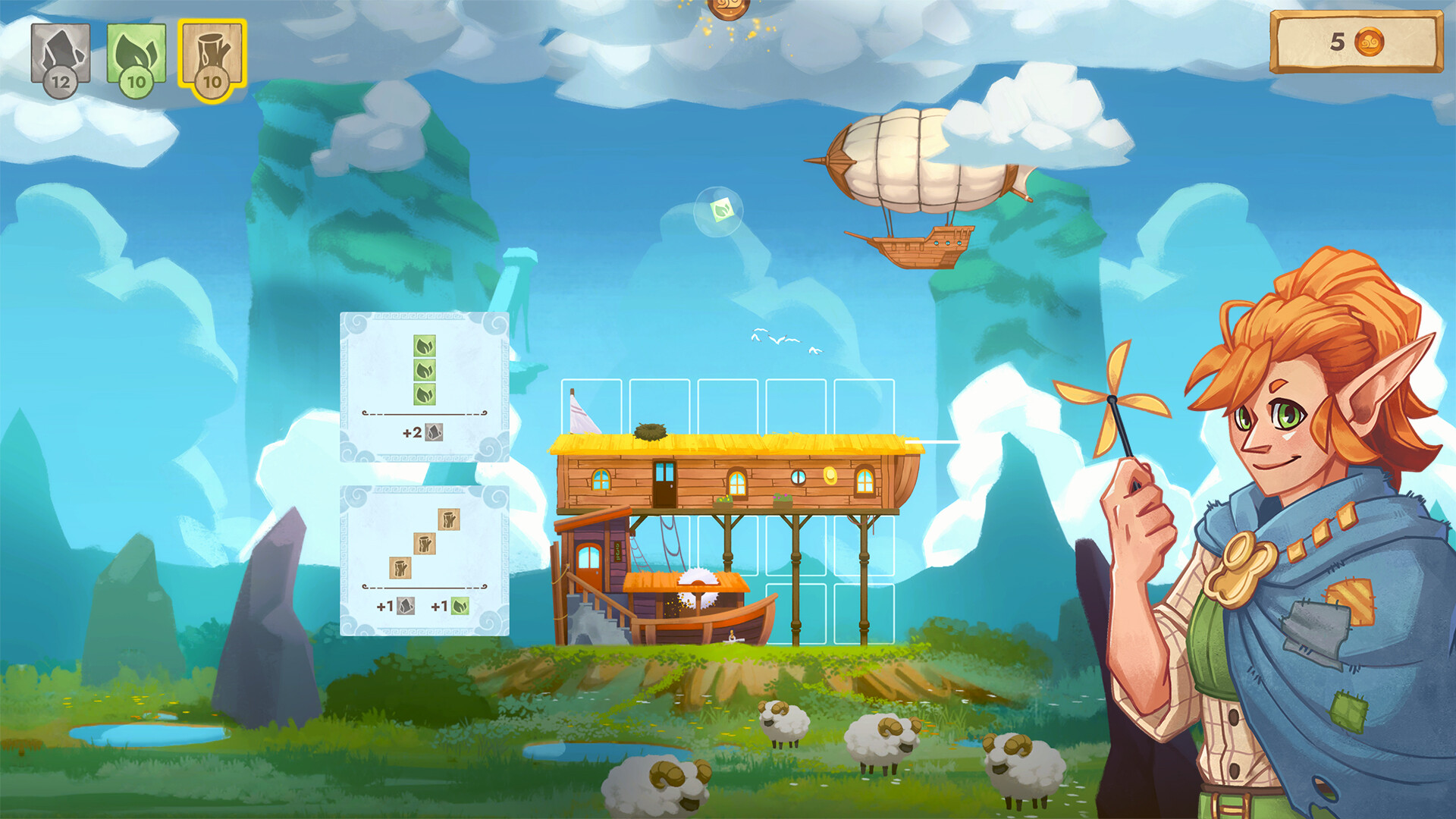
Surviving a two-year development cycle after downshifting to a duo gave Jantschke a lot of clarity. For other small teams trying to rebuild, his final piece of advice is a sharp reminder that staying flexible in both game scope and business strategy keeps you alive.
“The biggest lesson for us is probably that your scope can almost always be smaller and more focused than you think. The better you get at finding that balance, the faster you reach a presentable state, which means you can start building an audience, talk to publishers and put a demo in players’ hands sooner. Cutting unnecessary weight also makes the whole development process a little less stressful.
We planned to self-publish Cloudscrapers from the beginning, but kept talking to publishers rather than closing that door completely. That turned out to be a good decision: only a few months before release, we signed with Curve Games, which gave us the opportunity to improve the game further with things like the original soundtrack and a new game mode. So for us, planning to self-publish while staying open to a publishing deal at any stage turned out to be a good approach.”

You won’t have to wait long to check the smart mix of cozy building, quiet lore, and a dynamic soundtrack. As a matter of fact, you won’t have to wait a all since there’s already is a great demo fo Cloudscrapers.

Leave a Reply