
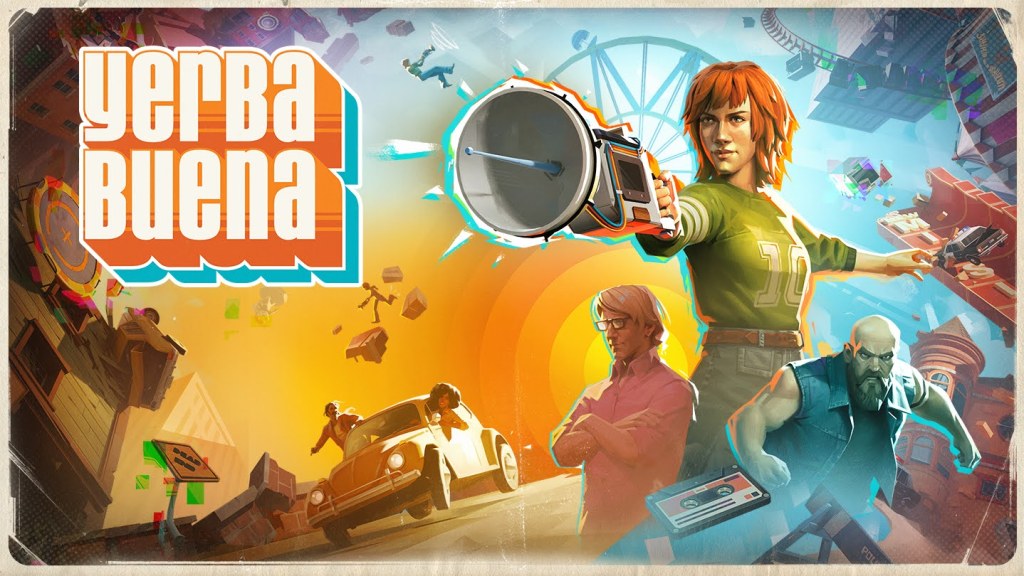
Whenever a new puzzle game hands us a strange sci-fi gadget, our minds almost automatically jump to Portal. It is a really big shadow for any game to step out of, and we honestly try our best to avoid making that comparison so we don’t set unfair expectations. But every now and then, a game comes along that genuinely gives us that exact same spark—that exciting rush of looking at a normal room and realizing we can completely bend the rules of physics to escape it. Yerba Buena, a new puzzle game from the small team at Mad About Pandas, manages to capture that magic. Instead of shooting portals, it hands us a fancy tool that lets us copy and paste reality itself. It is a very clever and mind-bending trip, but what really caught us off guard was how ordinary and relaxing everything feels when the game first kicks off.

Thirty Pandas and a Dream
Mad About Pandas is a smaller indie crew. They spent about three years building this, and Focus Entertainment stepped in to publish it. The team only had around 30 people working on it.
Copy, Paste, and Bounce
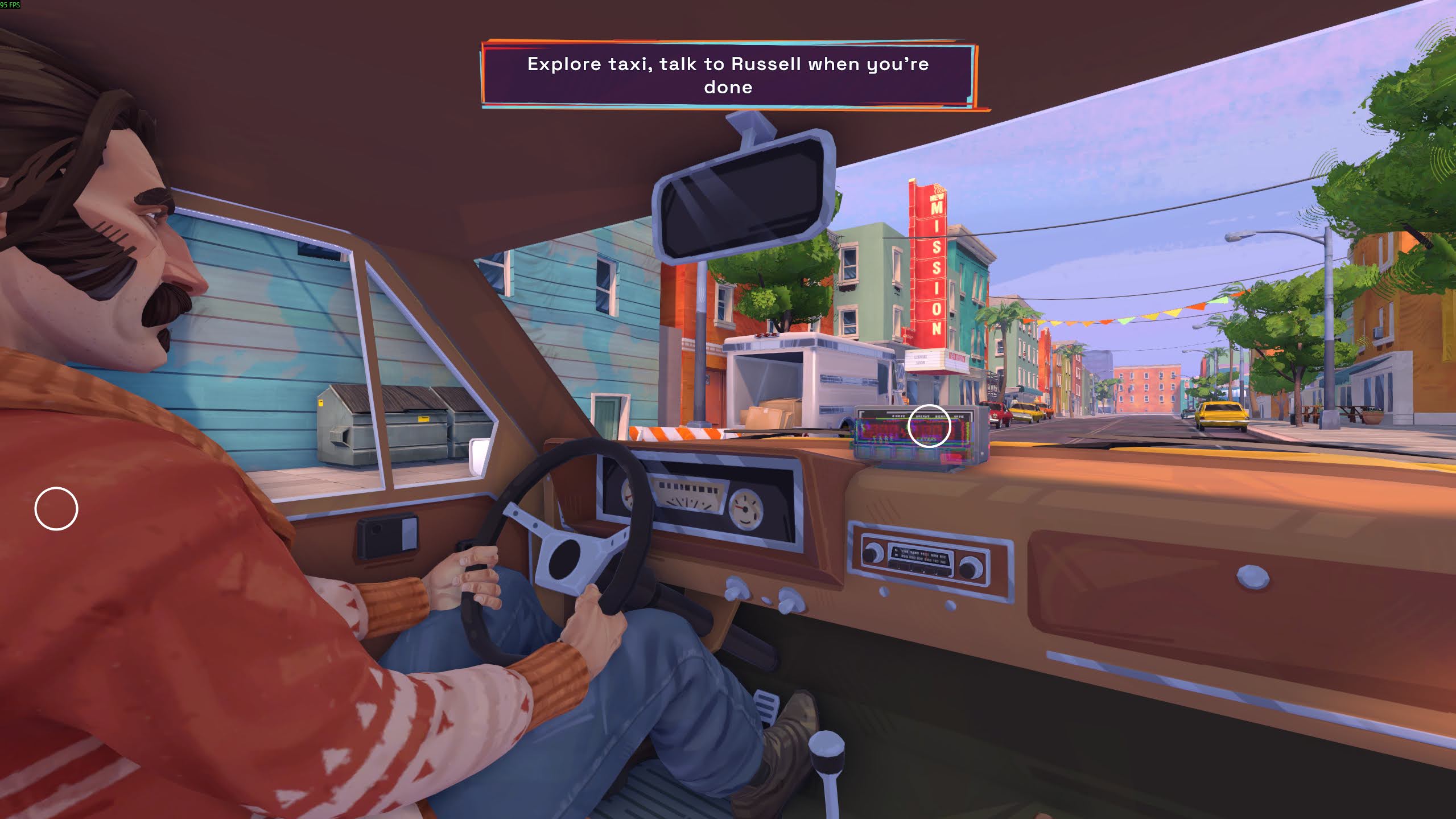
The opening is very chill, especially driving around the city in the cab, looking around, and chatting with Russel (the driver and our friend) about life. The characters are well acted, the stories they tell are well thought out and presented, the colors are warm, and the music is amazing, giving off some serious cozy 70s vibes. And then you start chatting about Russel’s radio, and things take a weird turn. More and more things start glitching, the Yerba Buena park is being prepped for destruction to be replaced by a corporate tower, and your friend (the one you just had that cool, casual chat with) is kidnapped, leaving you with a mysterious suitcase.
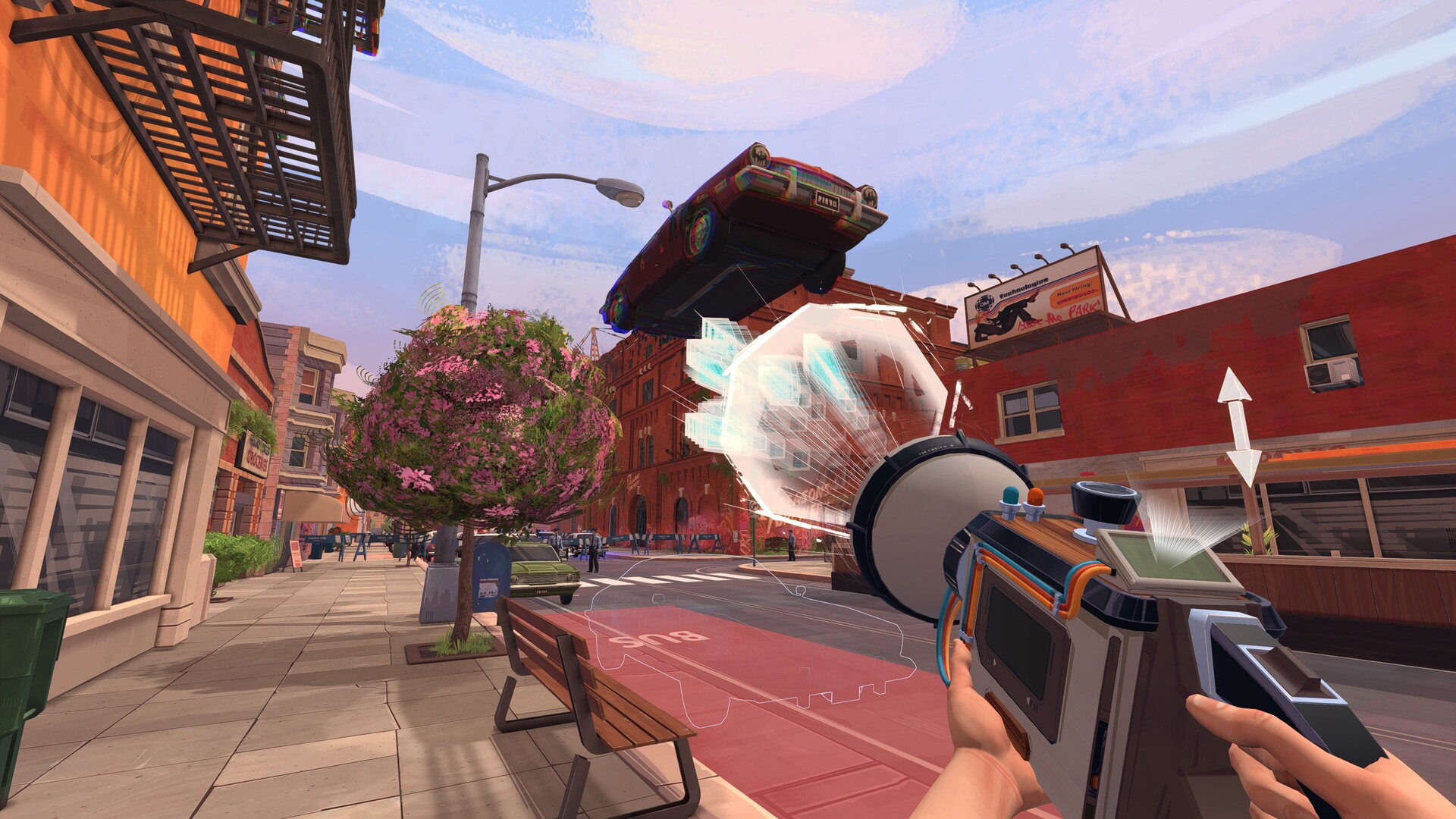
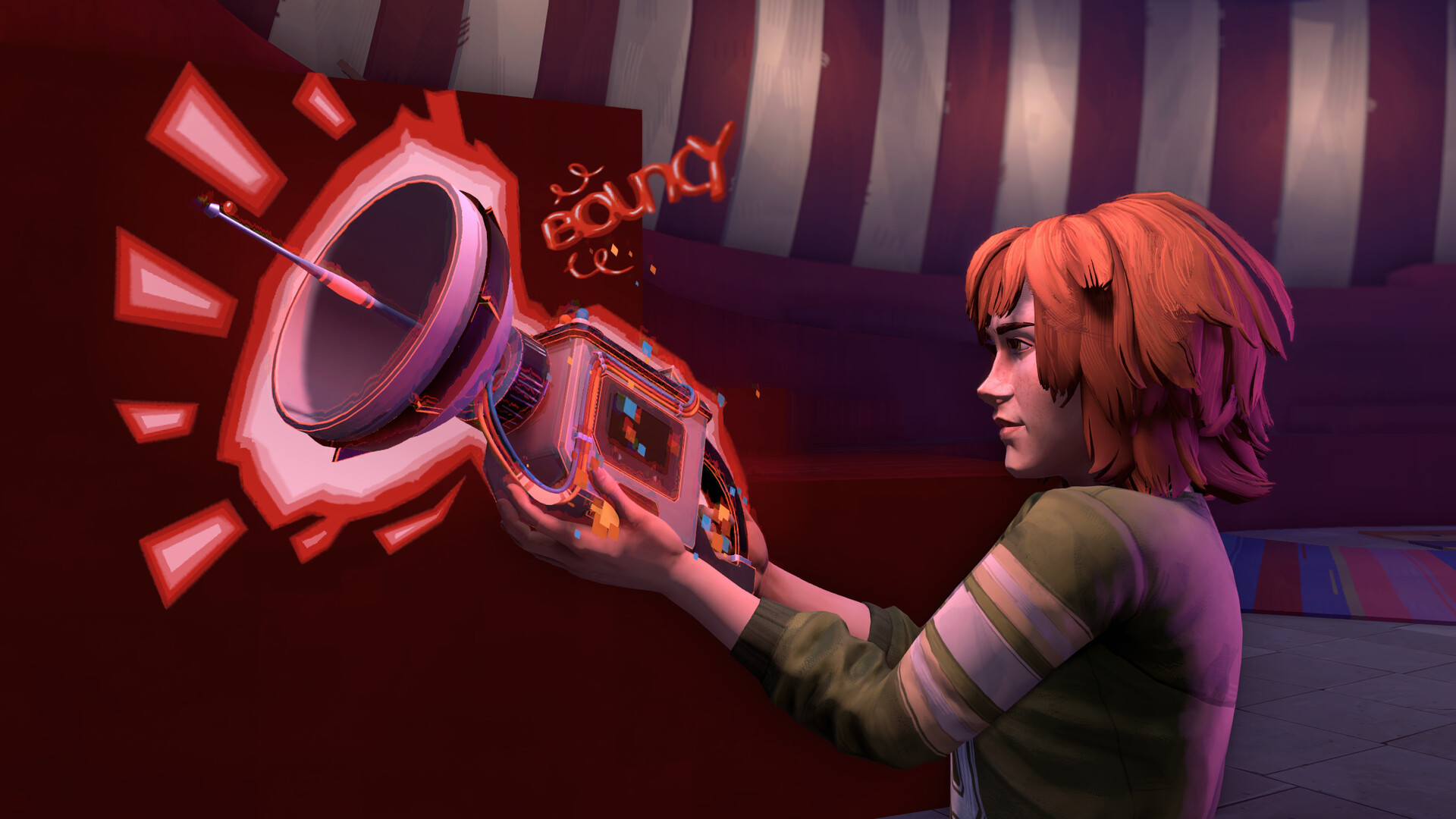
Yerba Buena revolves around the Oscillator. It is basically a sci-fi clipboard. We pull it out to scan the environment, and the tool highlights what properties we can steal and what glitched objects we can actually modify.
It starts simple. We copy the velocity of a moving object, like a car. We paste that momentum onto a static housing block, like glitched shelves blocking our way, and voila—the second object starts doing what the first does. You can also reset objects and move them back to their original locations. But then things become increasingly more challenging. You start copying and experimenting with various movements and rotations, thinking hard about how it might work in relation to the world around you. A lack of imagination is your only obstacle. The devs tried their best to give us as many options as possible to play with and to challenge our logic. One easy example is rotating a pipe and moving it around just so you can use it as stairs. Another is copying vapor and pasting it onto a solid brick wall to turn it into thin air. And, before you ask, walking right through it made us feel like badasses.
The best moments happen when the game lets us stack those properties. We can take the momentum of a car, stack it with the bounce of a trampoline, and apply both to a single block to build a makeshift slingshot. A softer version would be taking the vertical movement of a street sign, applying it to a trash can, and then using the horizontal movements of passing cars to move up and to the right so we could reach a building. Speaking of buildings, yes, you can move whole buildings in certain missions. The sky is the limit. Moments like these really make us feel like we are literally breaking the game’s code. That specific ‘aha’ moment when a weird, chaotic idea actually gets you out of a room is a massive adrenaline rush. The last time we felt this was with Portal 1 and 2.
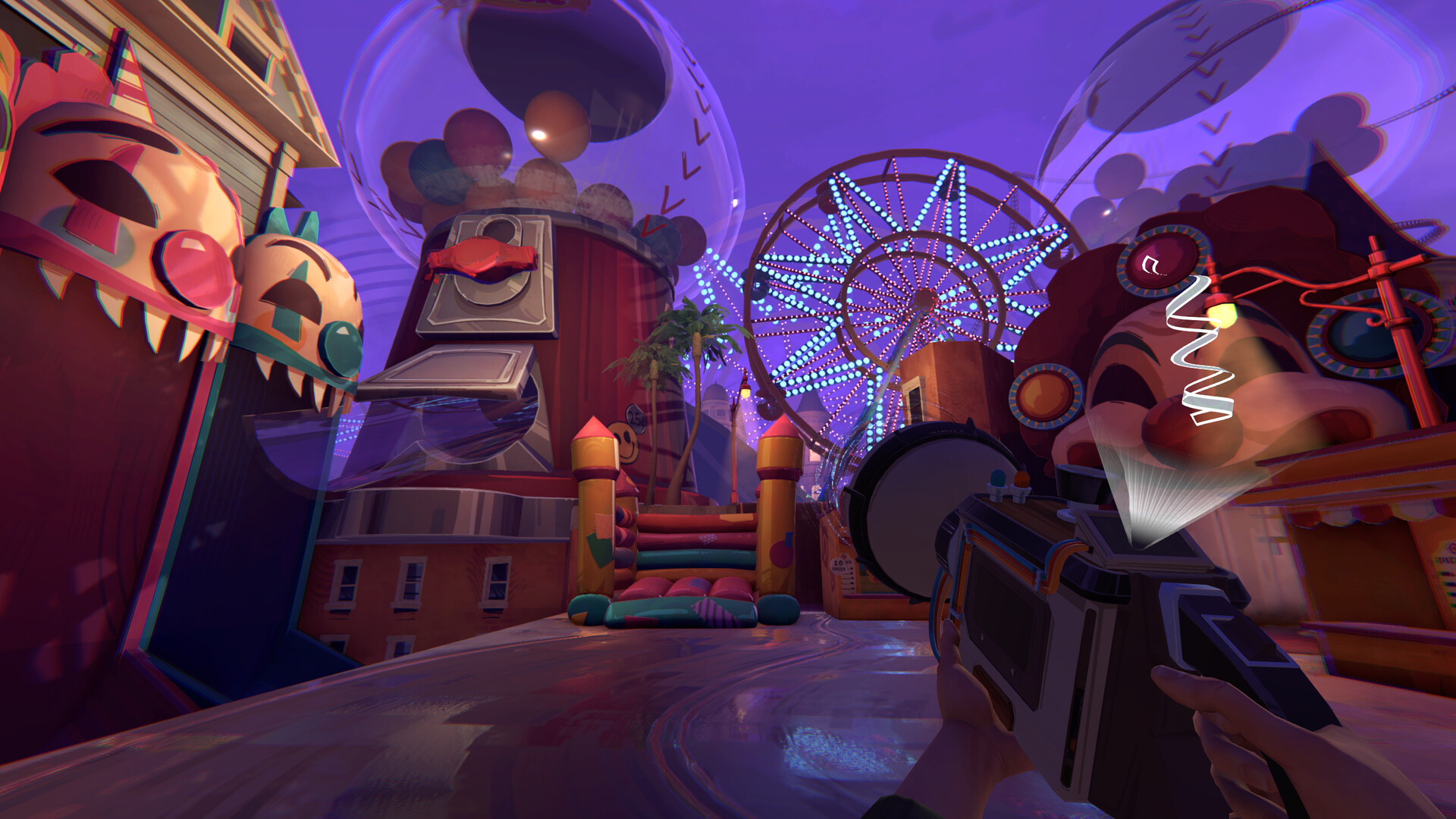
There is no traditional combat in Yerba Buena. When we finally corner baddies, the encounters turn into massive environmental boss puzzles. We can’t just punch them. We have to dodge their attacks, scan the environment, and build makeshift physics traps to take them down. In other words, the cool devs at Mad About Pandas managed to turn a standard boss fight into a chaotic game of 4D chess.
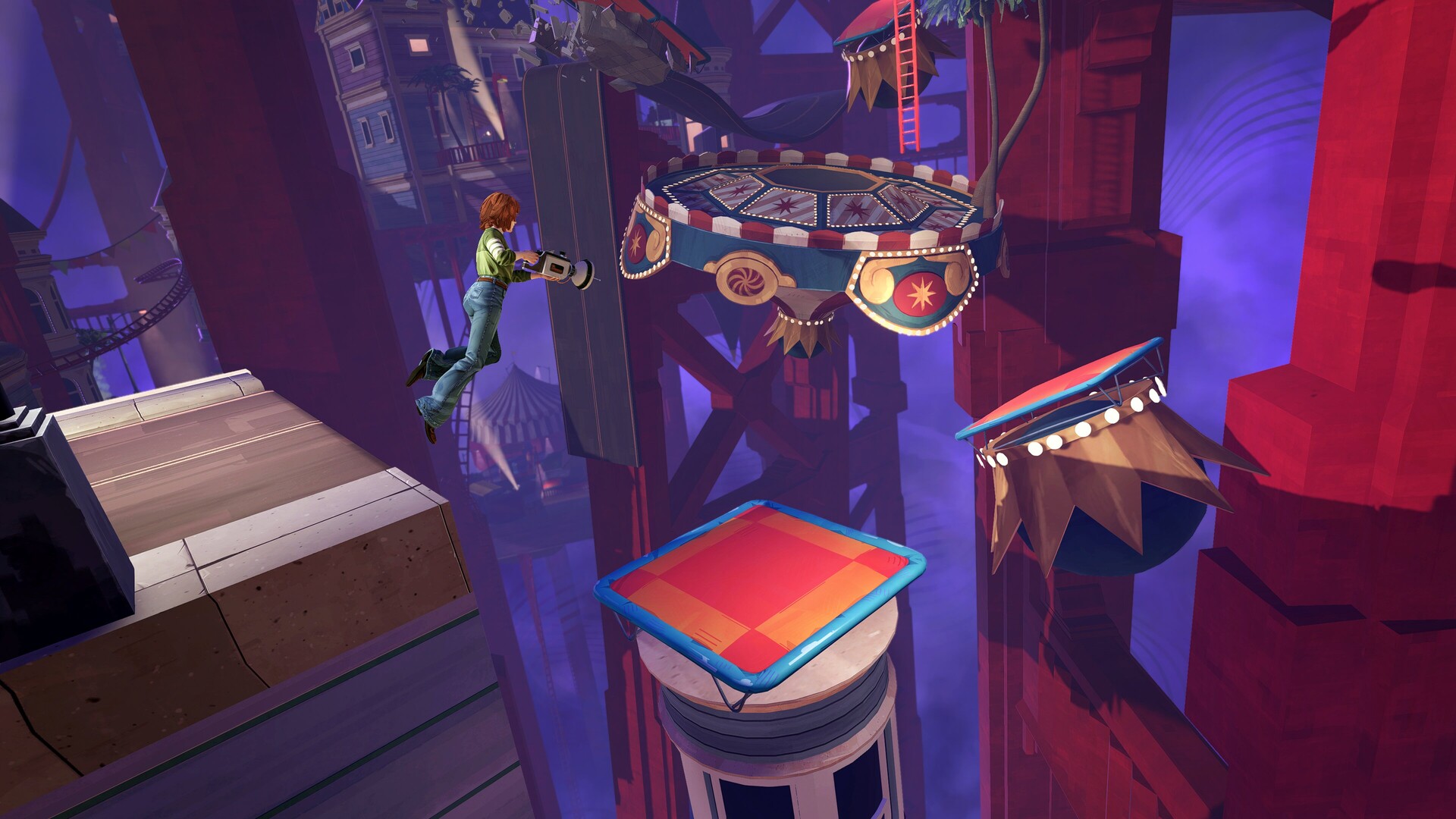
The actual execution can get in the way, however. In certain situations, you need to think and react fast. There are puzzles and boss fights where you have to swap abilities immediately. For example, we had to grab a property, jump, and paste it onto something else while mid-air. If you’re not fast enough, things fall apart. We struggled with a controller, so we swapped to mouse and keyboard. Even so, the targeting reticle is slow. It often refused to snap to the correct object when we were under pressure. This could totally be us—we don’t handle pressure well. We ended up taking damage or falling into pits over and over. The funny thing is, we knew the solution, but we couldn’t execute it fast enough or efficiently enough, the way the devs intended.
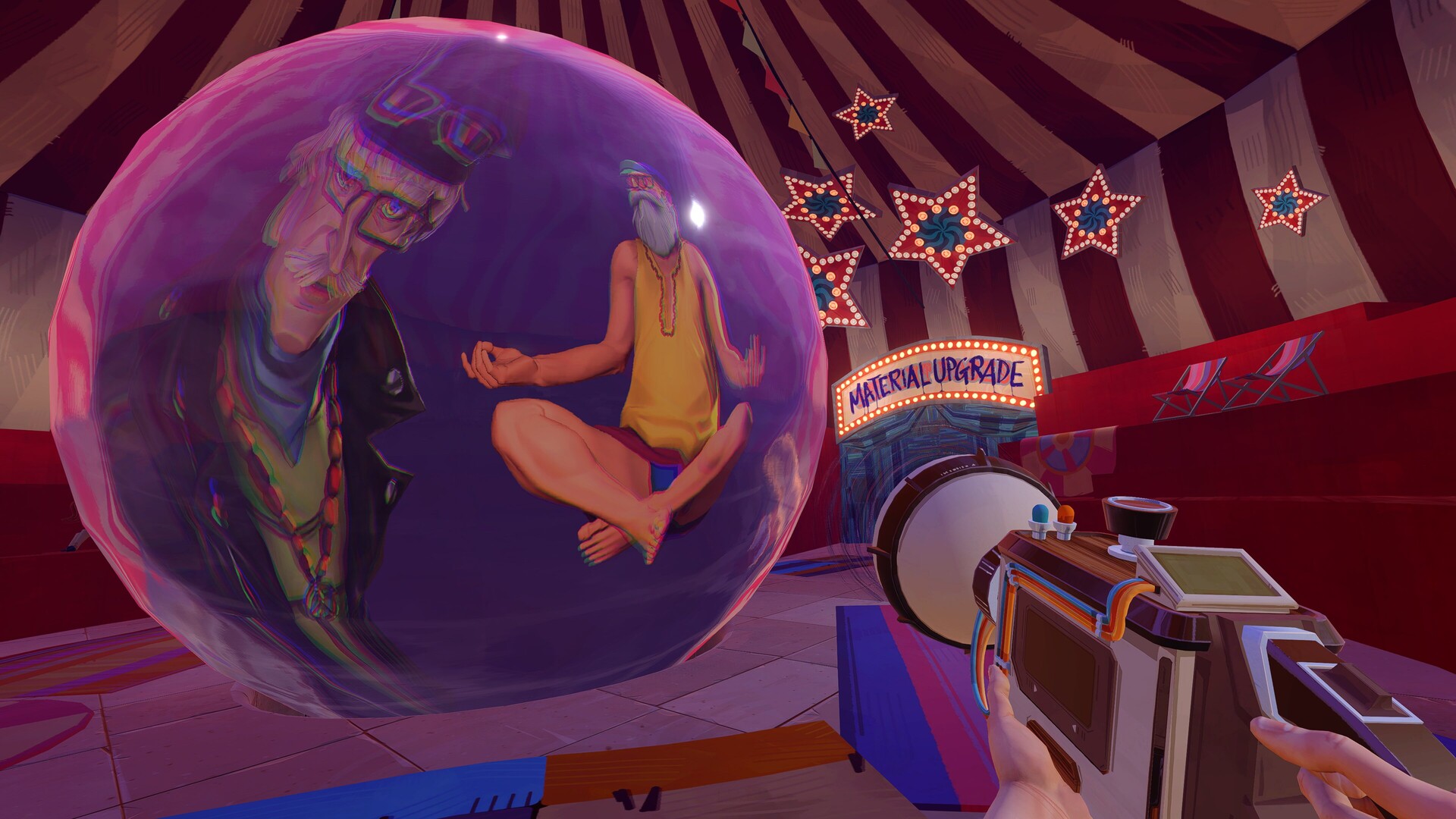
Yerba Buena is a genuinely great puzzle game. Hiding behind the neon 70s aesthetic, this Mad About Pandas title does a wonderful job of letting you use the physical properties of objects to break the rules of the level. It is a ton of fun, the story is amazing and highly unique, and the characters are very lovable. We give it a 9/10. It is a strange, clever little trip.
ID Card
- Developer: Mad About Pandas
- Publisher: Focus Entertainment
- Platforms: PC (Steam), PS5, Xbox Series X/S
- Release Date: May 26, 2026
- Genre: Puzzle Platformer / Action-Adventure

Leave a Reply