
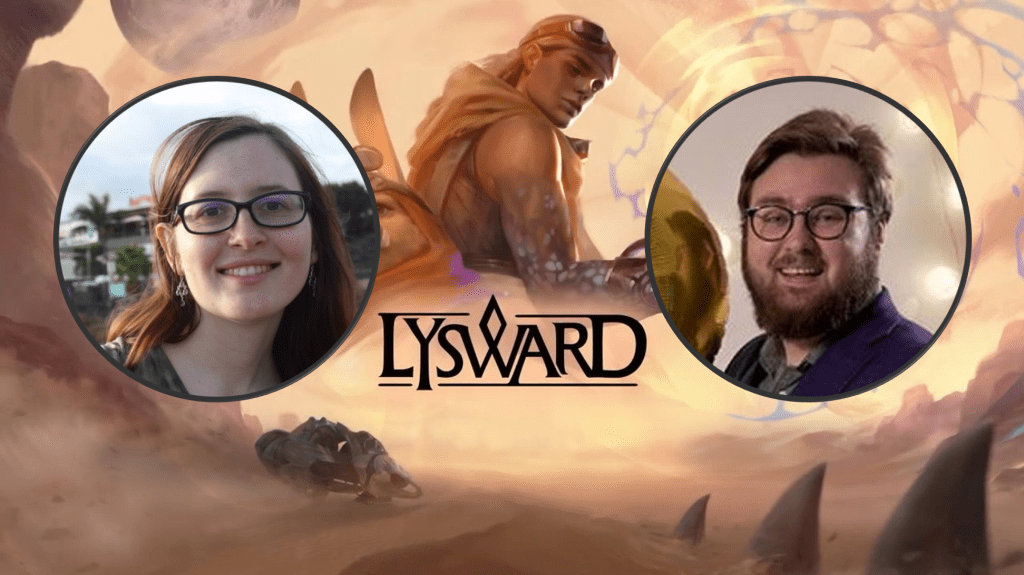
Surviving the indie games industry takes the exact same kind of stubborn resilience needed to wander a sun-scorched wasteland. Snowcastle Games knows a thing or two about both.
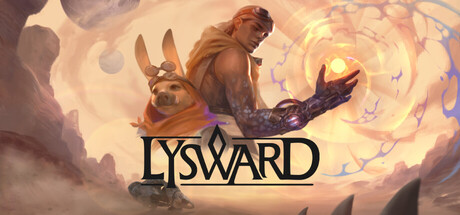
Founded in 2009, the Norwegian studio has weathered over a decade of brutal industry turbulence, steadily building a rich, interconnected universe spanning titles like Earthlock and Ikonei Island. Now, with their upcoming title Lysward, they are dropping players into the harshest environment they’ve ever designed: the dayside desert of Umbra, a planet locked in perpetual, lethal daylight.
We recently caught up with Narrative Designer Hannah Werner, Game Director Erling Hoff, and Creative Director Bendik Stang to talk about the mechanics of surviving a deadly sun, the heavy philosophical weight of amnesia, and what it actually takes to keep an independent studio alive for 16 years.
This interview would not have been possible without the wonderful people at Plan at Attack. Thank you Mateja Sop!
A World Forged in Sunlight
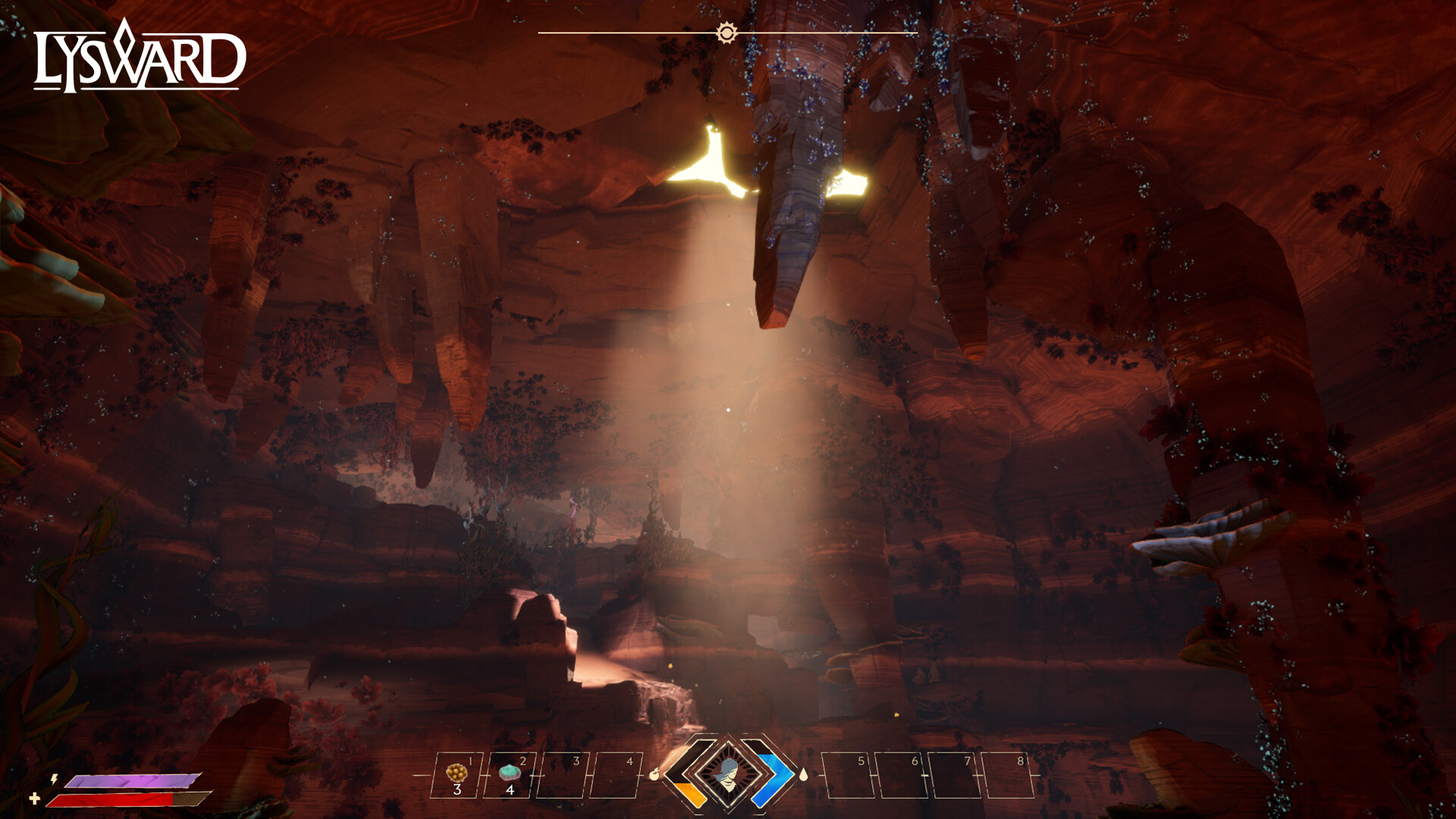
In most video games, we’re taught to fear the dark. The shadows are where the monsters hide. Lysward flips that script entirely by making the sun both the source of your magic and your greatest enemy. It’s a desolate, beautiful world, born from a deep passion for environmental storytelling.
“The dayside desert of Umbra drew us in for a lot of reasons. On a purely visual level, a world locked in perpetual daylight is incredibly harsh and unforgiving – but that’s also what made it such a compelling place to tell a story about resilience,” the team explained.
“With our own planet facing more and more environmental challenges, we kept coming back to the image of a desert that can come back to life through the actions of people. Umbra is very similar in that regard: It’s a world shaped by past mistakes, and now it’s up to the current generation to find ways to survive and restore it. At the same time, it feels like we’re living in a moment where messages of hope, survival, and perseverance really matter. A place this hostile becomes a surprisingly beautiful setting for that, because even in the most hopeless environments, life finds a way to persist in remarkable forms.”
It was also a chance to push the boundaries of the universe they’ve spent years crafting. “From a worldbuilding perspective, Umbra itself is also a broken planet: It’s tidally locked to its sun and we haven’t really explored what it means to live in those extreme regions before. Earthlock touched on it briefly, and Ikonei focused more on the milder zones, so this felt like a natural opportunity to finally dive deeper into one of the more unusual parts of the world we’ve been building over time.”
The sun-scorched planet of Umbra isn’t just a brutal biome; it acts as an environmental allegory, challenging players to find hope and restore a world broken by past mistakes.
Subverting the Amnesia Trope
Dropping a player into an alien environment is often handled through a classic gaming crutch: the protagonist with amnesia. Lysward’s hero, Kiran, wakes up with his memories completely wiped. It’s a setup that usually makes critics roll their eyes, but Snowcastle is treating it as a deep philosophical inquiry rather than a cheap tutorial mechanism.
“It wasn’t an easy starting point,” they admitted. “Amnesia is a trope a lot of people are tired of: It’s often used as a convenient way to explain the world to the player in a way that feels natural for the character. And while it does help with that, that was never the main reason we chose it for Kiran.”
Instead, that void in Kiran’s mind is the emotional anchor of the narrative. “For us, the amnesia isn’t just a device; it’s at the heart of the story’s mystery. What happened to Kiran, why his memories are gone, and what kind of person he used to be are all central questions the player uncovers over time. What interested us was something deeply personal: not the loss of knowledge about the world, but the loss of who you were. We wanted Kiran’s journey to focus on rediscovering his own life, his relationships, his past decisions, and ultimately, himself.”
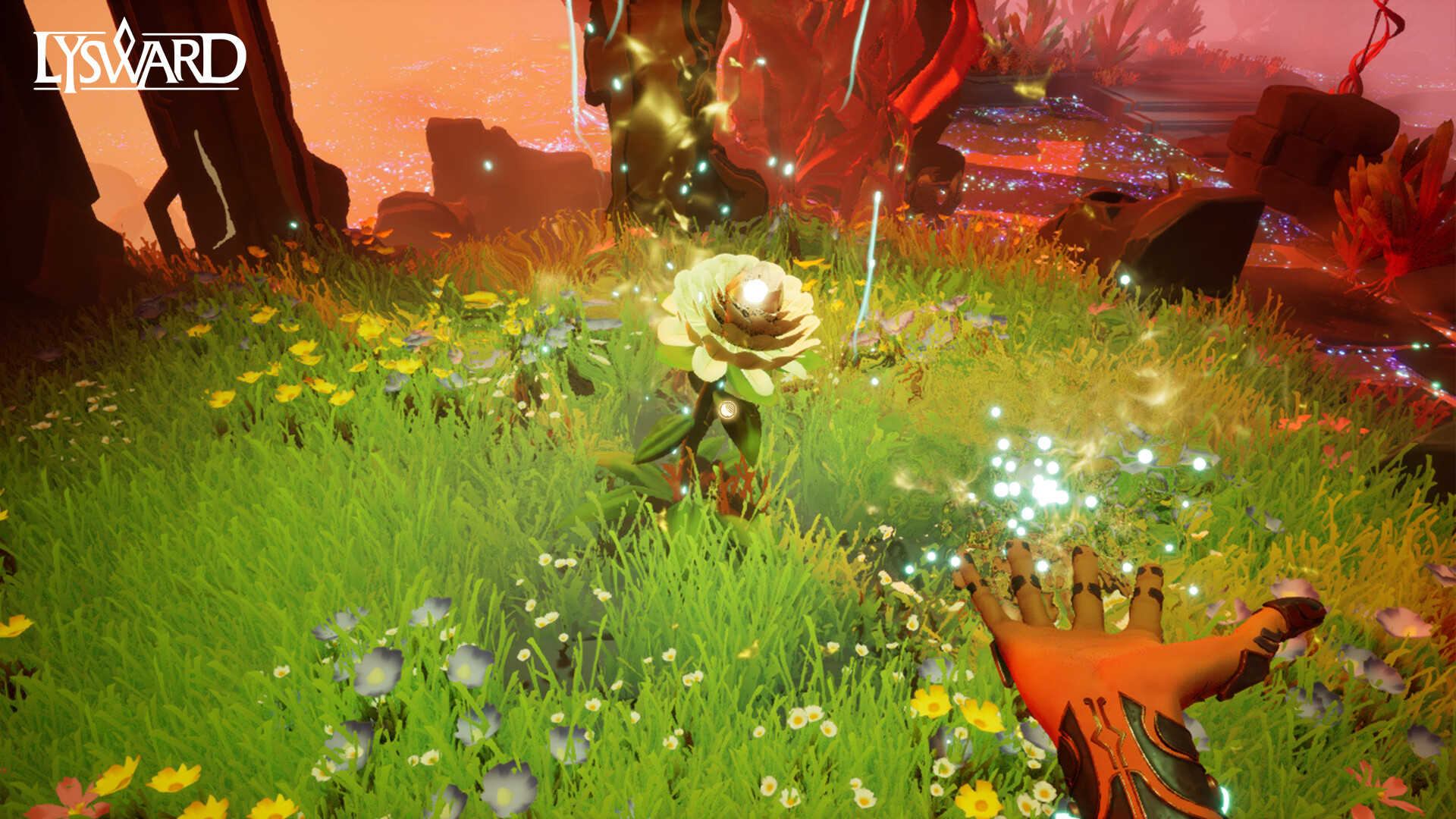
It creates a fascinating tension. Players aren’t just uncovering lore; they are actively judging the person they used to be.
“That’s where the emotional core comes in. As Kiran uncovers his past, he’s confronting a version of himself that might ultimately feel like a stranger. That divergence became very compelling to us. Identity, at least as we explore it in Lysward, isn’t fixed. It’s not a single moment or decision; it’s something that’s constantly shaped over time. So even if Kiran regains all his memories, that doesn’t mean he simply becomes who he used to be again. In some ways, he’s observing his past self from the outside – questioning it, judging it, maybe even disagreeing with it.”
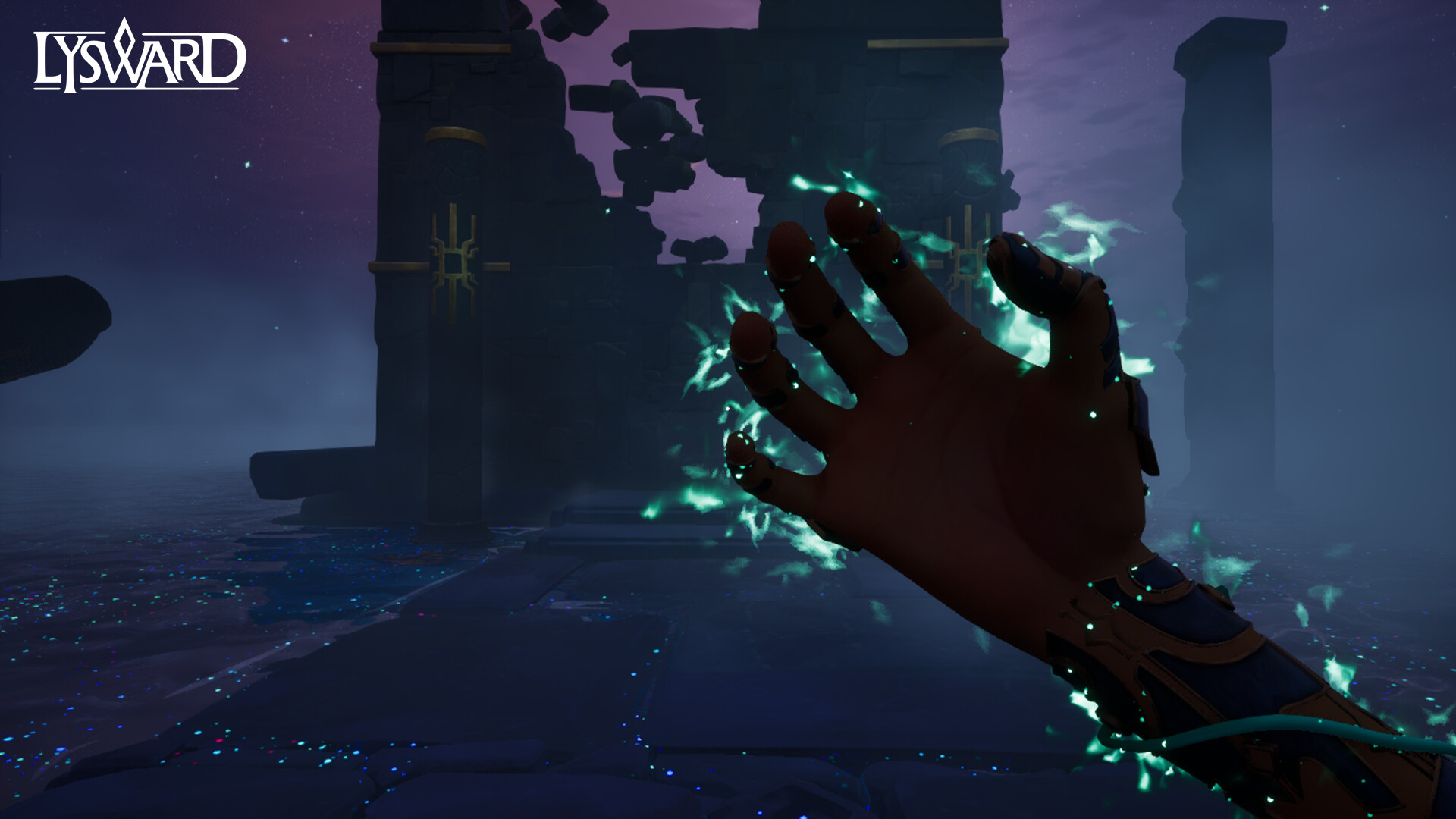
“And that creates something powerful. It gives him a kind of agency that can feel just out of reach in real life: the ability to consciously decide who he wants to be. That idea was very much inspired by Sartre – the belief that we define ourselves through our choices, and that meaning isn’t given to us, but something we create.”
Rather than a lazy vehicle for lore dumps, Kiran’s memory loss becomes a powerful philosophical tool—giving him the existential agency to observe, judge, and ultimately choose his own identity.
Balancing the Burn
Of course, Sartre’s philosophy won’t save you if you stand in the sunlight too long. Making the environment a deadly force has required some delicate balancing, especially as players naturally try to exploit the system.
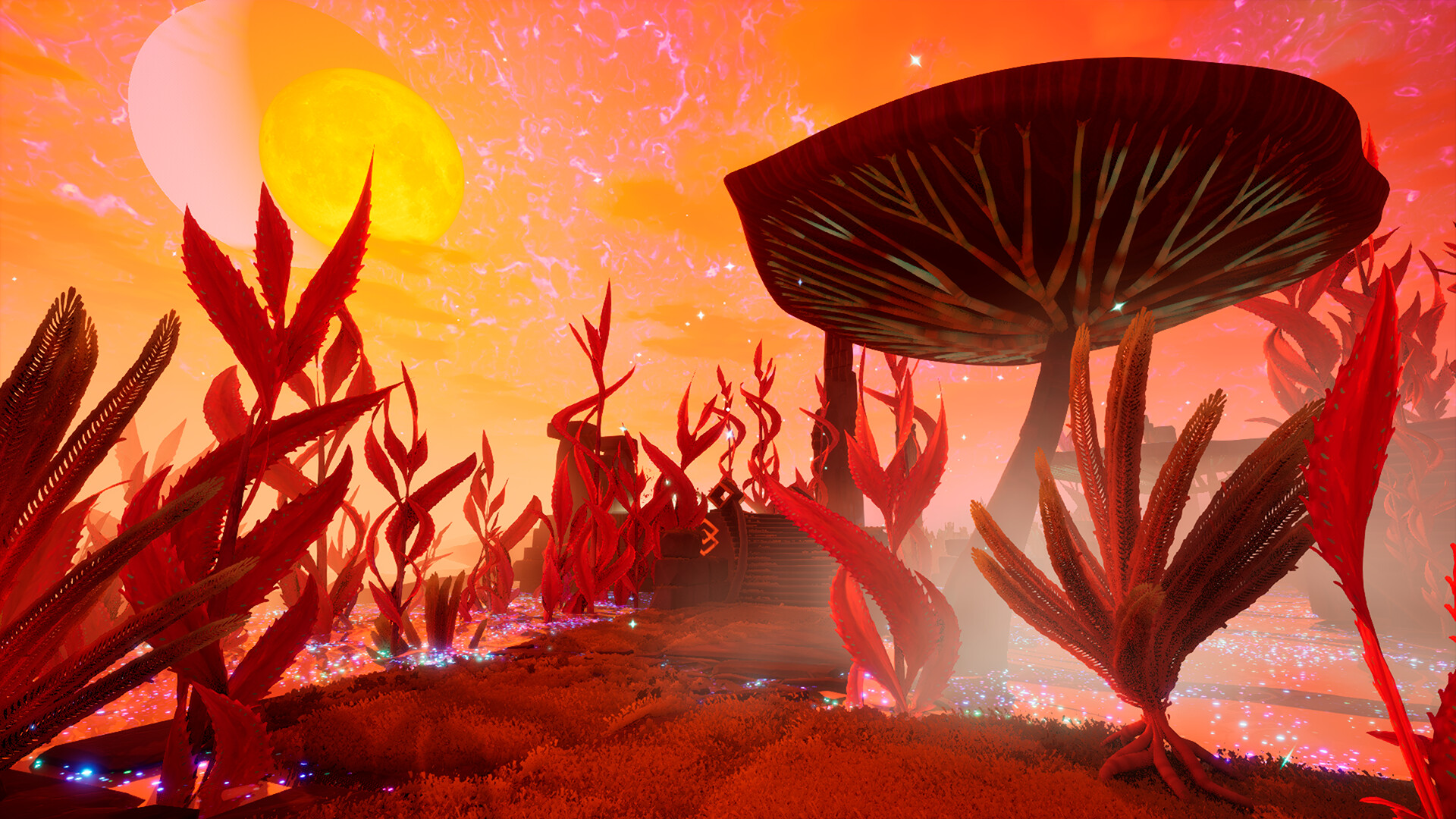
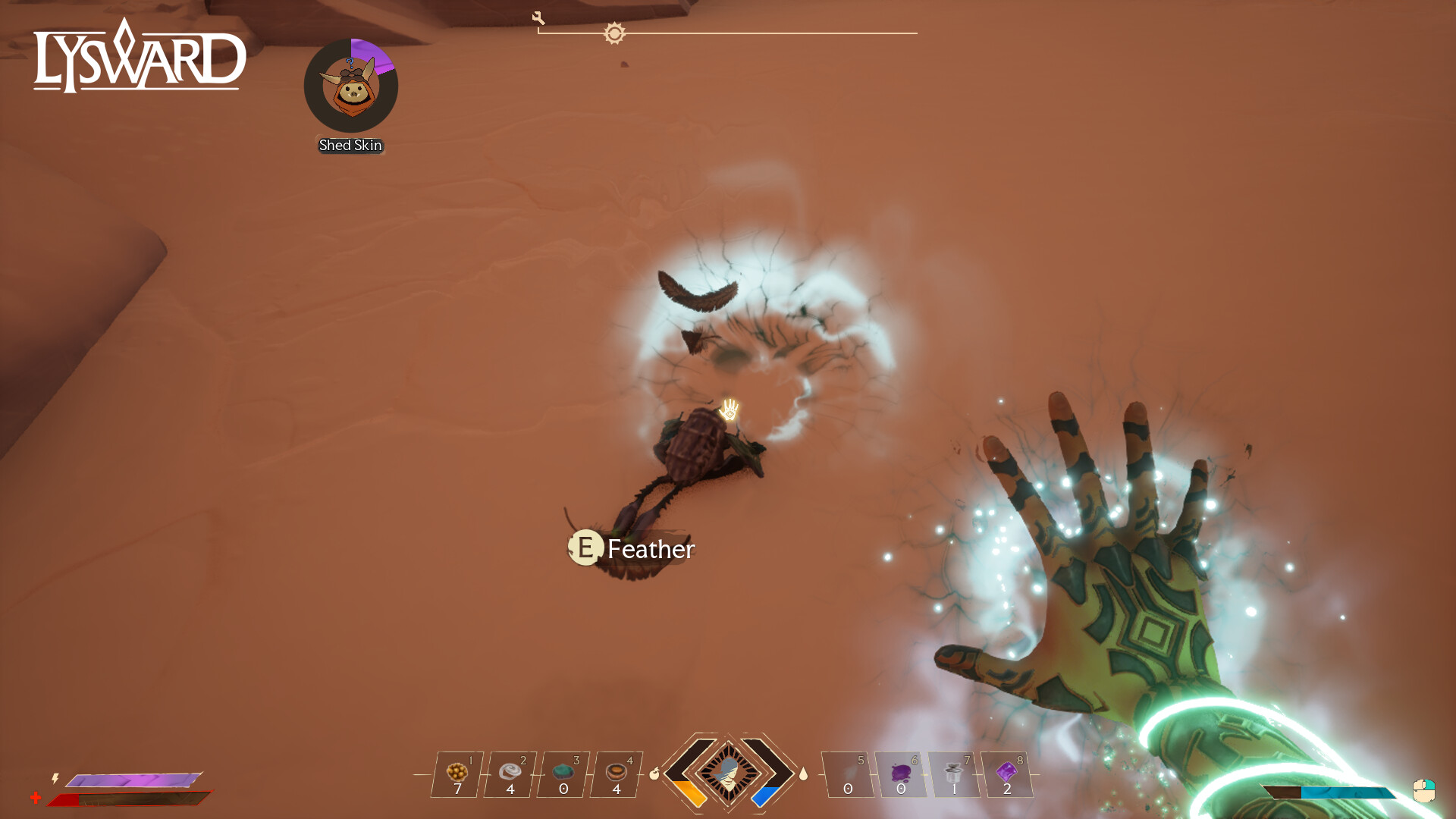
“We have faced a lot of “peekaboo” issues, where the player keeps poking their head in and out of the shadow, and not really respecting the deadly rays of the sun,” they explained. “We are working to give more of an upgradeable path for Amri restoration and make the sun sting a bit more!”
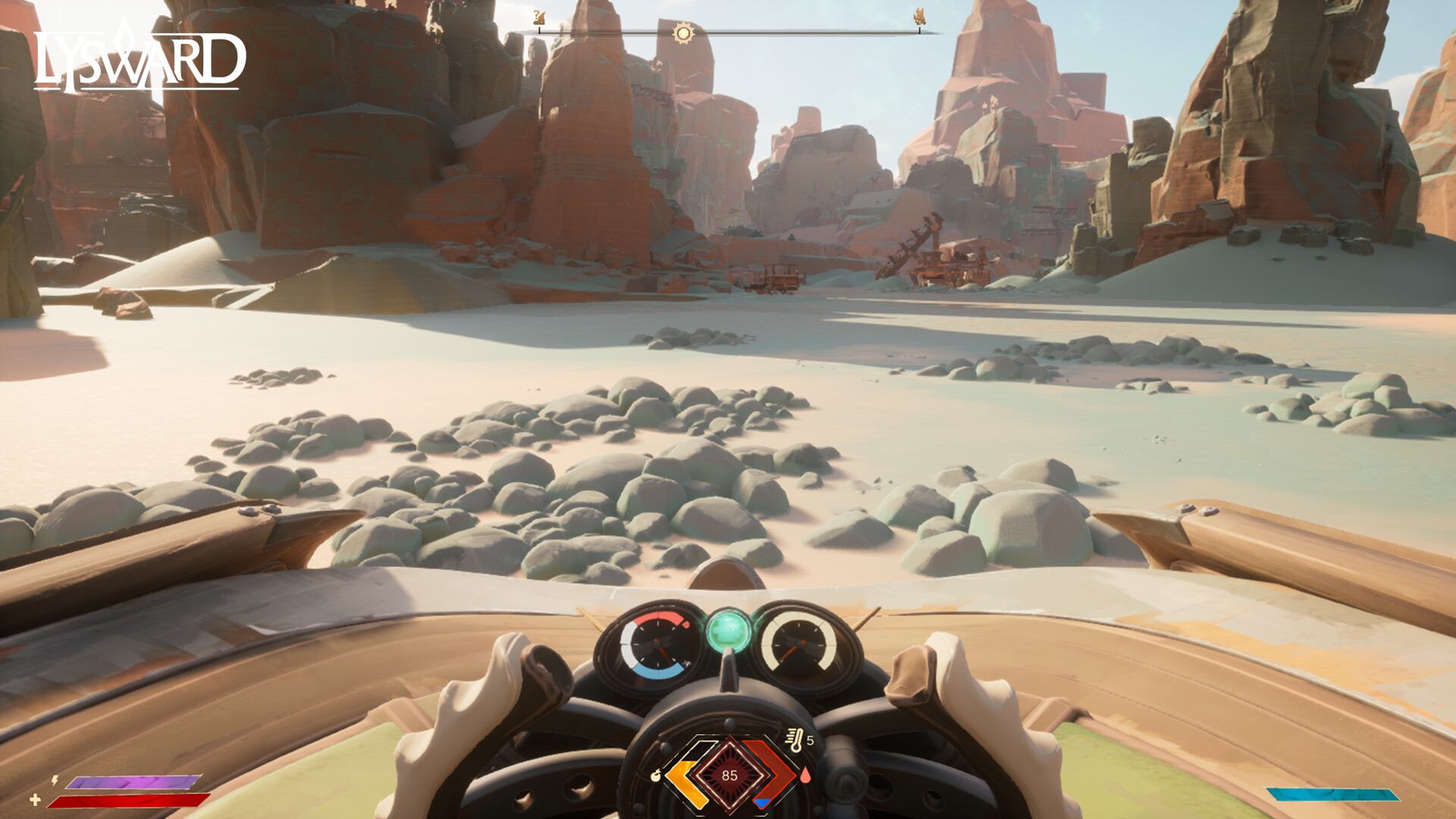
Navigating this wasteland also requires specialized tools. A Speeder was introduced in an early demo to help traverse the dunes, but dropping a fast vehicle into a hostile world presents its own design headaches.
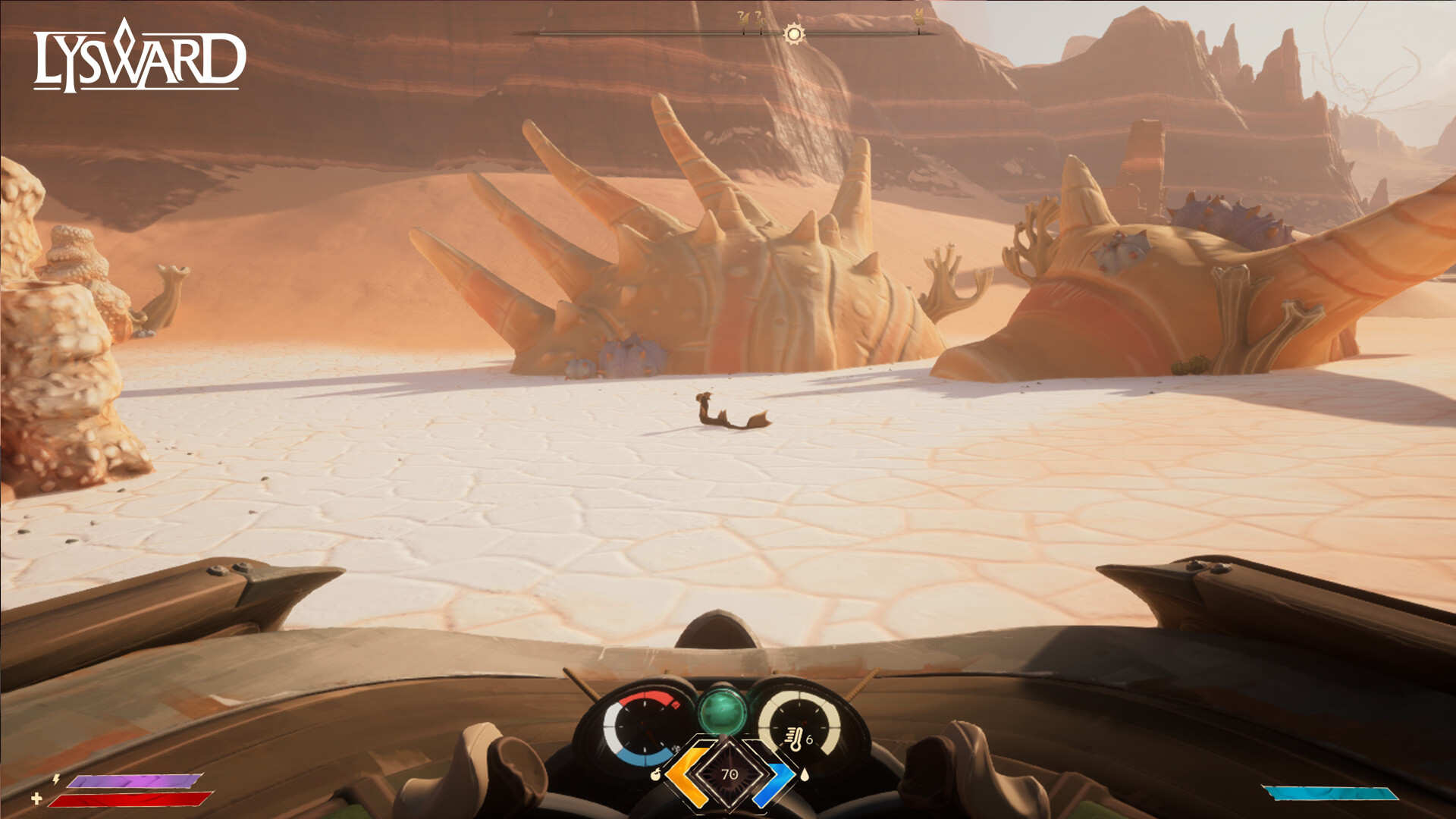
“The speeder is a tricky subject. We are excited about it, which is why an early version made it into the demo, but it needs a lot of work. Refining and balancing to fit better in our world. In the next iteration, expect it to abide by and play more by the rules and limitations of our desert.”
Interestingly, seeing the community try to break the demo has actively shaped the studio’s focus.
“We’ve loved seeing them being surprised by our sun mechanics, and it sets the tone and expectation of what they think is possible. The players started thinking and experimenting with creative ways to survive and navigate the desert. ‘Whats possible?’ That’s something we want to lean even more into. Giving you more freedom in how to survive, and reducing reliance on specific items or gear.”
Community feedback is driving the team to double down on emergent gameplay, aiming to punish players who don’t respect the sun while heavily rewarding creative, out-of-the-box survival strategies.
The Reality of Indie Survival
Kiran doesn’t face this blinding world alone. He’s joined by Gjorna, a constant companion. Because “escort mission” is a cursed phrase in gaming, Snowcastle had to ensure she felt like a genuine asset.
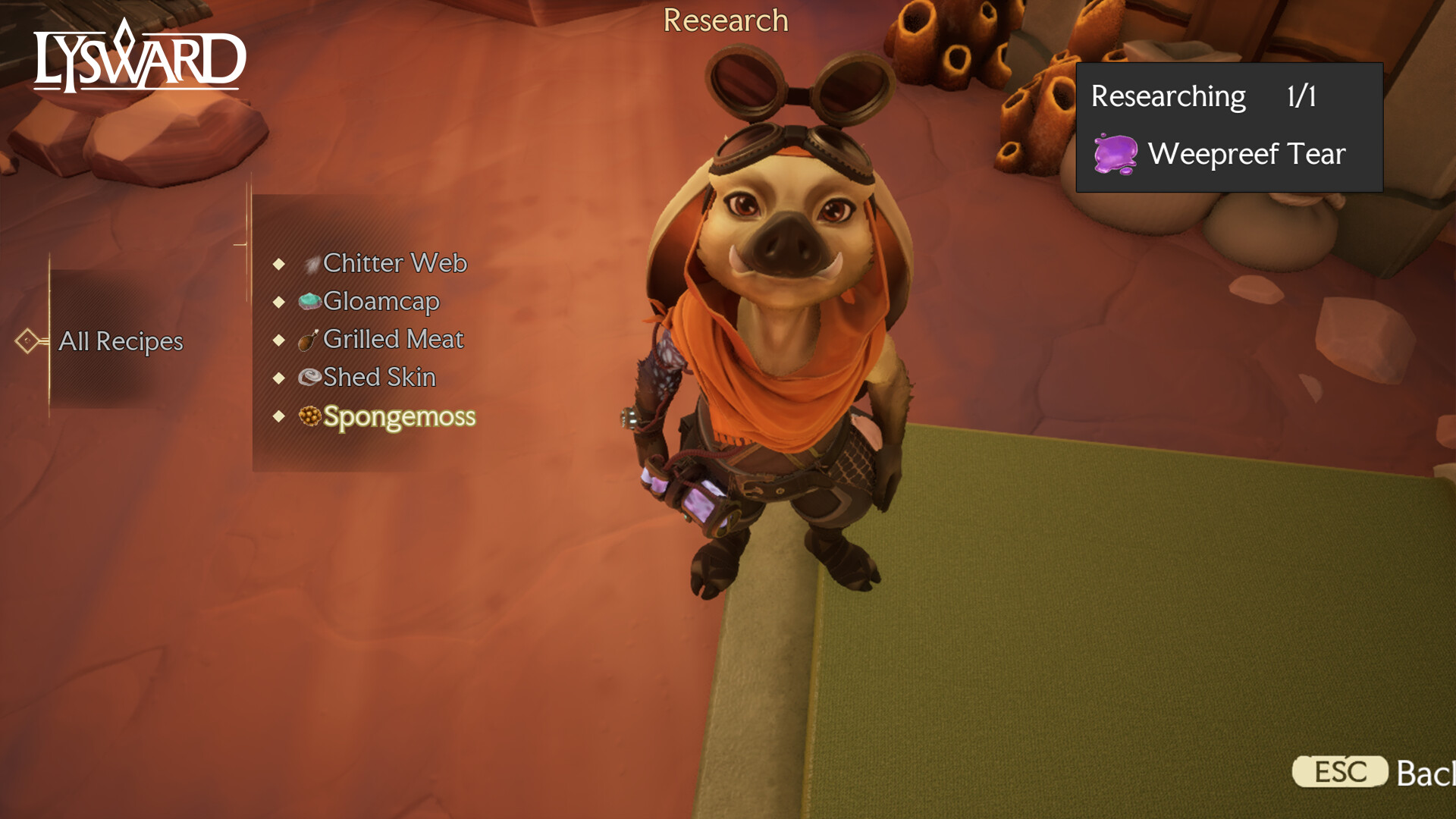
“It’s impossible to tell a story without characters. And we’re a small team, so focusing the effort down to one complex NPC allows us to make her stand out. Gjorna isn’t a blind follower, but rather a character ‘that holds the fort,’ so to speak. She is integral to both the story and how you learn and expand your craftable equipment. We are working to improve the UX of her research, too, and make it more goal-oriented.”
Zooming out from the perilous sands of Umbra, keeping a studio afloat to make a game like this is a survival story of its own. In an era marked by sudden studio closures and mass layoffs, making it 16 years is no small feat. When asked about the secret to their longevity, the team was refreshingly blunt.
“It is a combination of the early goal of building an IP world, a story world of Earthlock, and just pure stubbornness. There have been several times in the past 16 years when any rational and sensible person would have given up. We have been so fortunate to have angel investors who have believed in us and helped out every time when it was needed to save Snowcastle from certain death. That, combined with the generosity of the Norwegian Film Institute, is why we are still here. Well battered and somewhat smarter than when we started.”
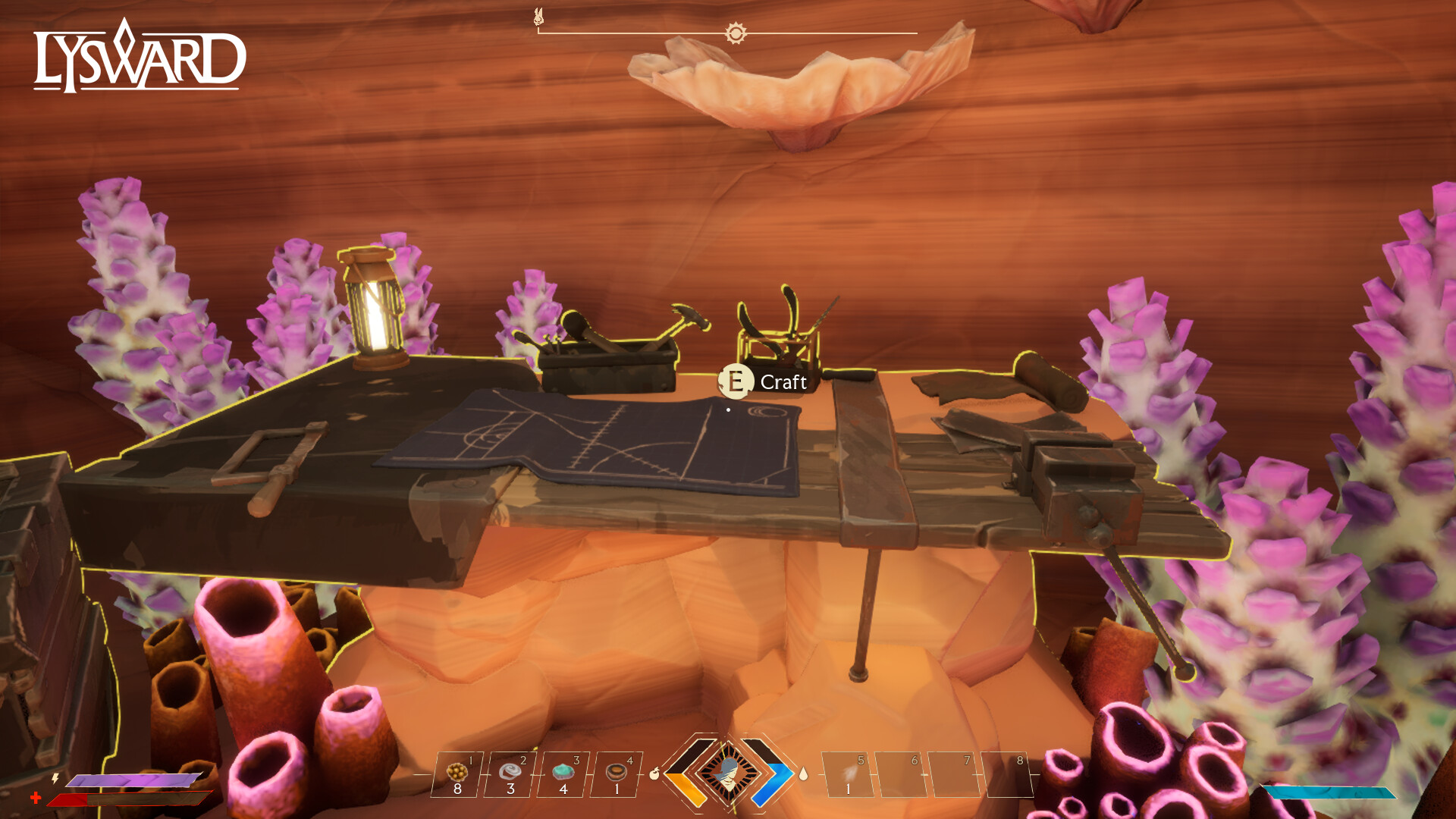
Snowcastle’s remarkable 16-year run comes down to sheer stubbornness, the early vision of building a cohesive IP universe, and the vital lifeline of angel investors and local arts funds.
With a legacy stretching back to Earthlock and forward into the ambitious scope of Lysward, Snowcastle has hard-won wisdom to share. For aspiring developers looking to jump into their own passion projects, their parting advice is simple and tested by fire:
“Just start! Deep dive into it. Try and fail as soon as you can. Things never go as expected, but don’t panic when it gets difficult. Stay cool and focus on the things that you find special. The rest will fall in line or fall off. And that’s usually for the better.”
 Dev & Play Media
Leave a comment