
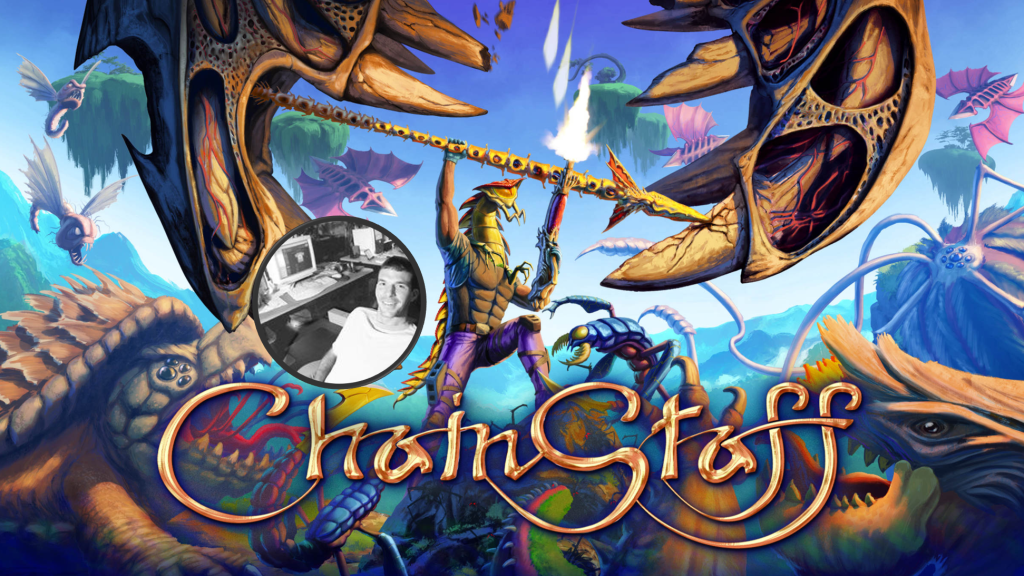
Blood, Chrome, and Bizarre Worlds
Mommy’s Best Games is preparing to drop a bomb of unapologetic, retro-soaked sci-fi carnage. Founded by AAA veteran Nathan Fouts—whose pedigree includes blockbuster hits like Ratchet & Clank and Resistance—the studio has been a staple of the boutique indie scene since 2007. Their latest title, ChainStaff, is a chaotic, hand-drawn fever dream that looks like it was ripped straight from the cover of a vintage prog-rock vinyl.
We sat down with Fouts to discuss the artistic inspirations, gruesome gameplay mechanics, and the secret to surviving over a decade and a half in the indie trenches.
Painting a Heavy Metal Masterpiece
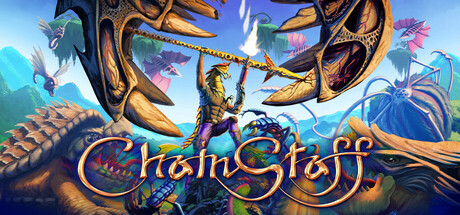
One glance at ChainStaff, and it’s clear the game is dripping with 1970s and 80s heavy metal and sci-fi nostalgia. The hand-drawn aesthetic shuns modern pixel art trends in favor of something far more illustrative and raw. The key takeaway here is that ChainStaff’s visual identity is deeply rooted in the foundational fantasy and sci-fi illustrators of the 20th century.
When asked about the specific album covers and artists that fueled this unique look, Fouts pointed to a pantheon of legendary creators:

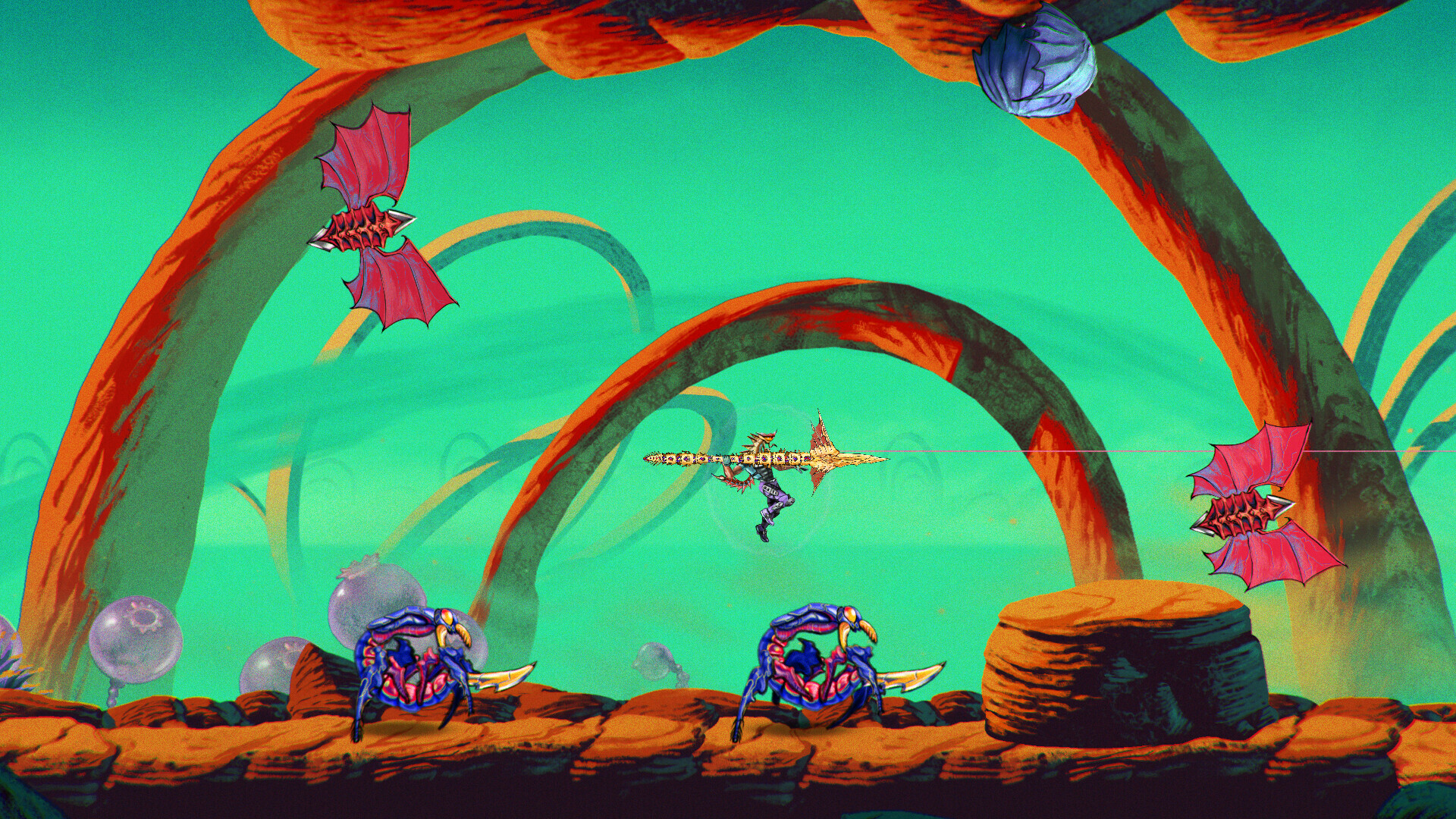
“I was definitely inspired by Yes album covers and the amazing work of artist Roger Dean,” Fouts told us. “But then I was also greatly inspired by art by Frank Frazetta, Michael Whelan, Boris Vallejo, Julie Bell, Bruce Pennington, Mobius, Syd Mead, Jeff Easley, Patrick Woodroffe, Keith Parkinson, and so many more wonderful artists that were big back then! I love their bold color choices, the often textural style of painting, and the imaginative worlds they created.”
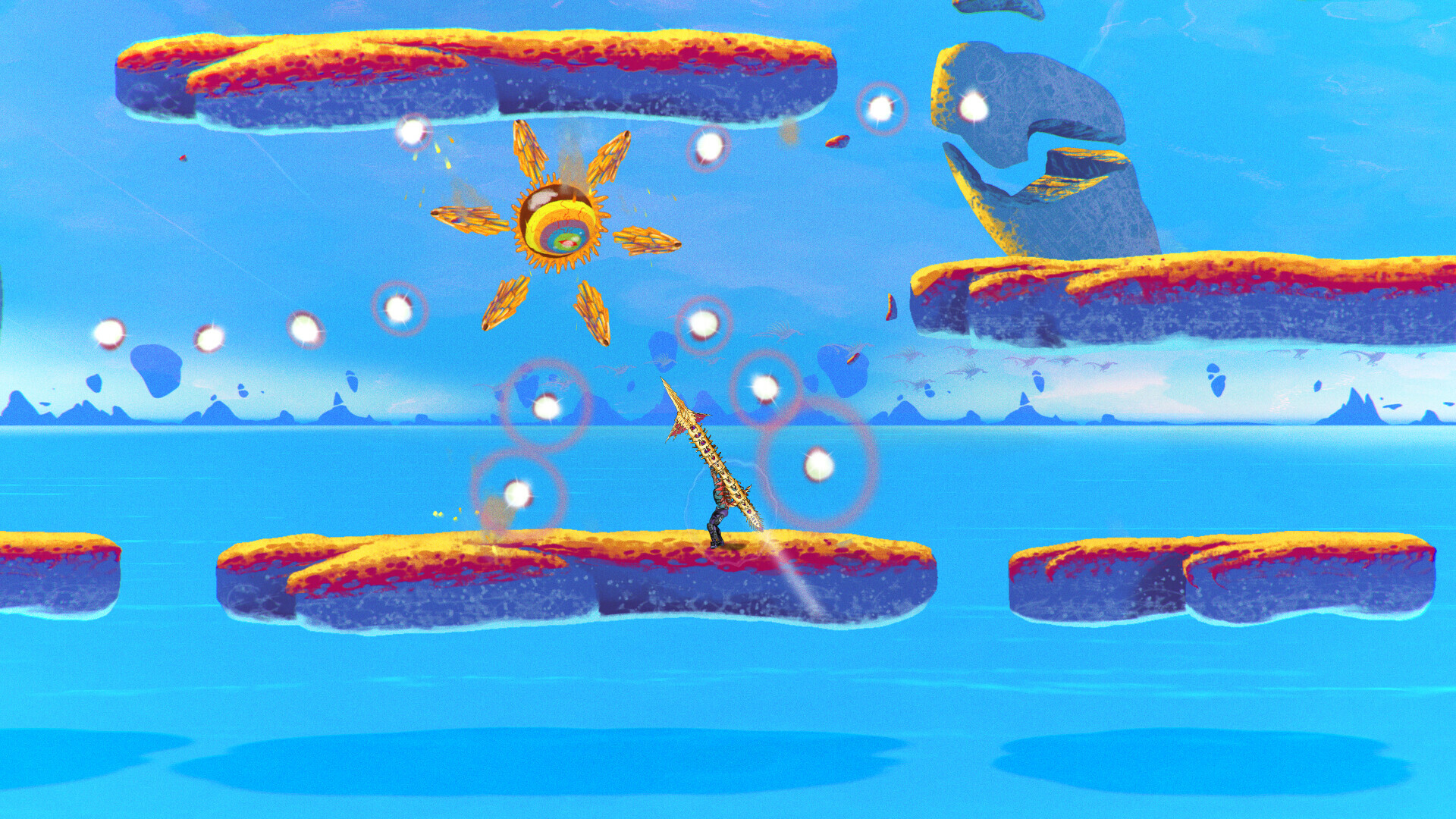
That bold visual flair is paired with a blistering soundtrack composed by Deon van Heerden. However, rather than just blasting a wall of sound at the player, the audio experience is highly reactive. Instead of dictating the pace, the music dynamically shifts between high-intensity metal and low-intensity ambiance based on the player’s immediate actions.
“The gameplay was there first in which the player was in shooting action moments, but then would take their time to look around and explore the weird levels,” Fouts explained. “Deon was instrumental in the dynamic design of the music! It was his idea to create two versions of each track: a high intensity version and a low intensity version. I love this system and all the music he’s created. He got to incorporate so many heavy guitar riffs for the high intensity sound, but also bring in a variety of other instruments even like saxophone and chimes for the low intensity tracks.”
Cannibalism, Tech Trees, and Screen-Filling Bosses
ChainStaff isn’t just a feast for the senses; it actively asks players to make some surprisingly gruesome tactical decisions. The game forces a moral and mechanical dilemma: when finding fallen comrades, do you rescue them, or do you harvest them for parts? This morbid choice directly dictates your playstyle, offering a brilliant risk/reward system where devouring allies grants powerful alien tech but significantly ramps up the game’s difficulty.
“As the player explores a level they will find ‘downed soldiers’ that need help,” Fouts revealed. “The player can decide to rescue them or eat them. This leads to human tech, which the player finds out is ‘additional’ always shooting alongside the main gun. And if they eat soldiers they discover alien tech. This is all about more power but more danger. If the player eats soldiers the other soldiers start to attack, raising the difficulty! I worked hard to create two different styles of play the player gets to experiment with.”
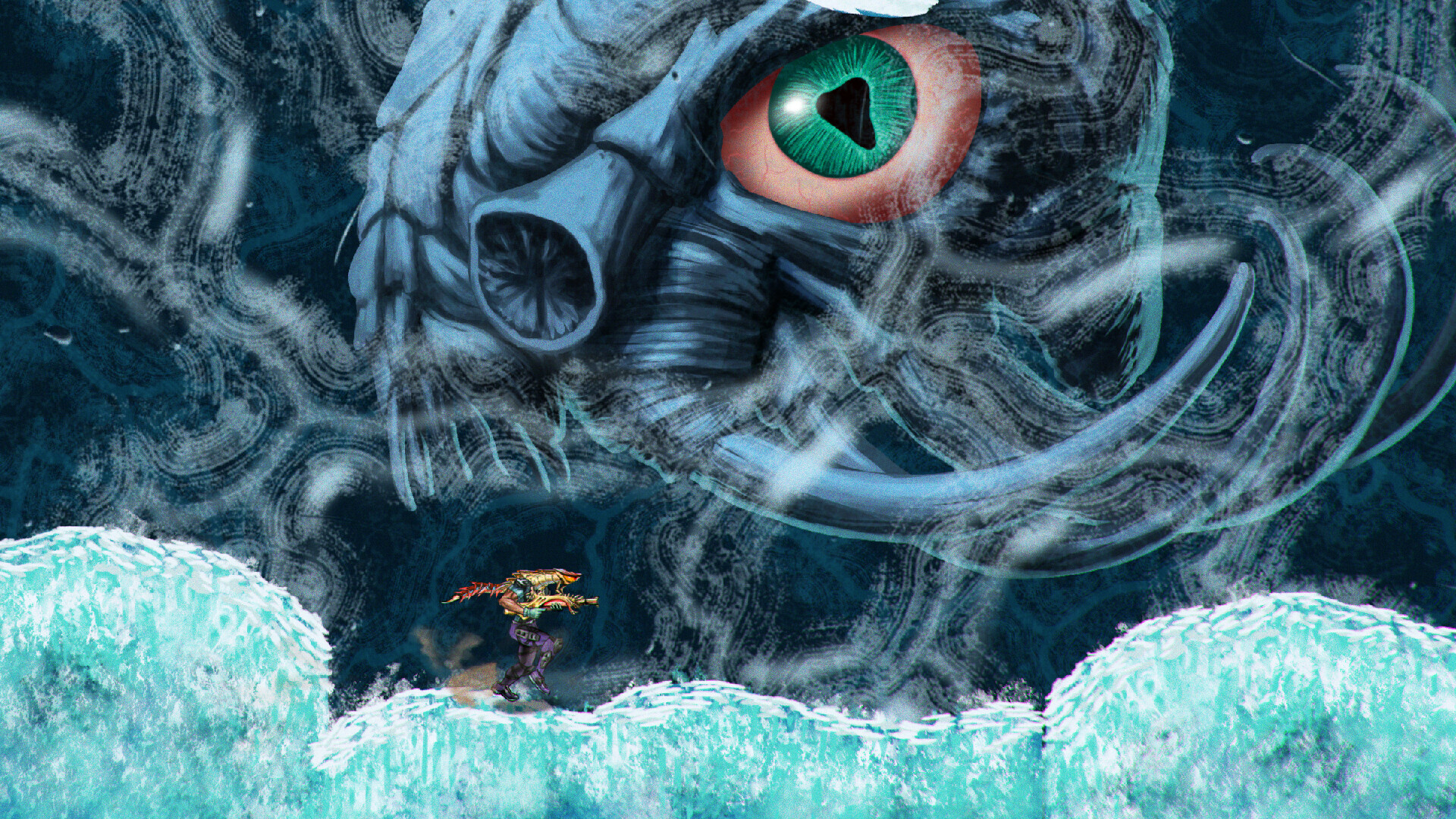
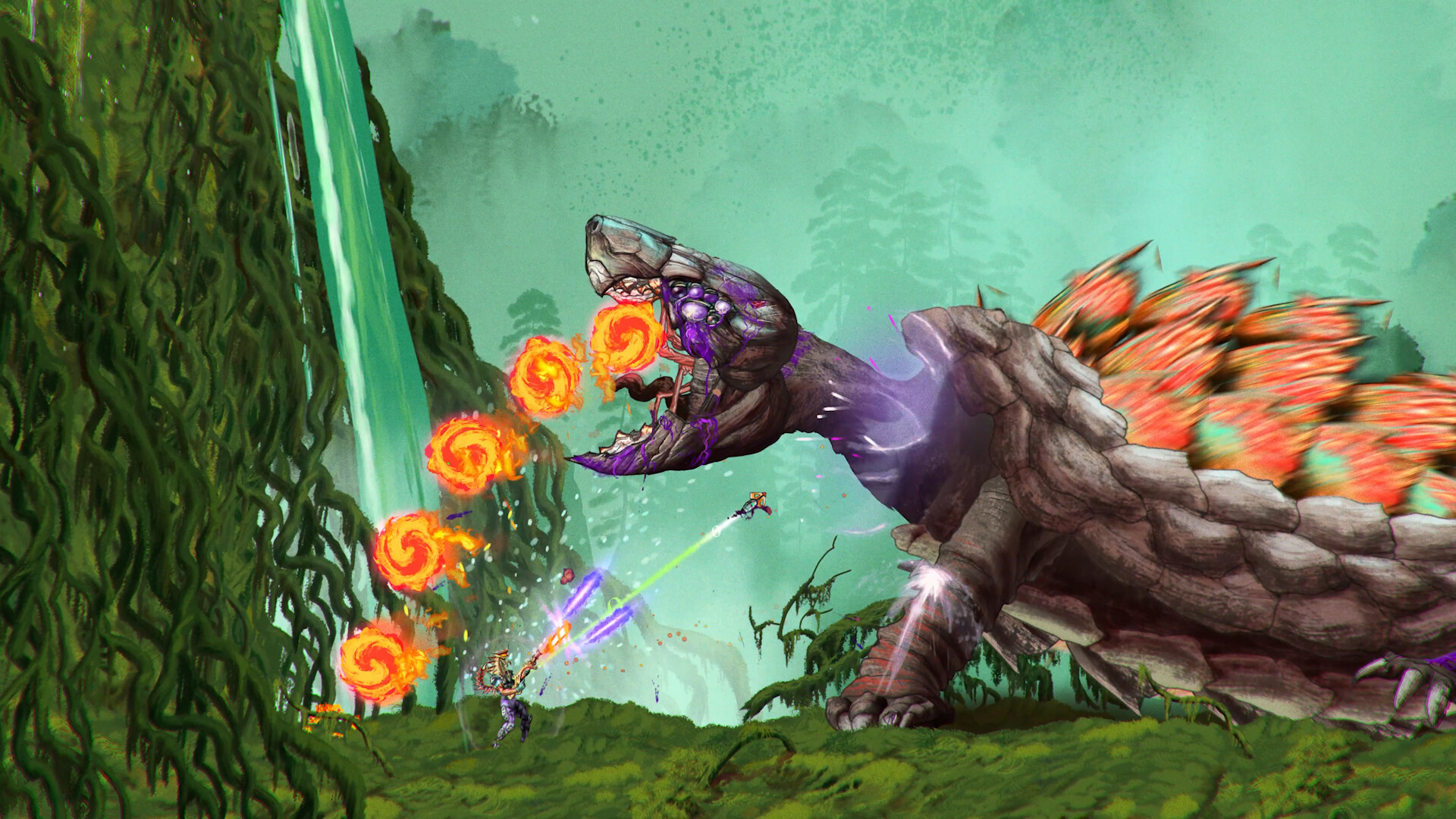
Those distinct playstyles are put to the ultimate test when the player encounters the game’s massive, screen-filling monstrosities. Designing bosses that are both visually imposing and mechanically engaging is a delicate balancing act. Boss encounters in ChainStaff aren’t just bullet sponges; they are intricate puzzles designed to force players to creatively utilize their titular weapon.
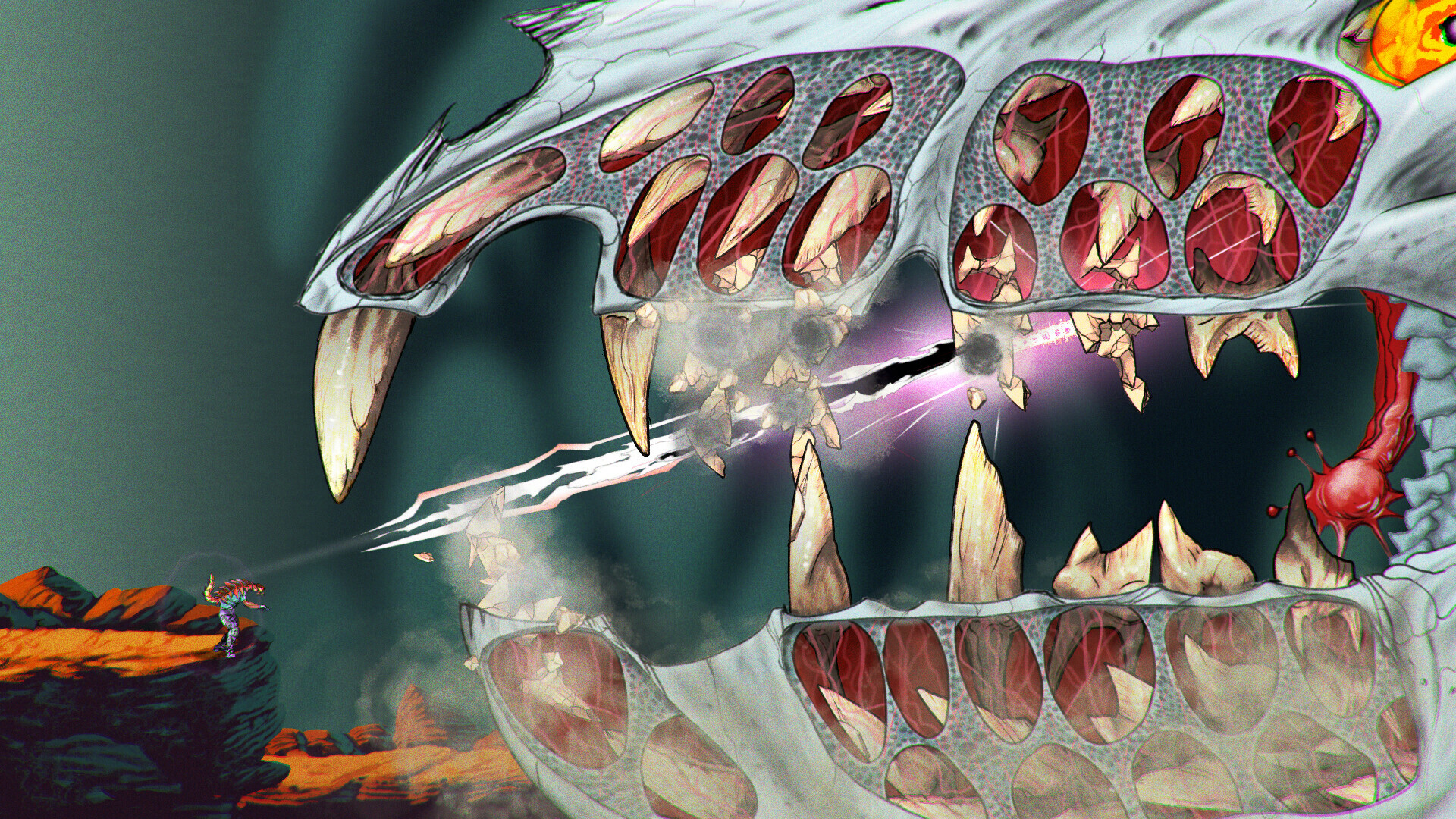
Walking us through his design process, Fouts noted: “I have two different goals for each boss: Can it be an interesting, unique monster design? And how can the player use the ChainStaff and their guns against it. I would brainstorm on paper, creating lists of ‘ChainStaff use’ concept lists and trying to make them work with a specific alien design. Most of the bosses will require and reward the player for using their ChainStaff against them.”
The AAA Influence and Indie Longevity
Fouts is no stranger to crafting memorable arsenals and enemy encounters. His time at Insomniac Games on massive PlayStation franchises clearly left a lasting mark on his development philosophy. Despite the self-described “janky” charm of his indie titles, Fouts brings a relentless, AAA-tier dedication to player satisfaction and post-launch polish.
“I think it brings an element of professional polish to my games,” he said of his AAA background. “My games are still pretty janky, but I always keep up with making them, patching them and listening to the players. I like players to know that I want them to have a great time, and Insomniac Games always felt like this. They listen to players and want to create a great game for them.”
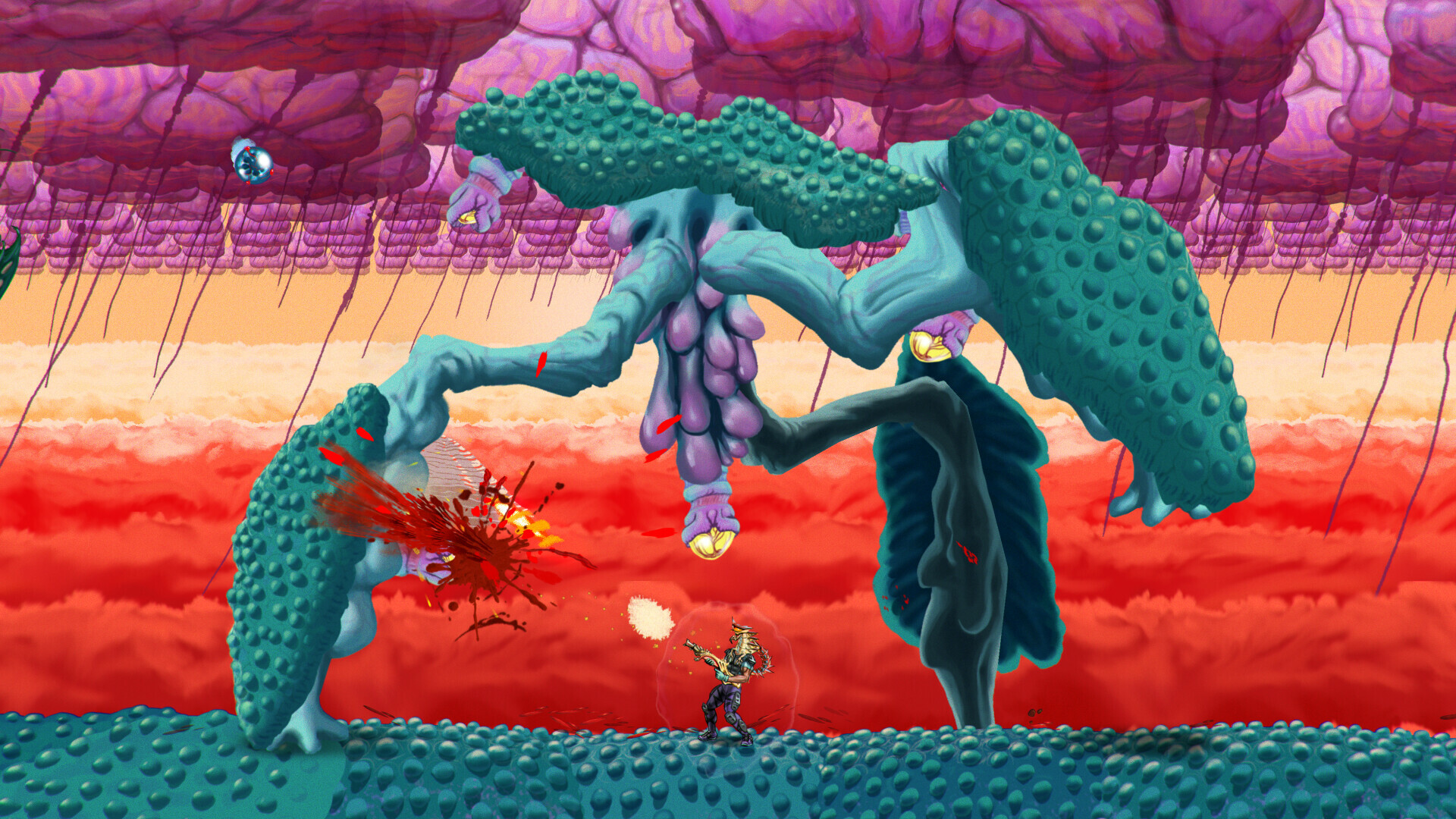
That dedication to the player experience extends to the game’s overall structure and replayability. Originally slated as a tight 4-6 hour adventure, the scope has organically grown. With 10 levels, 3 endings, and a New Game+ mode, ChainStaff is built for sequence-breaking and speedrunning, rewarding players who master its mechanics.
“Well for starters the game is now 6 to 8 hours long! I guess it’s not quite so tight,” Fouts laughed. “But that’s only for the first playthrough. After the players have beaten the game and gotten an ending they can retry it. The next time they will know how levels are unlocked, and that they can pick a new path through the game, getting upgrades ‘out of order’ and probably beating it much faster. I worked really hard to create several different upgrades and level structure pieces to let the game ‘unfold’ and players feel good about learning its style and how to go even faster.”
Mommy’s Best Games has been surviving—and thriving—in the notoriously volatile indie scene since 2007. When asked about his secret to studio longevity, Fouts’s answer was refreshingly grounded and entirely separate from code or marketing:
“Have a loving partner (my wife) that supports your work!”
As our conversation wrapped up, we asked Fouts what advice he would give to new developers trying to make their first game stand out in an increasingly crowded digital storefront. His advice was incredibly practical: Before writing a single line of code, developers should create visual mock-ups to ensure their game cannot be mistaken for anything else on the market.
“Do some mock-up art of what a screenshot could look like for your new game. Does it look like something new? Or could it be mistaken easily for some other game? I like to try to work on mock-ups until I have something really interesting looking that looks like a new game.”
ChainStaff certainly looks like nothing else on the market. If you want to dive deeper into the bizarre world Fouts is building, you can join his community on Discord at chainstaffgame.com.
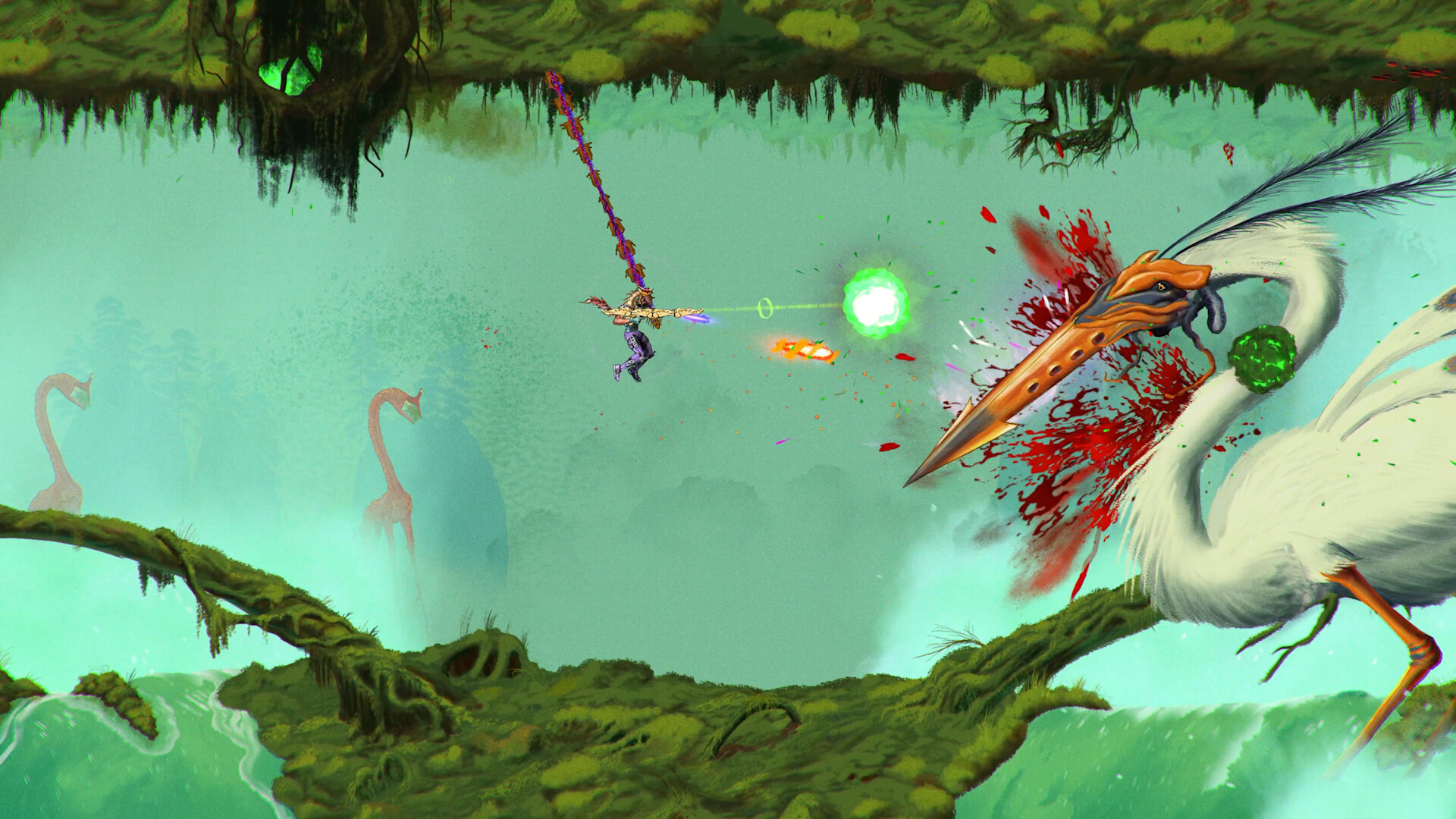
ChainStaff launches April 8th on Nintendo Switch, PlayStation, Xbox, and Steam.
 Dev & Play Media
Leave a comment