
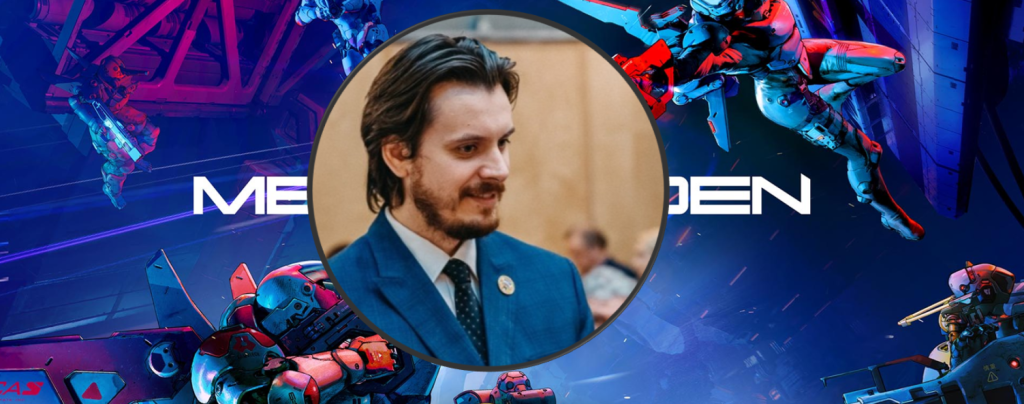
Metal Eden is an amazing adrenaline-fueled project from insanely talented Reikon Games. The game boldly trades traditional chest-high walls for skyborne megastructures and razor-sharp acrobatics. We really wanted to understand the psychological architecture and high-speed design philosophies behind this ambitious title. So, normally, we sat down with Jakub Izydorczyk, Brand Director at Reikon Games.

Our conversation delved into the stark, cinematic inspirations behind the game’s dual worlds, the terrifying intelligence of its enemies, and the massive technical gambles the studio took to bring their vision to life.
The Psychology of Concrete and Steel
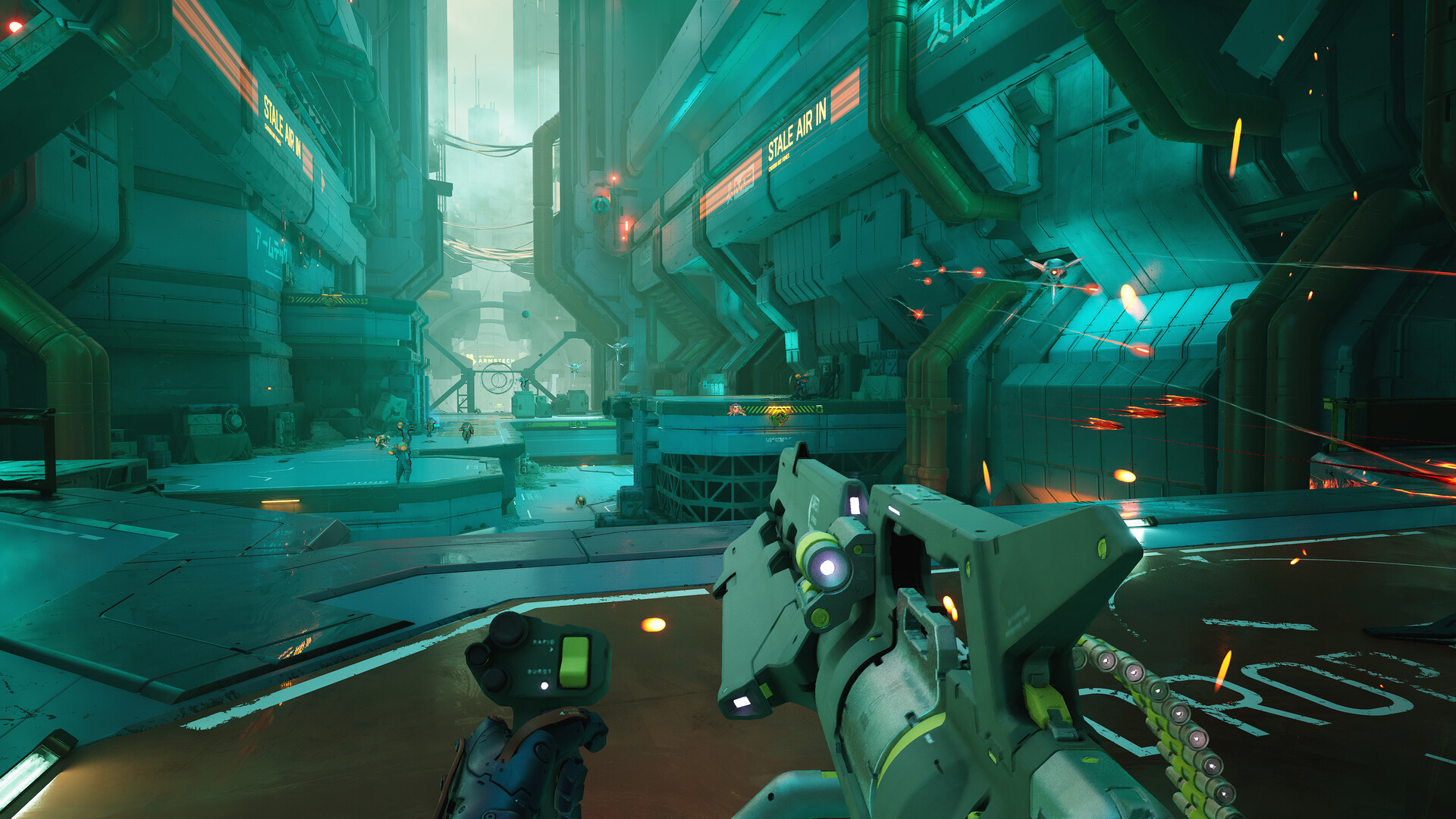
When you first step into Metal Eden, you are immediately struck by its imposing visual identity. It is a game of two contrasting halves: the pristine, skyborne city of MOEBIUS, and the scarred, ruined surface of VULCAN. I asked Izydorczyk what initial spark set the foundation for these distinct environments, and how they drew upon outside artistic influences.
“The game began with a feeling: that something beautiful had gone cold,” Izydorczyk explained. “That a world built to last had lost track of its original purpose — and was still running anyway. From that idea came the two core environments: MOEBIUS, a skyborne city of perfect systems and psychological balance, and VULCAN, a surface world scarred by erosion, failure, and things left buried.”
He elaborated on how these spaces were designed to evoke specific emotions from the player, rather than just serving as a backdrop for gunfire.
“MOEBIUS draws heavily from brutalist architecture, urban megastructures, and high-function, low-emotion infrastructure. It’s designed to feel imposing without being violent — a city built by intelligence, not empathy. The kind of place where everything is working, but no one is really living. Visually, it carries influences from hard sci-fi cinema and anime, especially works like Ghost in the Shell, where the environment isn’t just a backdrop — it’s a system you’re trapped inside. Light and shadow were key — symmetry, depth, scale. You’re not meant to feel small. You’re meant to feel measured.“
The surface below, however, tells a different story of a failed utopia.
“VULCAN is the inverse: chaotic, fragmented, covered in dust and static. But it’s not wild. It’s precise in its collapse — as if someone once tried to terraform order into it and failed halfway through. The ruins, craters, and incomplete machines aren’t just set dressing. They carry weight. Memory. Unresolved architecture. In the end, it’s not just about how the world looks — it’s about how much of it still watches you.”
Rewriting the Rules of Movement
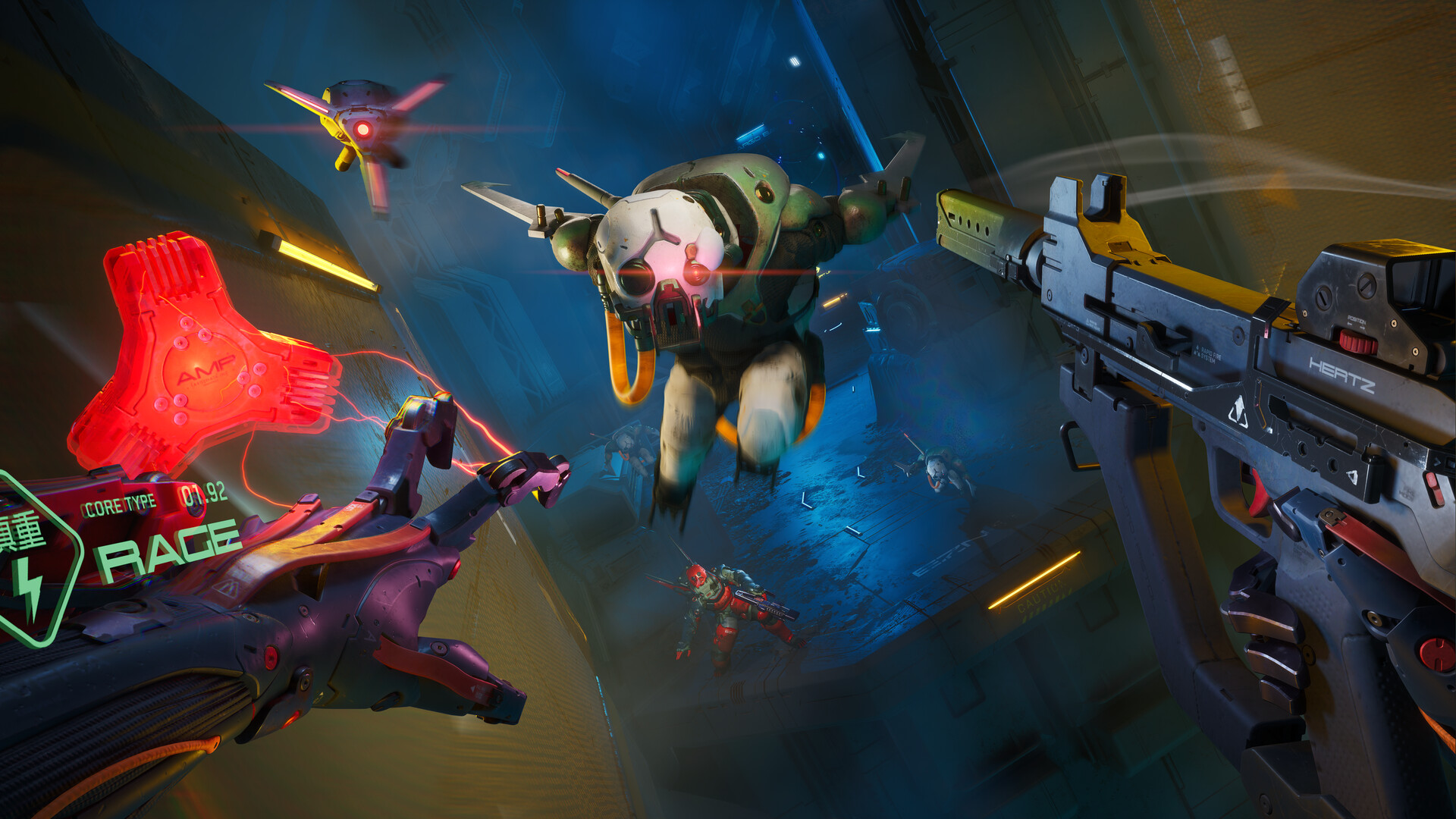
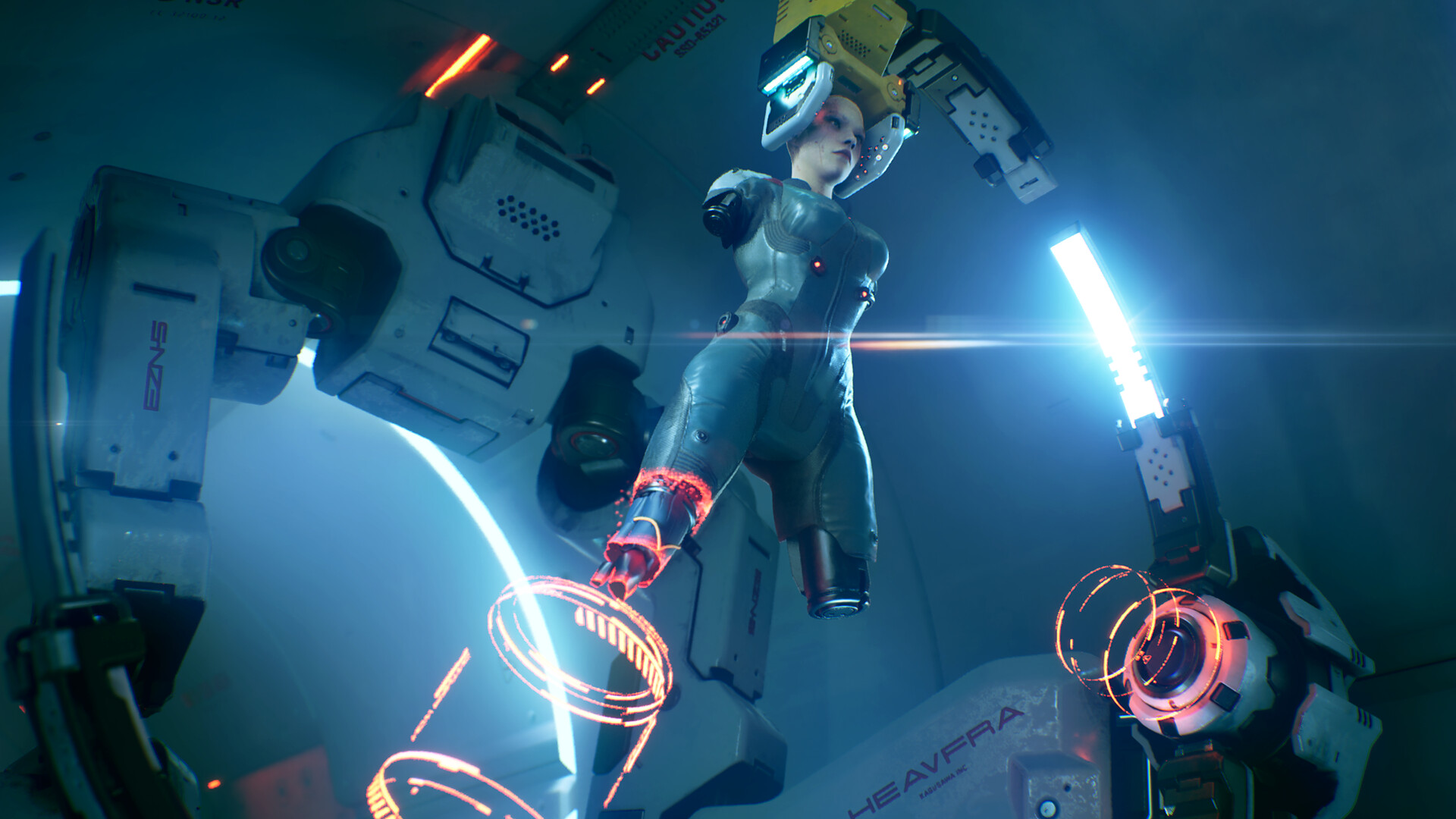
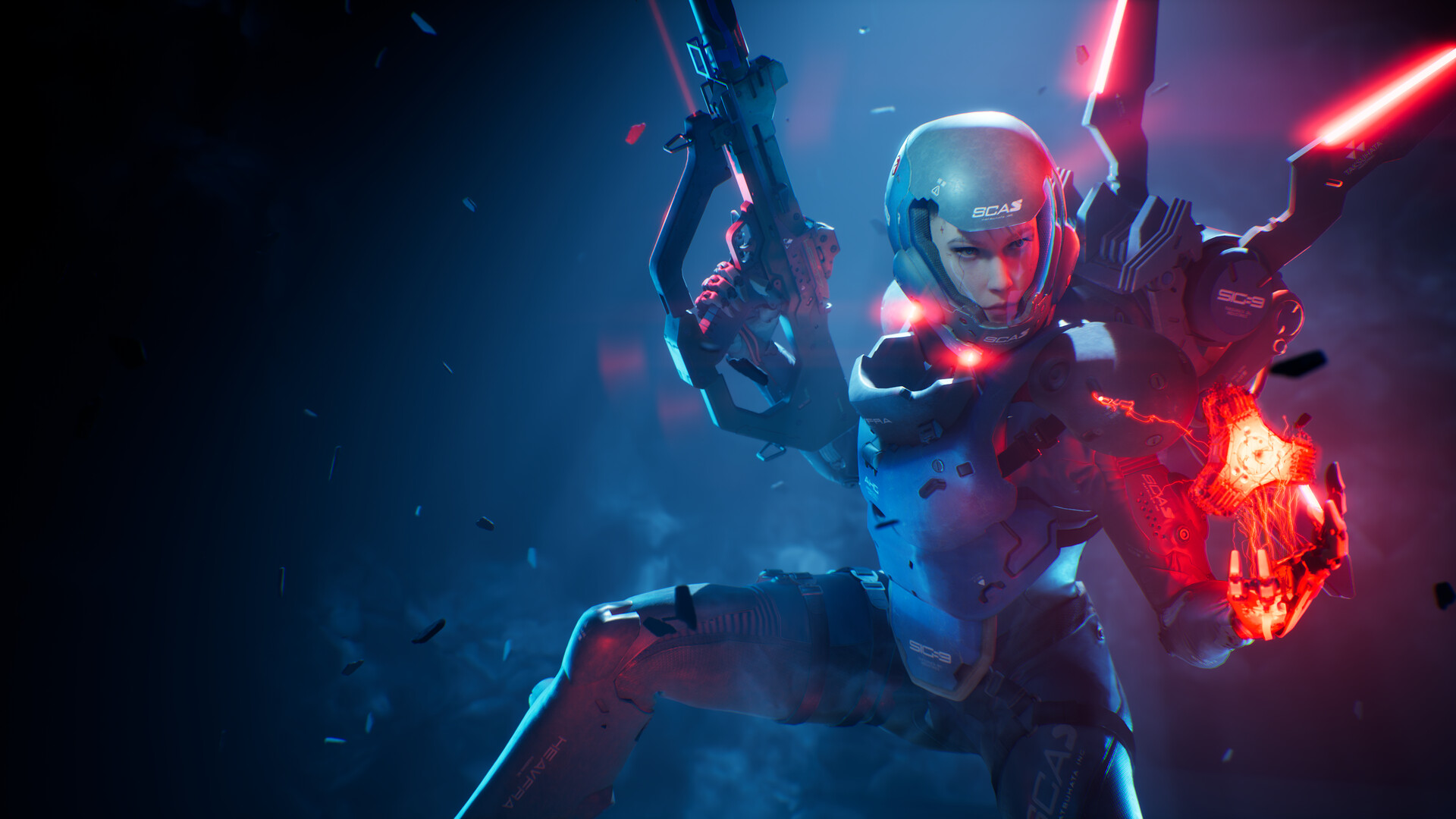
Navigating this watchful world is the HYPER UNIT ASKA, a protagonist equipped with a staggering array of movement abilities. Between high-speed parkour, wall-running, grappling, and jetpack flight, ASKA is a kinetic force of nature. But designing levels to accommodate—and challenge—that level of freedom is a monumental task.
“The biggest challenge was density,” Izydorczyk noted. “ASKA moves fast, vertically, and in bursts — which meant that environments couldn’t be built like traditional FPS arenas. We had to constantly ask ourselves: how do we reward movement without overwhelming the player? Every surface became a potential tool — a launch point, a wall-run path, a grapple target. Maintaining visual clarity was crucial. You need to be able to read the environment while moving at full speed, so we worked a lot with landmarking, negative space, and layered depth. And because ASKA can re-enter combat from almost any angle, we had to design encounters that were fluid and reactive — not overly scripted or flat.”
This extreme verticality meant the team had to completely rethink how a firefight should flow. I asked how this aerial focus influenced their encounter design compared to the grounded shooters players are used to.
“We had to unlearn a lot of classic FPS structure. Ground-based shooters often rely on cover, line of sight, and choke points. But in METAL EDEN, the sky is your escape route — or your attack vector. Every combat space had to become a multi-layered playground. This meant enemy placement needed to account for altitude as much as distance. It also meant giving the player moments to chain movement into offense — wall-run into a jetpack burst, gravity hook into a midair slash, and so on. Our goal was to keep the flow high — not just by giving the player tools, but by building encounters that demand you use them creatively.”
The Reactive Threat
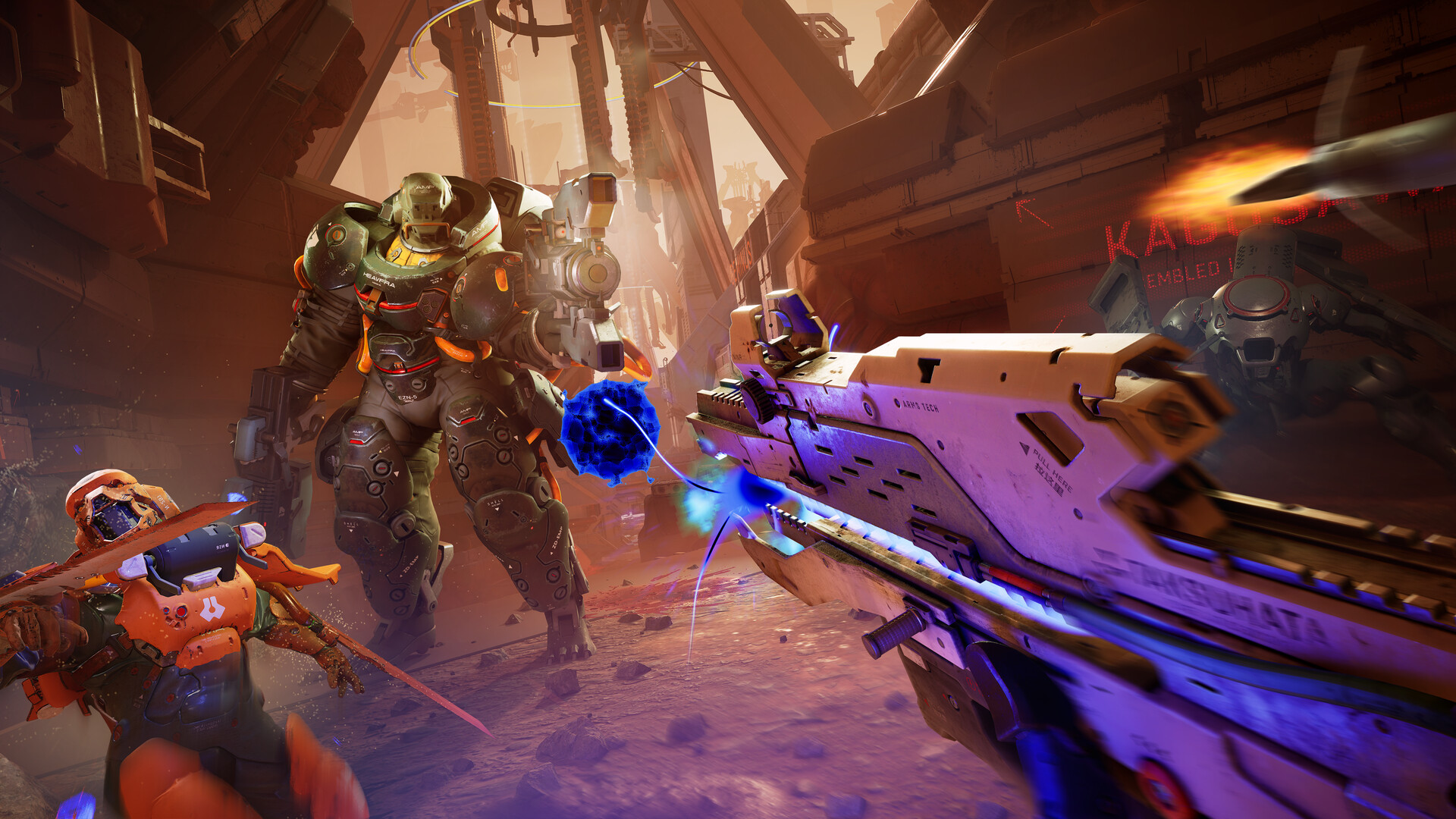
Of course, a multi-layered playground is only fun if the opponents can keep up. To counter ASKA’s agility, Reikon introduced the INTERNAL DEFENCE CORPS. Ensuring this roster felt diverse, challenging, and fair against a nearly flying protagonist required a distinct approach to AI.
“When the player is fast, enemies have to think fast,” Izydorczyk warned. “The INTERNAL DEFENCE CORPS are built as reactive systems — they read your actions, try to close distance, suppress, or disrupt your rhythm. We designed each enemy type around a specific pressure. Some lock down vertical paths, some force you to keep moving horizontally, others bait you into close quarters. The diversity came not just from how they attack, but from how they change the space around them. Fairness was a constant balancing act — especially since ASKA has tools like Ball form or gravity hooks — so we used cooldowns, stagger timings, and predictable ‘tells’ to let players outplay them without removing challenge.”
Technical Gambles and Killed Darlings
Maintaining the visual clarity Izydorczyk mentioned earlier, especially at blistering speeds, was no small feat. During development, Reikon Games made a perilous, highly unusual decision: they switched game engines mid-flight.
“Switching game engines in the middle of production is never ideal — but that’s exactly what we did,” he admitted. “METAL EDEN began development in Unreal Engine 4, but as the project grew in scope and visual ambition, we made the decision to transition to Unreal Engine 5. That shift came with both opportunity and risk: new tools, better lighting, improved streaming — but also reworks, instability, and re-optimizing entire systems we’d already built.”
The gamble, however, was born out of absolute necessity for the game’s core gameplay loop.
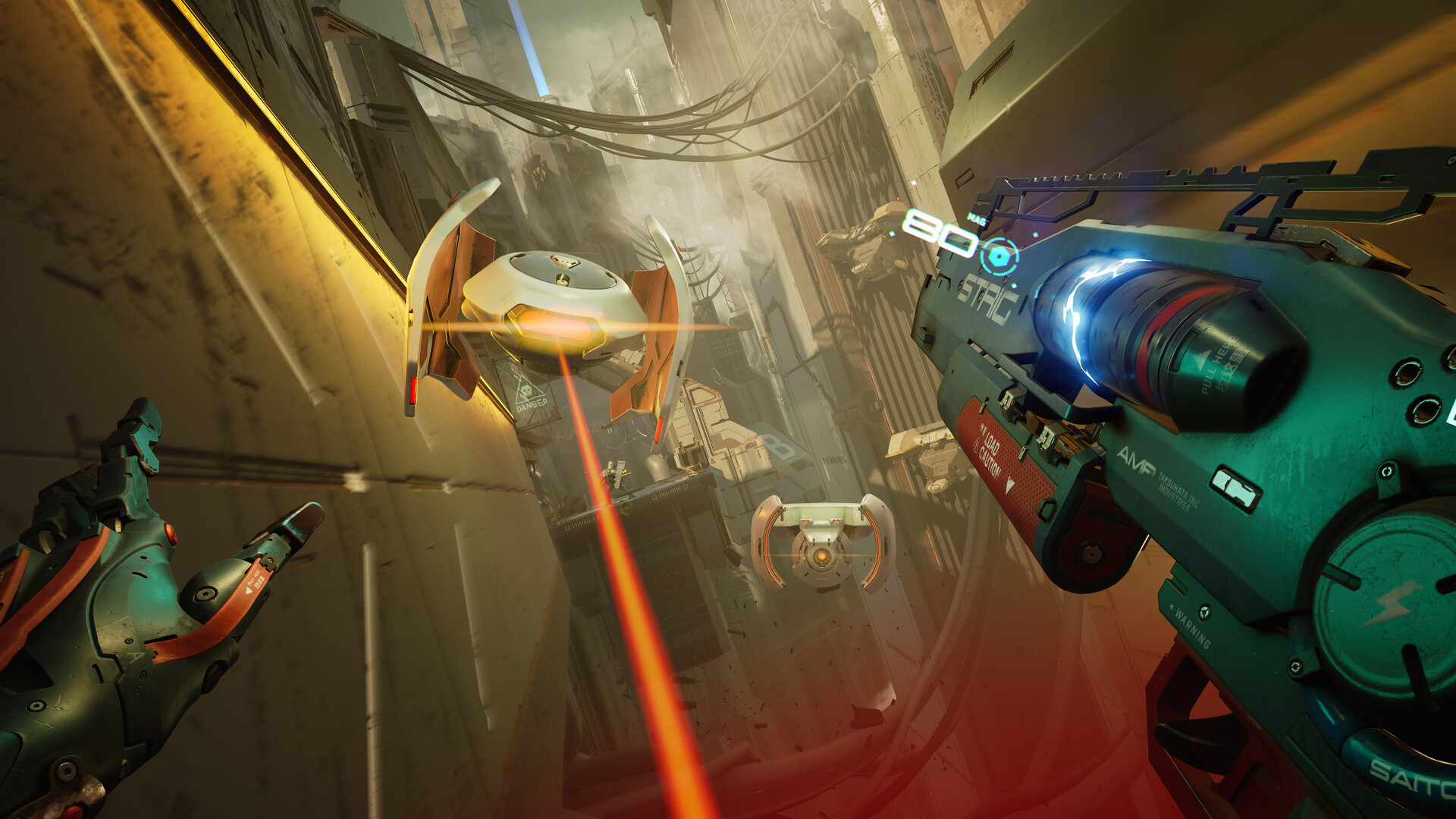
“One of our core goals was visual clarity at high speed. ASKA moves fast — dashing, wall-running, grappling mid-combat — and we needed the game to read instantly, even during chaos. That meant pushing for clean silhouettes, smart VFX, and careful lighting choices, not just raw fidelity. UE5’s features like Nanite and Lumen helped elevate the look of the world, but integrating them without compromising performance — especially across platforms — became a serious challenge. In the end, it paid off. The game runs smoothly, looks exactly how we imagined it, and still delivers the moment-to-moment clarity players need when they’re making split-second decisions at 60+ FPS. Getting there was a massive effort — but essential to making METAL EDEN feel as sharp and responsive as it does.”
Game development is also about sacrifice. I was curious to know what features the team was passionate about that ultimately had to be left on the cutting room floor. Izydorczyk pointed to a mechanic that sounds incredible on paper, but ultimately broke the game’s delicate pacing.
“Originally, we wanted the BALL FORM to be fully available across the entire game — something you could trigger at any time for traversal, combat, or just raw chaos. The idea was to give players that extra layer of mobility and destruction, whenever they wanted. But in practice, it didn’t work. Outside of carefully designed spaces, the freedom it offered often clashed with level readability, broke pacing, or undermined other mechanics. On open terrain or multi-level interiors, it either trivialized encounters or caused unexpected bugs with geometry, AI, or pathing. It just wasn’t as satisfying when it wasn’t curated. So instead, we re-scoped it into specific moments — dedicated sections where the form could shine. That way, we could lean into its strengths: momentum, power, spectacle. It became a tool for contrast, not just chaos — and while it meant letting go of the original ‘use-anywhere’ concept, the end result felt tighter, more deliberate, and far more impactful.”
Staying True to the Vision
Now that the dust has settled and Metal Eden is out in the wild, I asked Izydorczyk what aspect of the project the team is most proud of. His answer was simple, yet profound in an industry often driven by trend-chasing.
“We’re proud that we actually made the game we set out to create. METAL EDEN stayed true to the vision — a sharp, stylish, movement-first shooter layered with mystery and worldbuilding. We didn’t chase trends. We didn’t cut corners. We built a game that reflects what we, as a team, believe in: tight mechanics, bold atmosphere, and trust in the player’s intelligence. It took time, iteration, and a lot of stubbornness — but what’s out there now is ours, fully and honestly. That’s what we’re most proud of.”
To wrap up our time, I asked if he had any advice for the aspiring indie developers who look up to studios like Reikon Games as they tackle their first big projects. His parting words serve as a crucial reminder for anyone in the creative space:
“Make the game you actually want to make. Don’t try to predict the market. Don’t build around what’s trending. And definitely don’t let early criticism define your vision before you’ve even found your voice. You’re going to hear a lot of opinions. Some will be useful. Most won’t matter. What does matter is that you stay connected to your core idea — the part of the project that means something to you. That’s what will carry you through the long, difficult parts of development. You can’t control reception. You can’t guarantee success. But if you stay true to what you believe in creatively — you’ll at least end up with something you’re proud of. And that’s the only real way to build something that lasts.”
 Dev & Play Media
Leave a comment