
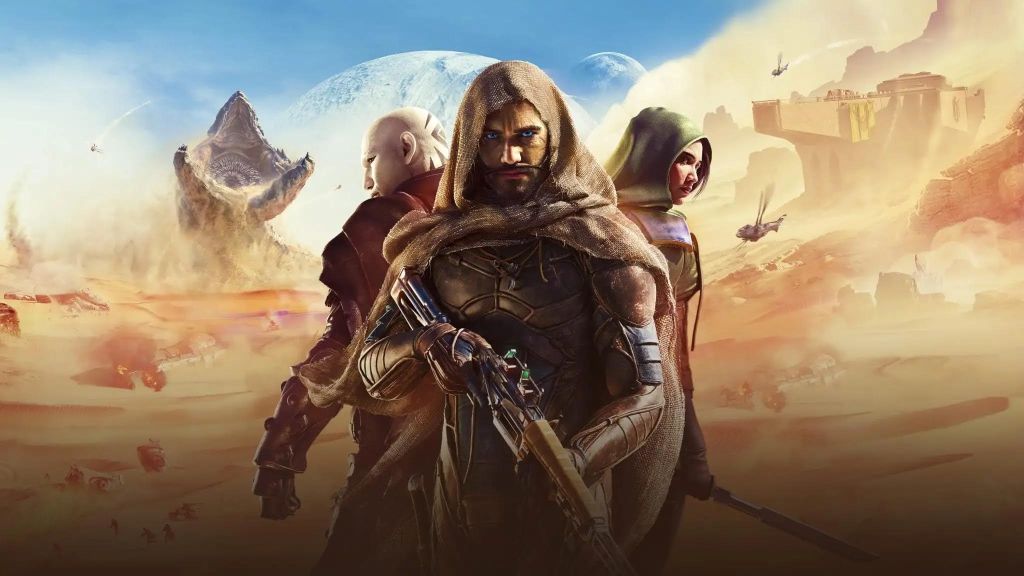
Dune: Awakening has been out on PC for a while now, but we never got the opportunity to check it out on Steam, although we followed all the news and updates that the devs kept releasing for the game. As huge fans of the books and the first two movies, we were intrigued by the idea of surviving on the most dangerous planet imaginable, a planet where water is precious and the sun is always in the mood for a barbecue, just in time for the ever-vigilant sandworms roaming beneath our feet. To make things even more interesting, there is crafting, building, combat, exploration, character progression and a lot more.
Thanks to the publishers, we were able to experience the much more complete version of the game on PlayStation. The PS5 version includes roughly a year of updates and improvements, the conclusion of Book One, a full single-player mode and a long list of changes to progression, the endgame and the game’s various systems. As we were never particularly interested in persistent multiplayer worlds, we extremely appreciated the single-player mode, as well as the substantial changes to the way the game handles persistence and world simulation so the experience can run locally. On the other hand, systems such as Landsraad were adapted to simulate the activity of other factions and players, but more on that in our second coverage! Today, we’d like to talk about how it’s quite the ambitious way to turn a game built around a shared world into an experience that can be enjoyed solo. And what an experience it is!

Welcome to Arrakis
The enormous desert is beautiful in that slightly terrifying way. We spent a considerable amount of time moving through the landscape, killing enemies hiding in all kinds of makeshift establishments, searching for resources, following objectives, looking for interesting locations or trying to get from one place to another without becoming worm food.
Water management is one of the first examples that shows how much the environment affects what we do. We have to think about where we are going, how long we will be outside and what we have available to keep ourselves alive. Heat and exposure add another layer to the problem, while sandstorms can make us run for cover and wait things out, if we’re lucky. There’s also the possibility of attracting a worm if we try to take our sweet time in the open desert. Half of the time, especially during those opening hours, Dune: Awakening is a terrifying game.
From a shelter to a home
To gradually become better equipped to deal with the planet, we have to gather materials, unlock new technologies, craft equipment, improve our character and build increasingly useful structures. After an afternoon of playing, we also gained access to vehicles and the ability to move our whole base, literally everything that we had built, from one corner of the world to another. That, as you can imagine, completely changes how you see and move around the world. It’s an insane sense of accomplishment and a larger-than-life achievement to be able to pick everything we’ve done so far and move to greener, or more dangerous, pastures.
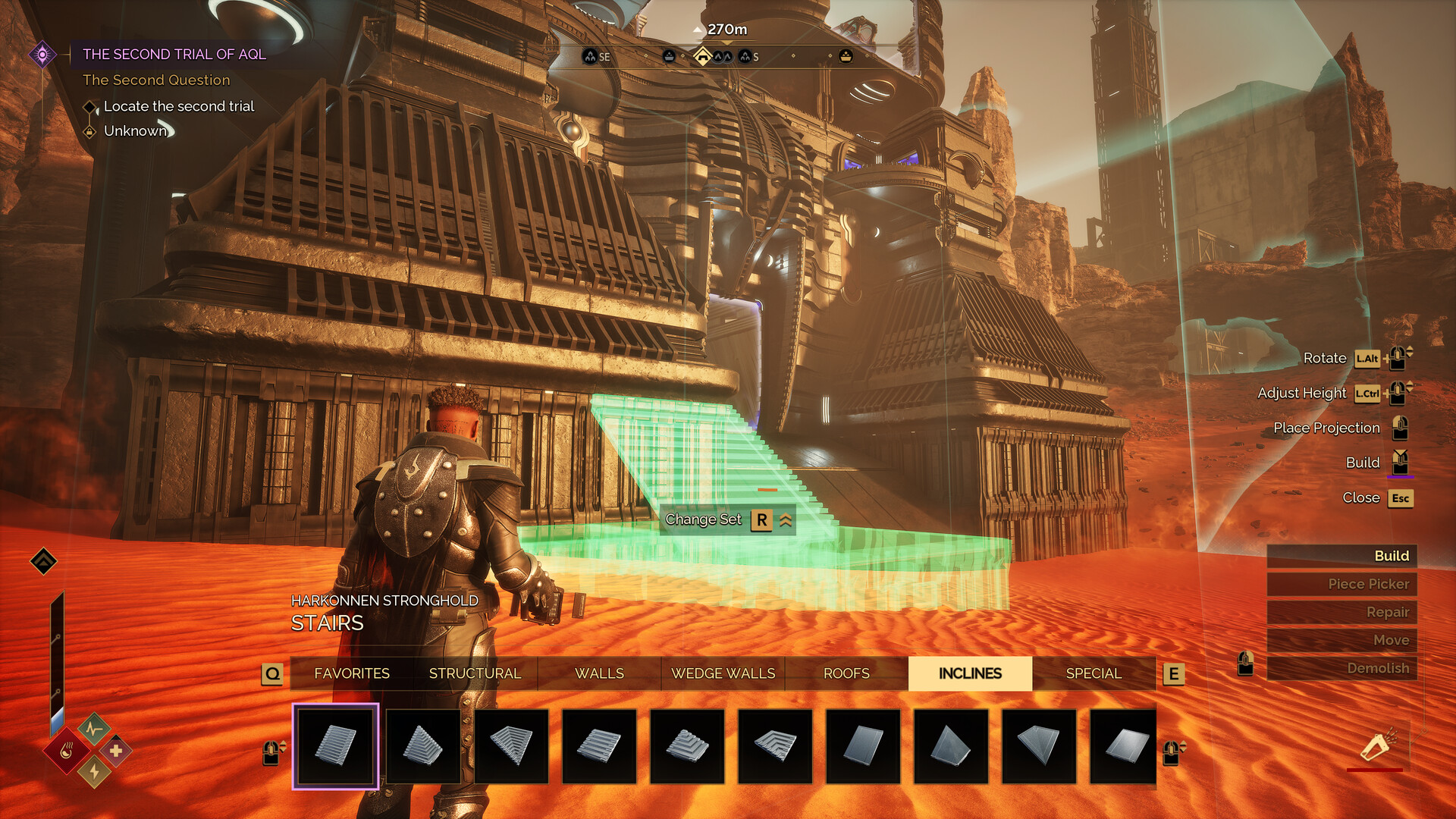
Our first shelter was functional, albeit not particularly impressive, but there is plenty of room to turn a collection of walls and crafting stations into something that feels like an actual base, a home even. There are a lot of pieces to pull from all kinds of collections, and we can work towards making our little patch of Arrakis into a proper home. It’s all very organic, and we never felt like there was a lot of grind. We usually had enough resources to always research, fabricate or work towards a goal.
You’d think the console controls would naturally be more complicated than using a mouse and keyboard for this sort of thing, but that couldn’t be further from the truth. Funcom has redesigned the UI and controls for PlayStation, and the effort is noticeable. There is a lot to keep track of, sure, but we never felt like we were struggling with the controller. Building doesn’t take much getting used to since everything clicks into place wonderfully, and you can come up with an impressive structure in a short time, provided you have the necessary resources.
PS5 Pro is a great home for Arrakis
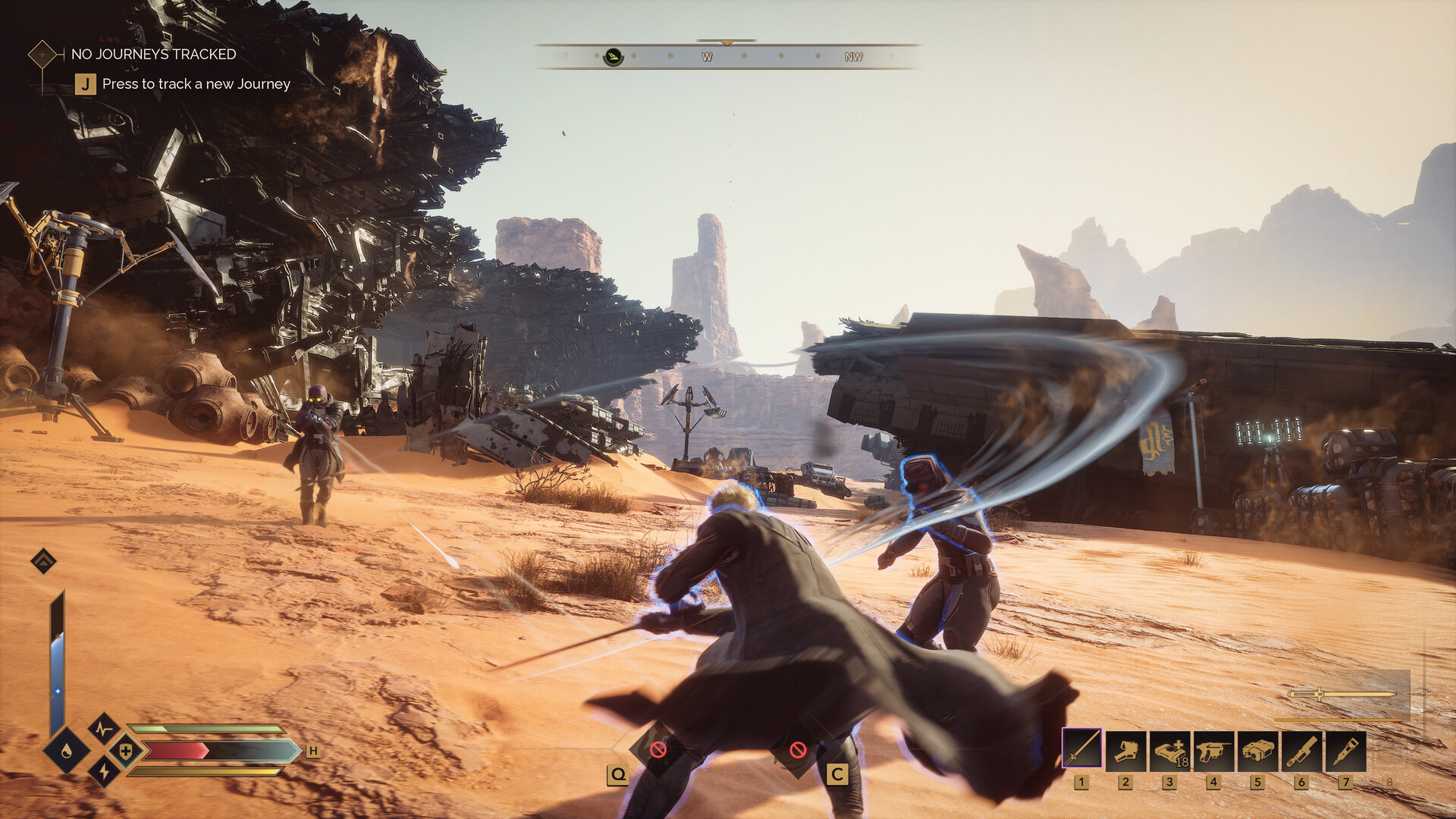
On the PS5 Pro, the game looks absolutely breathtaking, and we often stopped to look across the dunes and admire the rocky formations, spice fields and distant buildings. There are two graphics modes, with Performance Mode targeting 60fps and Quality Mode targeting 30fps. On PS5 Pro, both modes use a higher native resolution than the base PS5, while Quality Mode also receives enhanced visual settings.
We played first at 30fps, but when we switched to 60fps, it felt like the right mode for us. It felt like we could finally breathe. Although the graphical downgrade was noticeable, we appreciated the fluidity that comes with twice the frame rate. The game feels much more responsive at 60fps, and the higher native resolution on the Pro helps keep the image looking clean while we move through those enormous environments. Sand, distant terrain and small environmental details are particularly important because there is so much of them. The Pro does a good job of keeping the image stable while we are moving around.
We tried going back to 30fps, but we couldn’t handle how much heavier the game felt. We would rather have the smoother movement and responsiveness, but, again, the game does look better in Quality Mode.
Great solo experience
As we mentioned in our opening, the addition of proper single-player is probably the biggest reason why we wanted to look at the console version. We can experience Dune: Awakening entirely on our own, with no other players running around our world. We know that the game doesn’t strip away its larger systems, as Landsraad continues to function by simulating competing factions, while the Deep Desert remains part of the experience. And, in case you struggle with the default settings, there are also a lot of options for adjusting the survival experience, including resource gathering, crafting costs, enemy strength, dehydration, heat, sandstorms, sandworms and death penalties.
We like having that freedom, although we didn’t want to mess with it, as we found the challenge set by the devs to be perfect for us.
The story is also very interesting to follow, even though it’s set in an alternative universe where Paul Atreides was never born. In this equally dangerous world, we become part of the conflict between the major powers on Arrakis. We get the familiar houses, political struggles, Bene Gesserit influences, strange technology, spice, shields, sandworms and all the other things that make the setting so distinctive. In all this chaos, we still have enough freedom to make our own story.
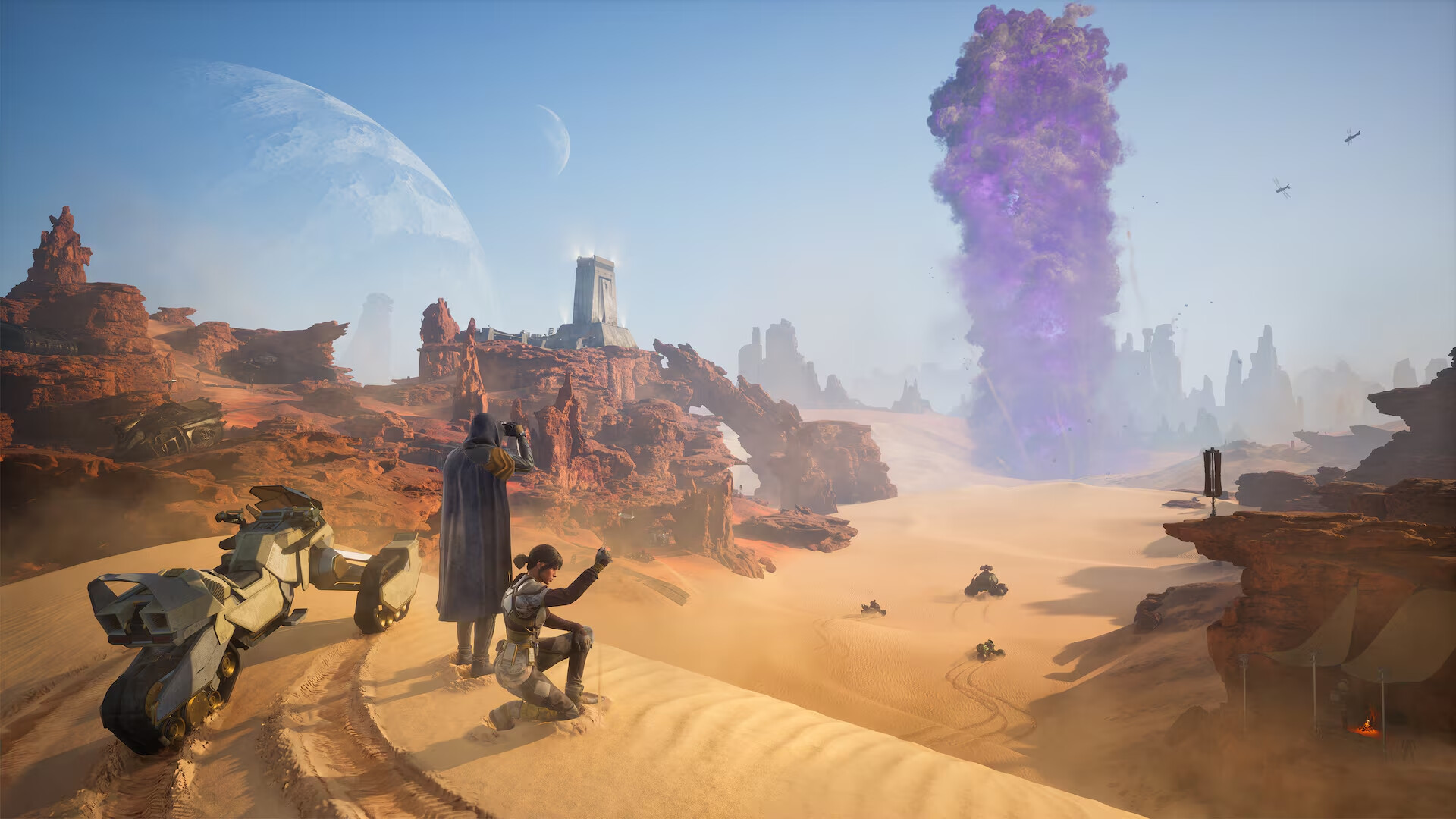
That’s because Arrakis does a lot of the storytelling for us. We see how people survive, how the different factions operate and how valuable every piece of the planet can be. Even gathering materials can feel like part of the setting rather than an arbitrary game mechanic. As huge Dune fans, there is a lot of lore to enjoy, but there were moments during the narrative exposition when we thought that some of the terminology would be anything but familiar to newcomers. Even for us, it sometimes felt like a PhD in Bene Gesserit politics was a must before we could understand some of the more nuanced things.
In terms of story, the current version includes the conclusion of Book One. As a much more complete narrative than the one players experienced when the game first launched, we have to say that there’s a lot of intrigue and politics here and, in terms of cinematic value, it can confidently stand somewhere between the books and the movies.
Drive on
The first several hours we walked. Walking, running and climbing across the desert makes Arrakis feel enormous. Collecting resources, crafting parts, putting a vehicle together and getting behind the controls of one was when we realized just how enormous the planet really is. Vehicles change how we interact with the world, and places that once felt impossibly far away become possible destinations that we were eager to reach. The ornithopter in particular captures that satisfying feeling of becoming better equipped to deal with the planet.
Flying over Arrakis also let us experience one of the best views in the entire game. Seeing our base become a tiny collection of buildings below us, with nothing but desert stretching in every direction, is quite the satisfying feat.
Another part where we felt fear, awe and respect was with the worms. Running on the sand and realizing that something very large is moving underneath us is one of the coolest mechanics in the game. It made us learn to pay attention to where and how long we’re walking and push towards a safe place as quickly as possible, similar to what happens when a storm erupts. The DualSense also gets involved here, adding some nice tactile feedback when the worms start making their presence known or when a storm engulfs and blinds us all of a sudden.
Combat, crafting and everything in between
Underneath it all, there’s a deep RPG system intertwined with different schools and abilities, ranged weapons, melee combat, shields and a fairly substantial progression system that lets us shape our character around the way we like to play. Later progression adds Specializations and Augmentations. Thanks to that, we get more ways to develop our equipment and character once the early-game systems have been exhausted.
Combat can be enjoyable. It starts slow and simple, but once we move past the knife and the gun, shields can change how we approach certain enemies, melee weapons have their own hack-and-slash rhythm, and the different abilities add much-needed variety. After a while, it can become a tad tedious, especially if we decide to clean each camp, but we always tried to freshen things up by cycling through a different weapon, approach or ability.
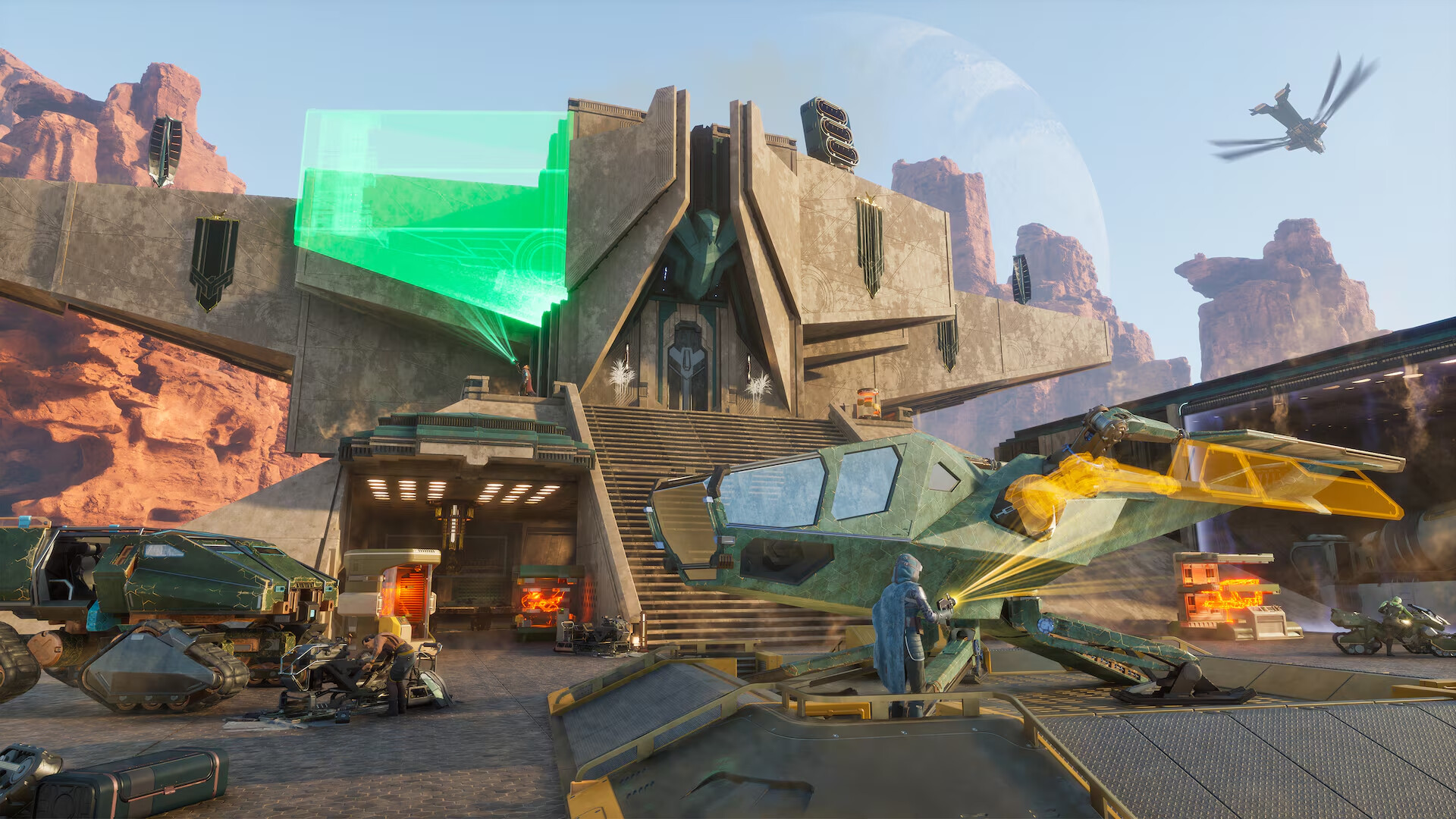
Some encounters can be more satisfying than others, but the enemy behaviour can feel erratic and illogical. For example, we’d kill one enemy with a loud weapon, and the other one, standing close to the first, would pretend like nothing happened, even if the first enemy returns fire and starts shouting doom and gloom. Certain types of enemies, like the ones with melee weapons, seem to have less than two brain cells, and all they want is to run in a straight line towards us and introduce us to their blade.
It isn’t too bad, as the challenge is still present, especially when their numbers become bigger or when a more challenging enemy enters the fray. It also really helps that the weapon feedback feels good, whether we’re killing an enemy with a headshot or our knife finally goes through a shield and finds a place in an enemy’s body.
Crafting is equally fun since there’s always something cooler to make, and we loved how getting access to a better piece of equipment can encourage us to head back into the desert for another resource-gathering trip. We never felt like the list of materials was a shopping list rather than an adventure. We see unexplored icons on the map, we go there, we admire the place, we kill and loot, and we move on. For us, that was a fun formula.
We are really glad we waited for Dune: Awakening to come to PS5. Experiencing the game in this much more complete state, with a full single-player experience, a year’s worth of updates and the extra benefits of playing it on PS5 Pro, made the wait more than worthwhile. We may have missed out on Arrakis when it first arrived on PC, but after spending so much time here, we’re quite happy with the way things turned out.
Our score: 9/10
Developer: Funcom
Publisher: Funcom
Platforms: PC, PlayStation 5, Xbox Series X|S
Reviewed on: PlayStation 5 Pro
Genre: Open-world survival RPG
Players: Single-player / Multiplayer
Release date: September 22, 2026
PS5 Pro enhanced: Yes

Leave a comment