

Some games refuse to stay buried.
Some games are remembered because they pushed technology forward. Others because they told unforgettable stories. There’s also a third group: games that we keep reinstalling because they just feel good to play, even after a decade. We like to call these games perfect. Assassin’s Creed IV: Black Flag has always belonged to that last group.

The original game came out in 2013. Since then, we’ve sailed across ancient Greece in Assassin’s Creed Odyssey and explored massive RPG worlds in Origins, Valhalla, and Shadows. We have been there from the very beginning, and we have watched the series experiment with different identities. Going back to Black Flag today reveals something interesting. It’s still the same game, just better. Black Flag isn’t trying to become an endless RPG—far from it. It simply wants you to become a pirate, making it hard not to shout “Yarr!” and “shiver my timbers,” or sing shanties until everyone looks at you weirdly and starts backing up slowly. For us, everything revolved around that fantasy.
That fantasy still carries the remake.
The moment we step aboard the Jackdaw and the open sea stretches out in front of us, the floodgates open. All our nostalgia and love comes pouring out, helping us easily remember why this remains one of the franchise’s most beloved entries. Before we even have time to process the magnitude of the remaster and how much better everything looks, the wind catches the sails. Then, the crew members start singing. Soon after, a ship appears on the horizon. Quest markers? What are those? We live in the moment, and what becomes important is what’s right in front of us. That ship. Do we attack, or do we let it pass and focus on something bigger?
Those little moments still define Black Flag.
But those are our questions. The question that you’re most likely chasing is: can one of Ubisoft’s best games feel modern without losing what made it special? We could tell you a straight-up “Yarr!”, but where’s the fun in that? So join us on this adventure, yarr scurvy dogs, and read on for our unabridged opinion!
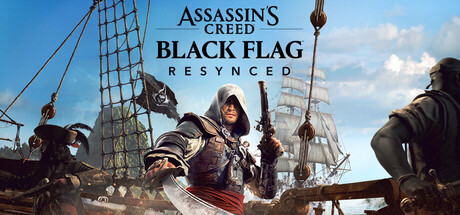
How It Compares to the 2013 Original
- The overall campaign structure remains the same.
- The mission order stays familiar.
- The world layout changes very little.
But…
- Combat asks for more.
- Stealth responds more reliably.
- Parkour flows better.
- Naval encounters have gained additional depth.
- Visuals receive a major overhaul.
- The world loads faster.
- Additional story content is included.
Steel, Salt, and Improvisation
In our talks throughout the years, we’ve heard our friends and many others say how Black Flag had an identity crisis, and that many fans remembered the pirate sections far more fondly than the assassin missions. Well, if you were one of those people, then you’ll be happy to hear that Resynced doesn’t fight that reputation. On the contrary, it embraces it. This is the same game with the same gameplay that revolves around moving between land and sea, collecting resources, upgrading the Jackdaw, hunting increasingly dangerous ships, and exploring islands filled with collectibles, contracts, and hidden treasures. You still have all of that. The difference is that nearly every one of those activities feels smoother than it did in 2013. Some might want a revolutionary overhaul, but we were strongly against it for fear the game might lose its soul. Smoother is fine. We prefer it this way.
Edward still feels different. Unlike most protagonists, our boy isn’t trying to save the world. If there were a coined term for someone selfish, greedy, and impulsive—and if that word were in a dictionary with pictures—we’re pretty sure the picture would be of Edward. A mission could be a very sacred thing to others, a duty, but to Edward, it’s just a payday. It’s an opportunity to strengthen the Jackdaw or buy better equipment. This makes him a very intriguing character, and the narrative is much stronger because of him.

Combat
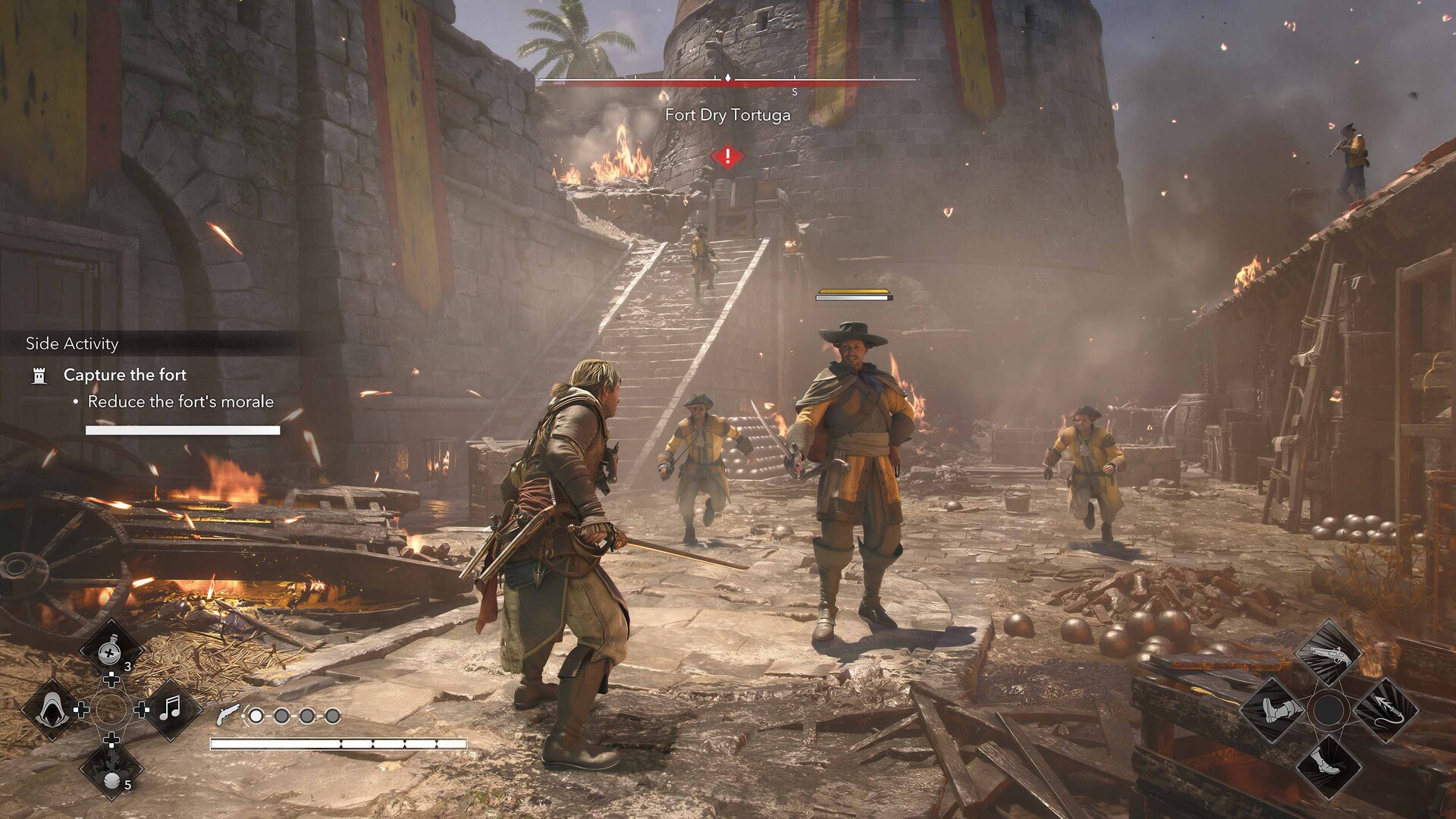
If we remember correctly, the original relied heavily on waiting for an enemy to attack before triggering effortless counter-kills. It looked cool, but once we understood the rhythm, large groups stopped being a challenge and became little more than elaborate animations. We feel that Resynced changed that in the best way possible and now asks more from us. Enemy aggression has increased, timing windows feel tighter, and successful fights depend much more on active parrying instead of endlessly waiting for counter prompts. Different enemy types pressure us simultaneously; gone is the politely attacking one at a time.
To better deal with these more challenging scenarios, Edward also transitions between weapons much more naturally—something that’s clearly evident when it comes to drawing pistols, switching to swords, or using the Hidden Blade. Everything flows together with far less animation delay. The system prioritizes readability over complexity, but we never felt overwhelmed by combo inputs. As a result, encounters demand more attention than before. And, if you parry successfully at the right moment, you can still trigger a flashy elimination. Boss encounters benefit the most from these combat improvements, requiring you to read attack patterns, create openings, and use your full toolkit.
Stealth and Parkour
When it comes to stealth, enemy detection now behaves more consistently. Edward can now snap into cover with fewer awkward pauses, and the whistle mechanics respond faster. To add to the overall fluidity of motion, parkour routes no longer break simply because a corner wasn’t aligned exactly right. Animations blend together far more naturally, allowing us to maintain momentum through cities, forts, and jungles. Running across rooftops now feels closer to later Assassin’s Creed games. In terms of movement, there’s no fighting the controls here. Regarding stealthy missions, however, it’s important to be aware that the remake doesn’t redesign every objective from scratch. We’ll say it again: this is the same game, but with smoother movement. It makes older mission layouts easier to appreciate, and that’s enough for us. They’ve done wonders with the traversal, and that’s not just faint praise—especially when you take into consideration that traversal forms such a large percentage of playtime. Consistency, you’ll agree, matters almost as much as speed.
The Jackdaw Remains the Star and The Sea is Still the Main Character
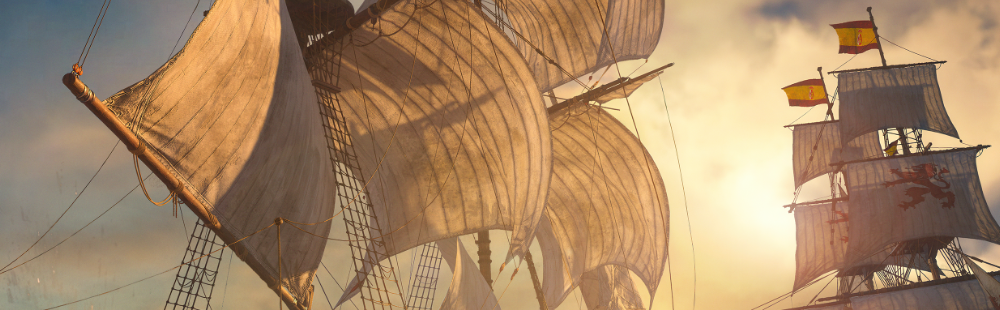
Speaking of perfection, the Jackdaw steals every scene, just as it did in the original. Sailing remains astonishingly satisfying, even if you’re doing simple things like adjusting sail speed depending on the weather, watching waves throw the ship sideways, listening to the crew react during storms, or spotting distant silhouettes and deciding whether they’re worth chasing. Tiny decisions like these create an almost meditative rhythm, something that we learned to deeply appreciate between explosive naval encounters. There is always another ship to chase, another island just visible in the distance, or another rumor worth following. Naval exploration remains remarkably organic, with so many temptations creating the illusion of a living sea.
Naval combat that feels fresh over a decade later
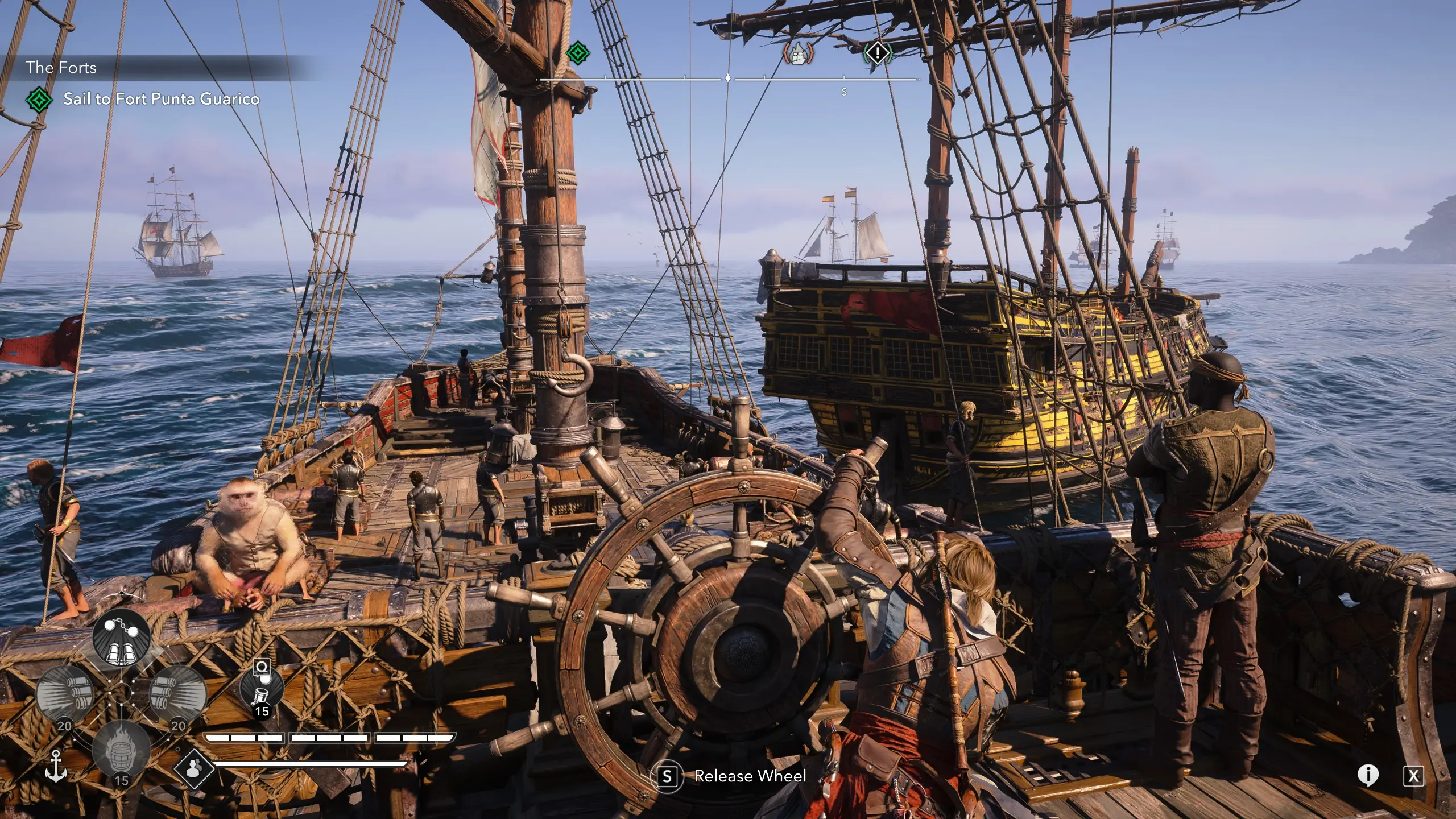
The original Black Flag had a near-perfect approach to ship combat. Resynced wisely avoids fixing something that wasn’t broken. Instead, the devs build on familiar mechanics. Broadside cannons remain your primary weapon, demanding careful positioning rather than reckless charging. Mortars still punish distant targets, while swivel guns reward accurate aim during boarding sequences. All that, combined with heavy shot, chain shot, and explosive barrels, gives different encounters their own rhythm.
The remake, however, introduces alternate fire modes and improvements to ship handling, like smoother turning, consistent aiming, and faster, more organic weapon switching. Hostile captains now react more aggressively, and stronger ships coordinate their attacks more effectively. As a result, positioning is a lot more important. Boarding naturally blends naval combat with traditional Assassin’s Creed combat, with objectives that vary depending on the ship. Sometimes we’re asked to eliminate officers. Other times we destroy ammunition stores, cut down enemy flags, or defeat a specific captain before claiming the vessel. Captured ships can repair the Jackdaw, provide resources, or become additions to our fleet.
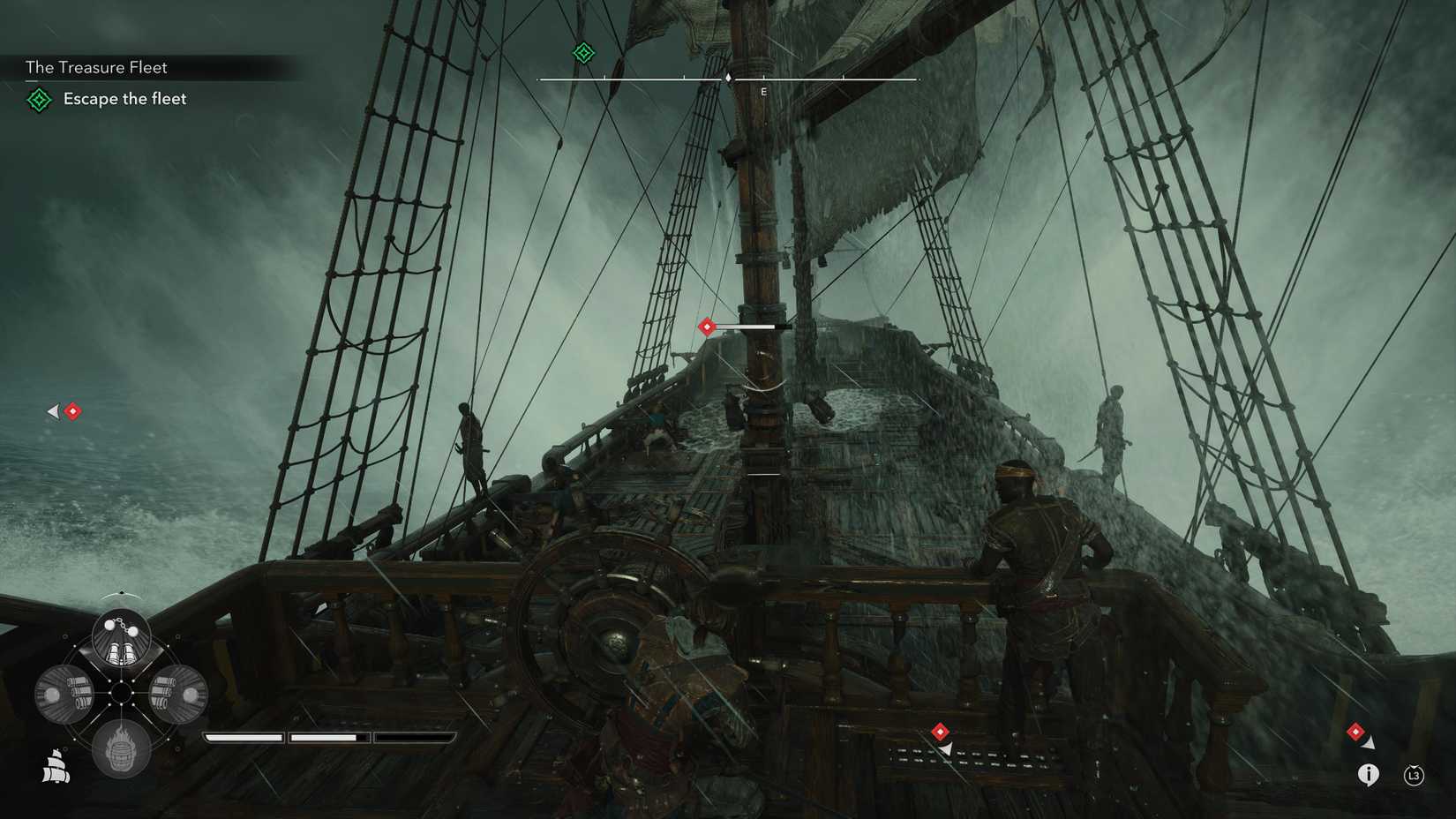
You also need to keep the weather in mind, since towering waves will disrupt your aim and storms will reduce visibility. Please don’t think these are scripted events. Just like in real life, the weather is an unpredictable mistress, and dynamic weather conditions constantly change how each engagement unfolds. Once you have enough resources gathered through exploration and naval victories, you can upgrade the Jackdaw. It feels earned to get stronger hull armor, powerful cannons, additional mortar capacity, improved ram damage, or expanded ammunition reserves.
Why you’ll love the Caribbean
While playing, we made a checklist of all the things that we really loved about the world. Here they are:
- Dense cities that encourage rooftop movement
- Small islands
- Naval forts that offer memorable challenges
- Underwater exploration with denser marine life and sharks!
- Hunting wildlife for crafting materials to expand Edward’s equipment capacity—animals like crocodiles, jaguars, boars, iguanas, and, of course, sharks!
- Collectibles
- Treasure maps
- Contracts
- Hunting grounds
- Assassination missions
- A well-optimized experience with shorter load times and more responsive menus
The list goes on, but we know when to stop. If you’ve read up until now, we really don’t want to overstay our welcome. Just a bit more! We left the best for last.
New Content
Scratch under the surface and you’ll come across new missions involving Blackbeard and Stede Bonnet. Without giving away too much, we will just mention that they felt like companion chapters and gave familiar characters more room to breathe—and we’ll stop at that. What we also want to mention is that the remake introduces three new officers who join the Jackdaw during the main campaign. Oh, and you do get more sea shanties, a full photo mode, additional cosmetic options, and pets. Let’s say that again: pets are welcome aboard the Jackdaw. And yes, they add to the experience in the cutest way possible.
This is still Black Flag. Just with more reasons to linger. The best reason being the new look.
Wearing New Clothes
From a visual point of view, Resynced can stand shoulder to shoulder with Shadows. It will make you stop, breathe deeply, and admire the beautiful world around you. Islands sit exactly where veterans remember them. Havana, Nassau, and Kingston remain instantly recognizable. The devs didn’t change everything; they just gave the world a complete makeover with a much richer presentation, something that’s possible thanks to the addition of ray tracing. Waves have more physical weight, and reflections shift naturally as the weather changes. Storms look intimidating, and braving them is an adventure in itself.
A Classic That Learned New Tricks
This is not a review but a love letter. Assassin’s Creed Black Flag Resynced is a thoughtful remake. It understands the importance of preservation because it improved only the areas that needed attention while protecting everything that made the original unforgettable. A wise person would say that familiarity is not automatically a weakness. Returning to a great idea with better tools is more than enough. After more than a decade, the Jackdaw still has somewhere worth sailing. After all these years, the Caribbean still calls. We hope you answer.
Final Score: 9.5/10
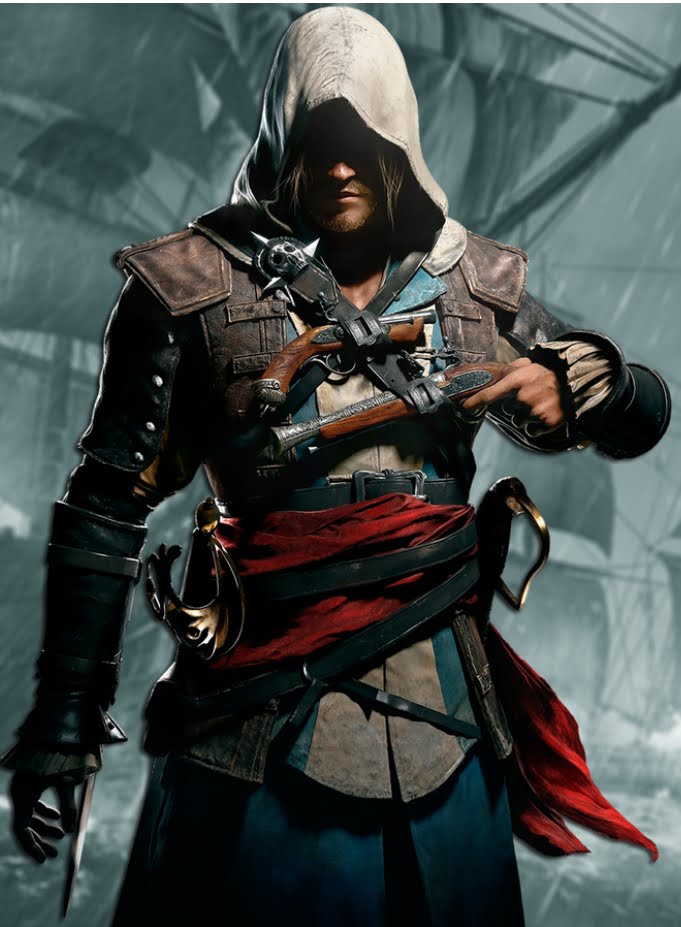
- Developer: Ubisoft Singapore / Ubisoft teams involved in the remake
- Publisher: Ubisoft
- Platforms: PlayStation 5, Xbox Series X|S, PC
- Release Date: July 9, 2026
- Genre: Action-adventure, open-world, stealth, naval combat

Leave a Reply