
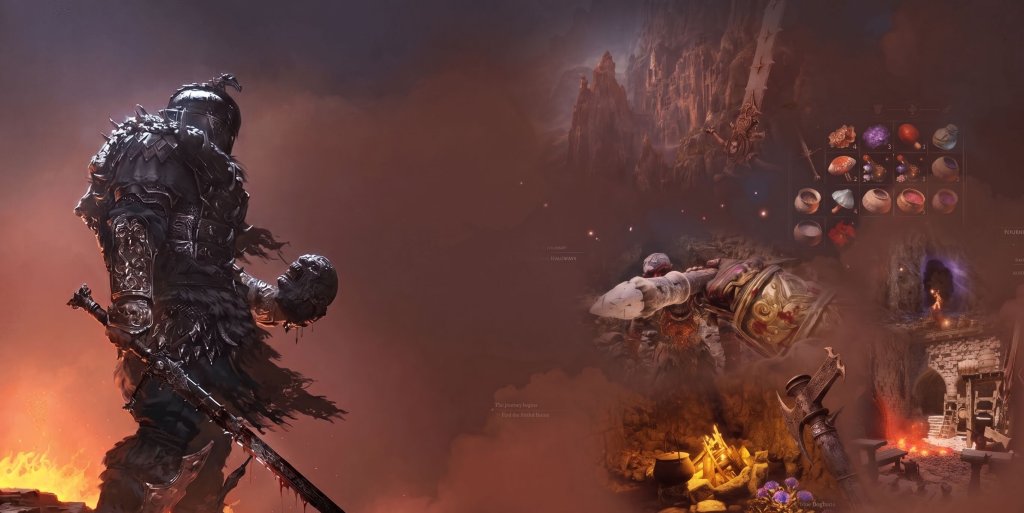
Welcome to our Screenshot Review of Fatekeeper!
Some games are just too heavy, bloody, and beautiful and, try as we might, we simply can’t capture it all with words alone. Fatekeeper is exactly that kind of experience. Instead of dropping a massive wall of text about the brutal combat and the grim, gorgeous world, we decided to build a visual journal of our early hours in the game. We want you to see exactly what we saw—from the quiet campfires to the goriest executions. Here is how our journey unfolded.
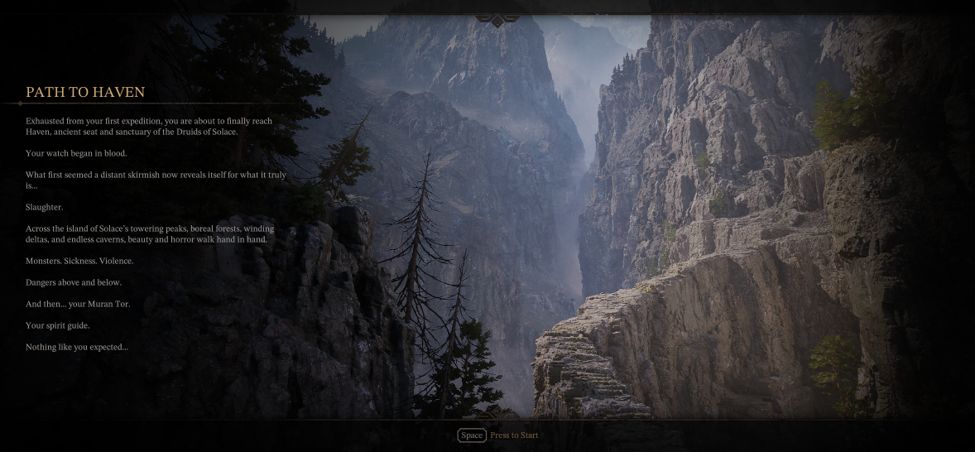
Before the first mission took hold, we listened to the withered voice of a clearly tired man preparing us for the world and telling us what to expect. In those opening moments, the music was mesmerizing and the acting was strong. We had a good feeling about what was to come.
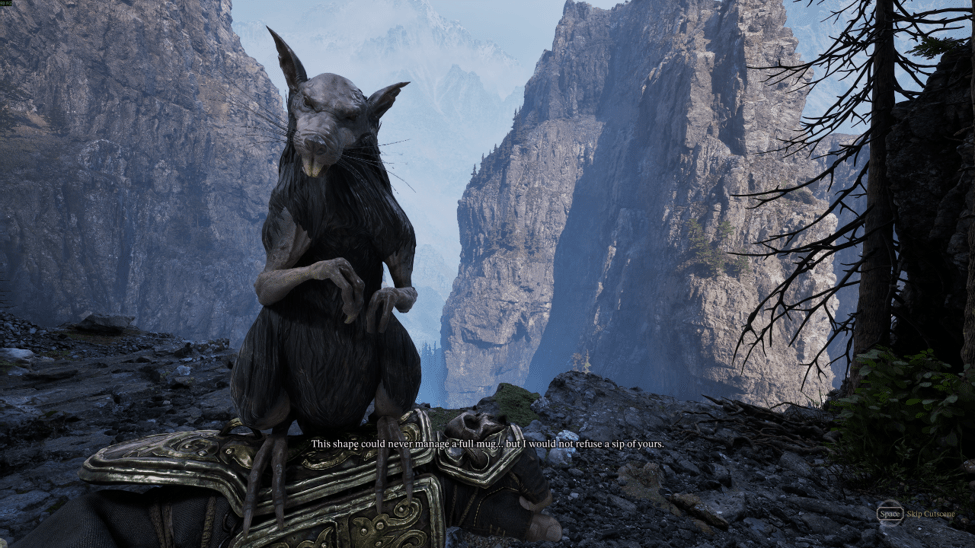
It’s hard not to be impressed even from the beginning. This seemed like a world that was begging to be explored, a place where we could lose ourselves completely! We seem to be a warrior on a mission of a sort. The rat seems to be a companion of ours. It talks. It guides us like no other rat we’ve seen.
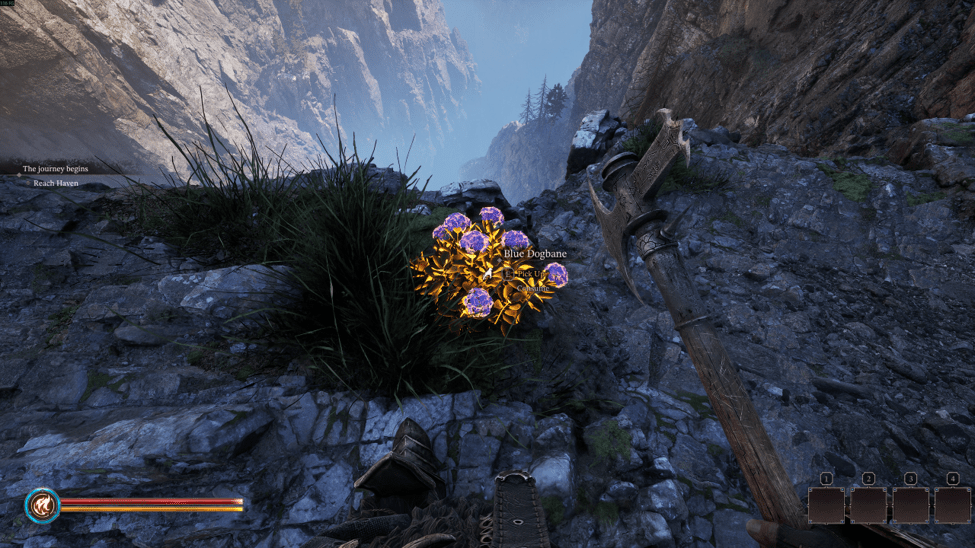
Here is some of the stuff we picked up along the way. There is an abundance of flowers, mushrooms, and all kinds of plants that later help us make all sorts of potions and bombs.
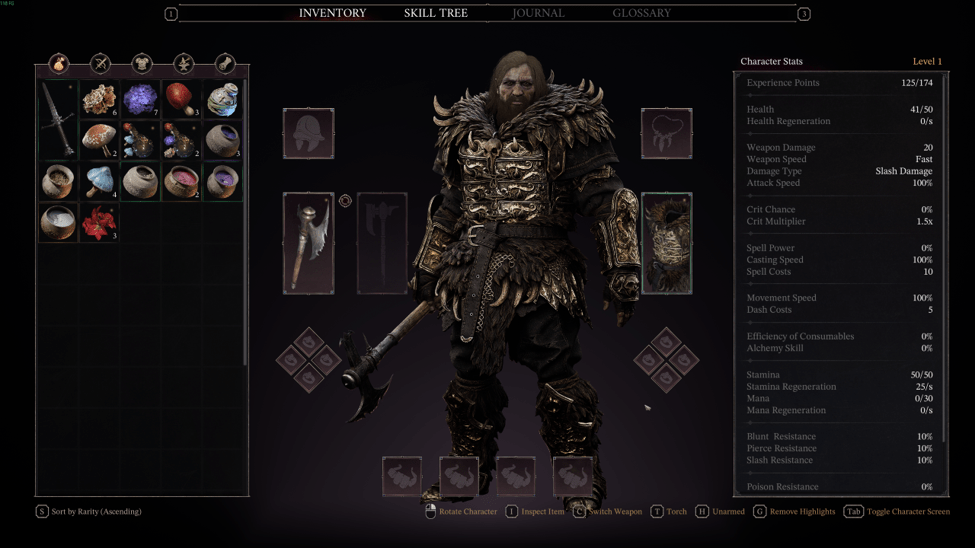
This is us! And we move exactly like we look—a mountain of unstoppable, brute force and hidden, mystical powers. The movement feels heavy, weighted, and very realistic. Every move signifies real physical effort, witnessing this heavy-set warrior who is fully dressed, carrying bags of loot and weapons. Running and swinging our weapons burns through stamina fast, making us really think about our movements and time our attacks.
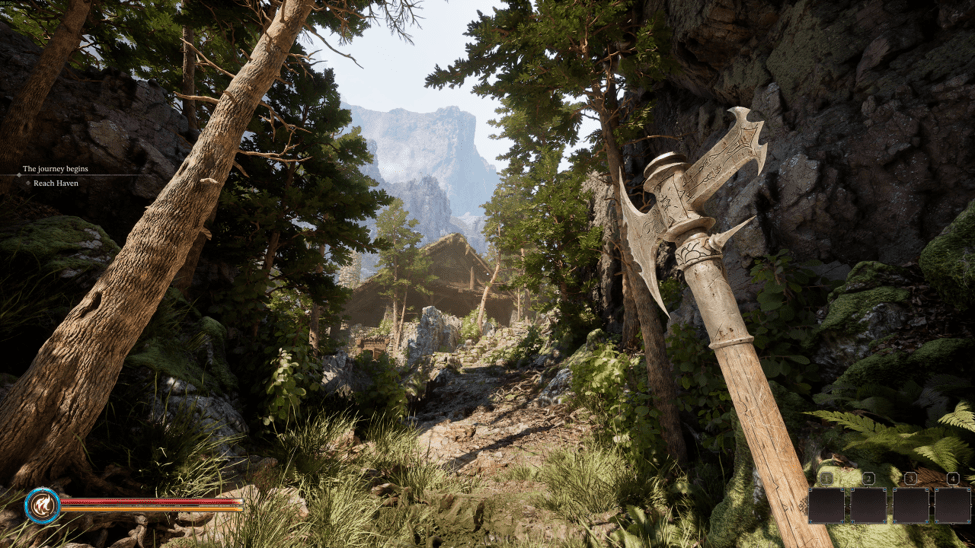
From a rocky place to a cozy cabin in a forest. This game is a true marvel to behold, and its surprises come in many forms. The maps are well-designed with many pathways, nooks, and crannies that we can run and move through. Some rooms hold useful loot but are well hidden or locked. Other chests hide a vary underwhelming loot that barely justifies the effort. But, no matter what we did, exploration was key since there’s no map or map markers. The devs paid a lot of attention to making the world look very believable.
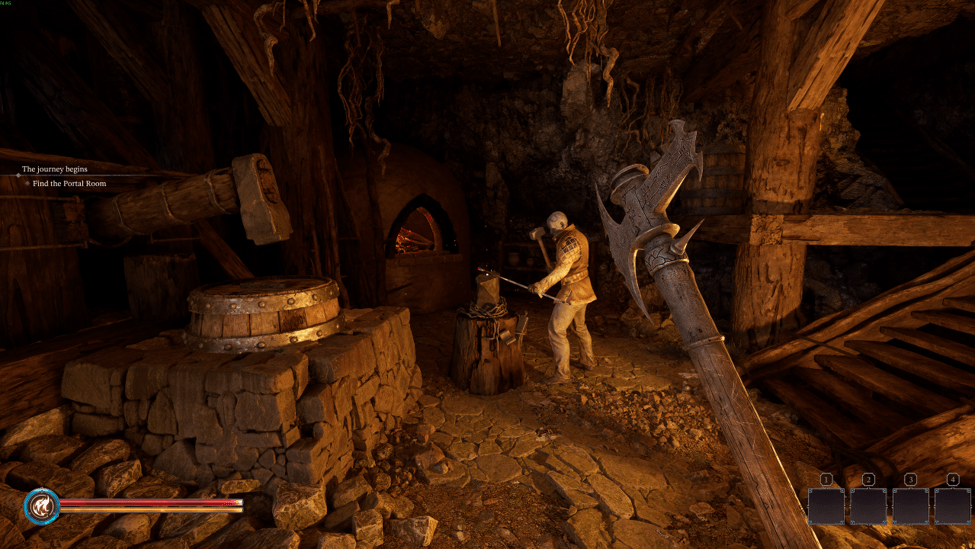
This is the first person we came across. Not a chatty fellow, but he sure knows his way around the smithy. We also know our way of “borrowing” some metal fragments and other materials that will come in very handy later down the line.
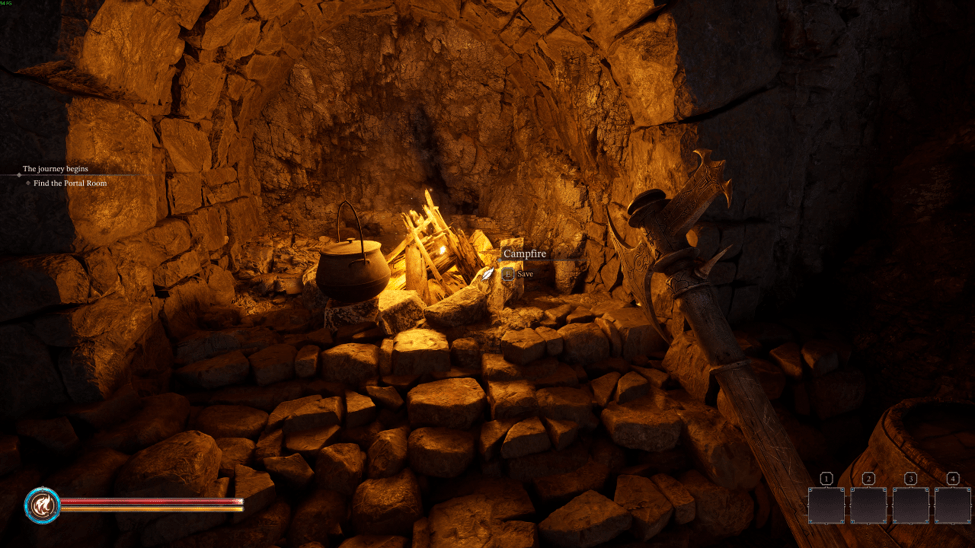
Campfires like these help us save the game.
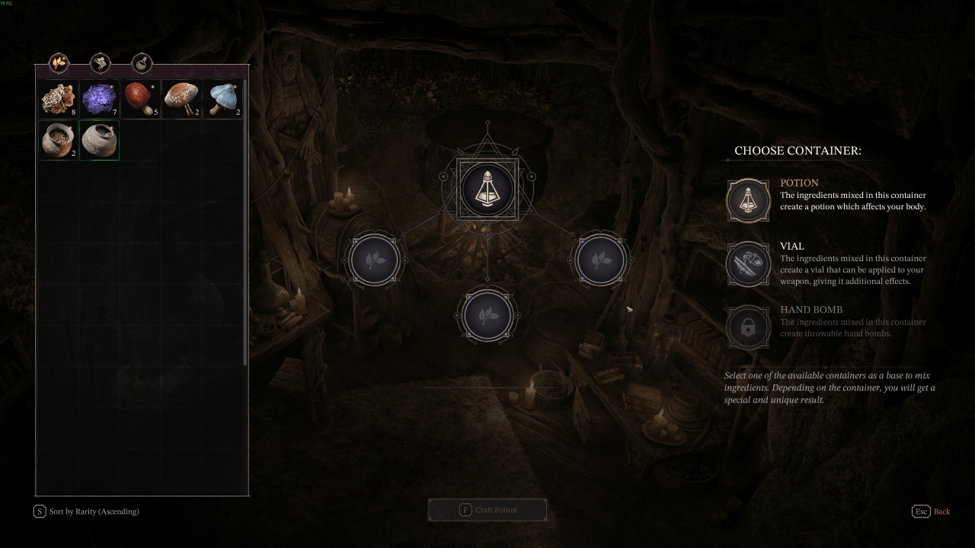
The alchemy pot helps us brew some potions and use the numerous things we collected on our way to the cabin. We can make potions, vials, and bombs. Potions affect the body, vials give weapons additional effects, and bombs—well, bombs make things go boom. Like potions and vials, bombs come in all shapes and forms, triggering all kinds of effects.
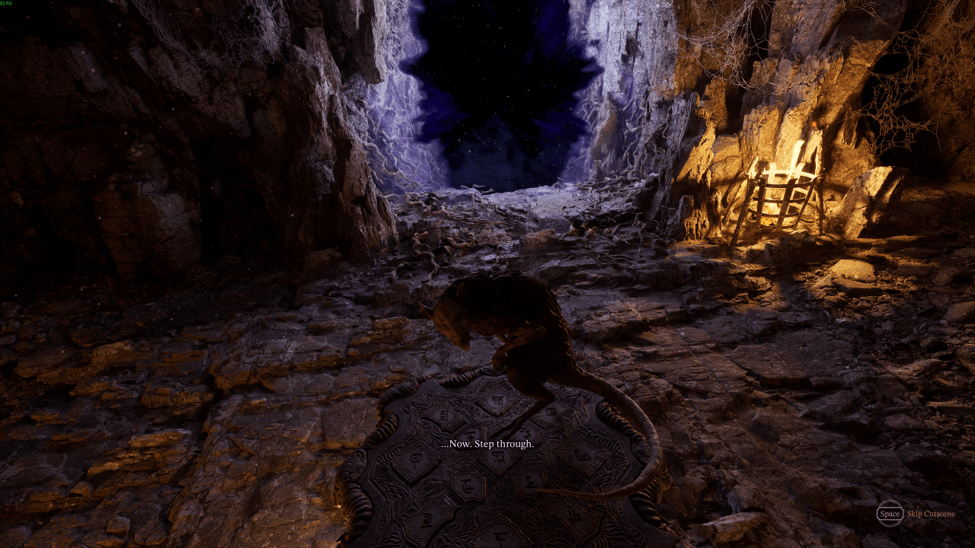
The portal and its passage seemed anything but painless. But it led us to our…
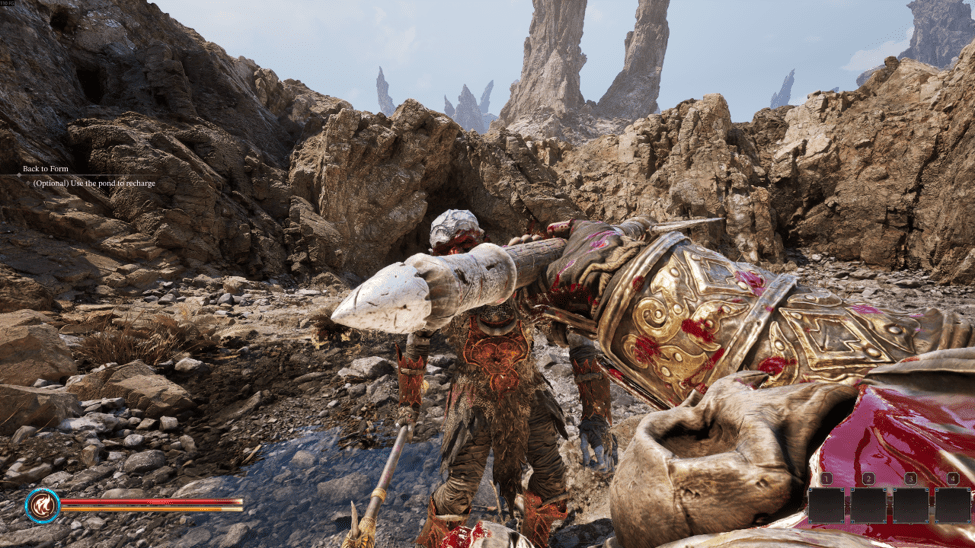
As expected, the hits are very heavy and measured, especially when preparing for a heavy attack and holding for the best moment to make the most of our damage. We’ve noticed that blocking hits is also taxing on our stamina. We can also kick and stagger enemies, which is very useful when they have a shield. For those unavoidable attacks, we can dash out of harm’s way, even when jumping. Combine all of these movements and we are left with a very complex set of offensive and defensive maneuvers that are very satisfying to execute, especially in moments when time slows down to highlight a critical hit. The gore is mesmerizing, especially the cutting of limbs, staring at the enemy wiggling helplessly, waiting for us to make the finishing blow. Brutality at its finest.
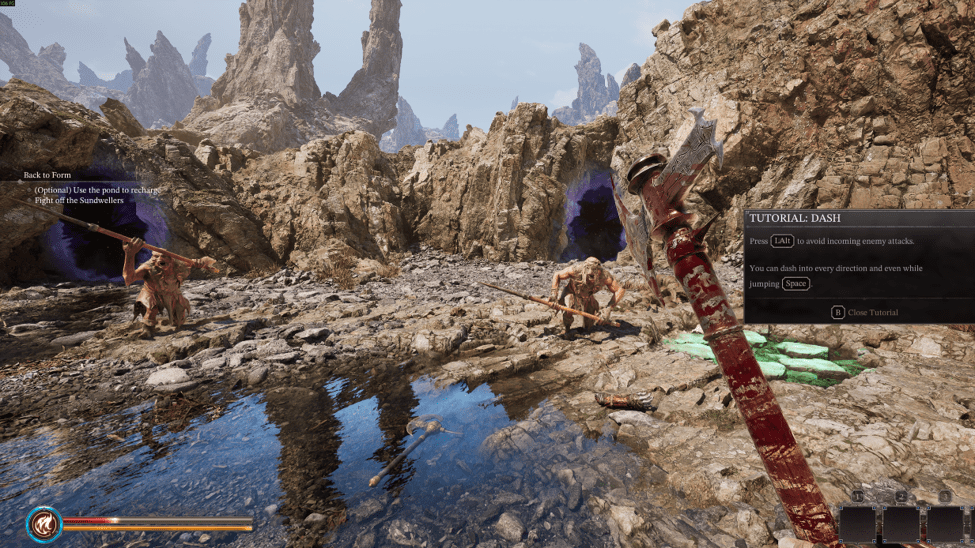
The sound effects are equally impressive: the grunts of the warriors, the connection between steel and flesh, the screams and shrieks of pain, and the guttural threats of the menacing, incomprehensible language. It all adds a lot to the whole dynamic, especially when intertwined with the heavy and oppressive soundtrack and the slow but judgmental beats of the drums. The fights are brutal. The enemies are unpredictable. Good luck with the boss!
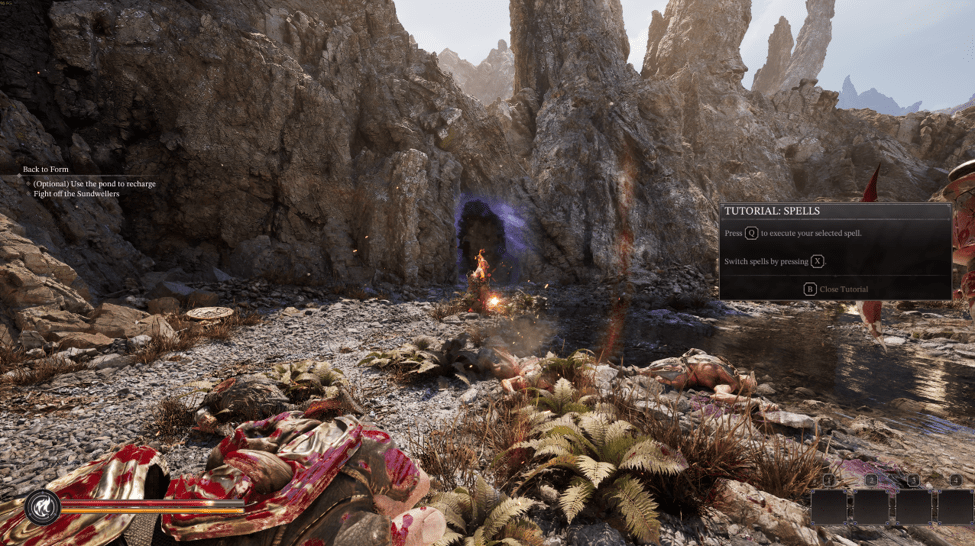
Then there’s magic. From the get-go, we can spend renewable mana to hurl balls of flame or icy daggers at the enemies. We can push enemies away from us with strong gusts of air, or pull them towards us. Just like with melee weapons, the impacts are strong and very satisfying to perform. We can’t use these powers very often, but they are absolute life savers in critical moments, if we’re fast enough! Some of the powers, like telekinesis, can be useful outside of combat, helping us activate things like portal sigils. Other powers, like flame balls, can be thrown into flammable materials, like oil, so that we can surprise the enemies by burning the ground beneath them.
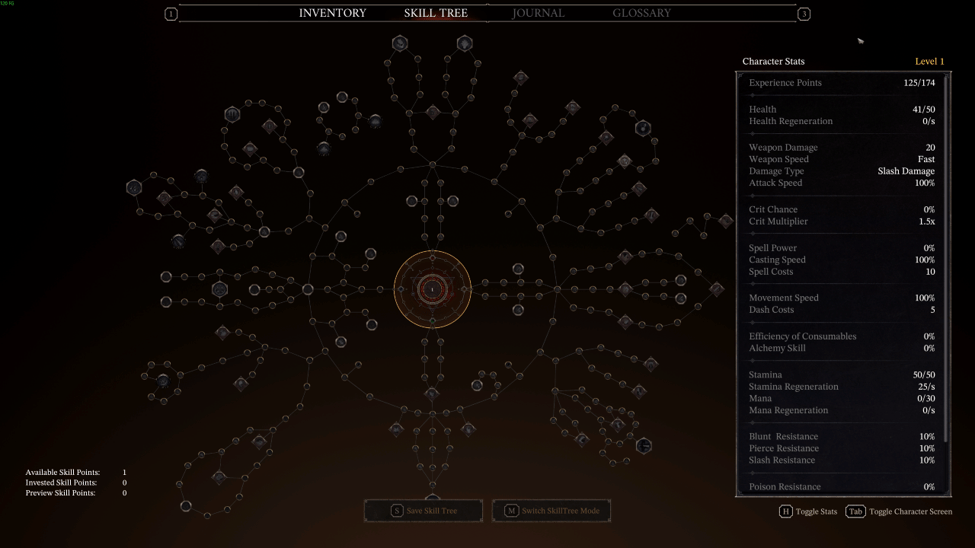
This is our skill tree. It’s a massive collection of statistical enhancements and skills that simply beg to be unlocked. We can work on the betterment of our melee damage, attack speed, stamina, health, spell casting speed and power, as well as unlocking elemental traps, shadow stepping, and more.
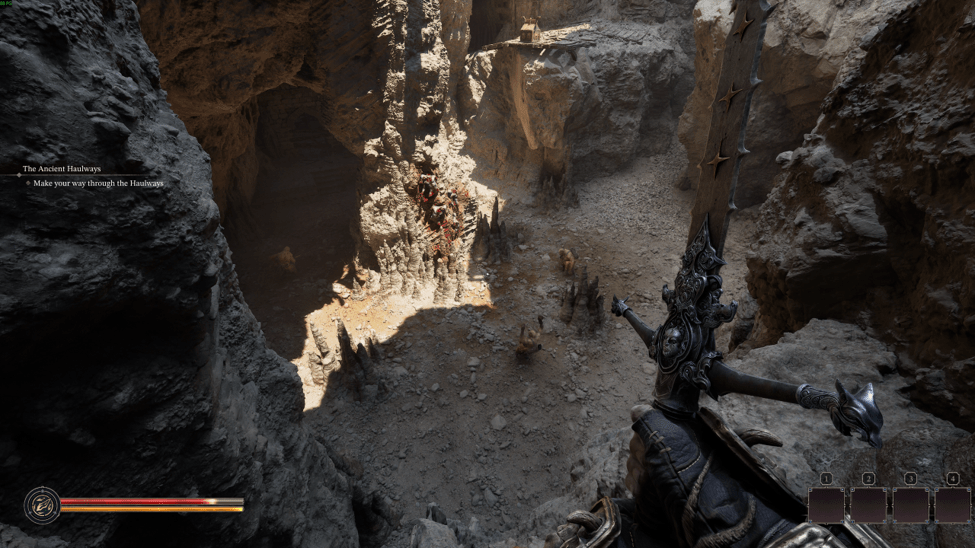
Our first adventure. We had to go down there, kill all the baddies, and find a special key. It’s a joy to explore the colossal ruins. We found a lot of useful loot, and we fought a couple of memorable fights. But the best reward? The best reward was the sight that came after that.
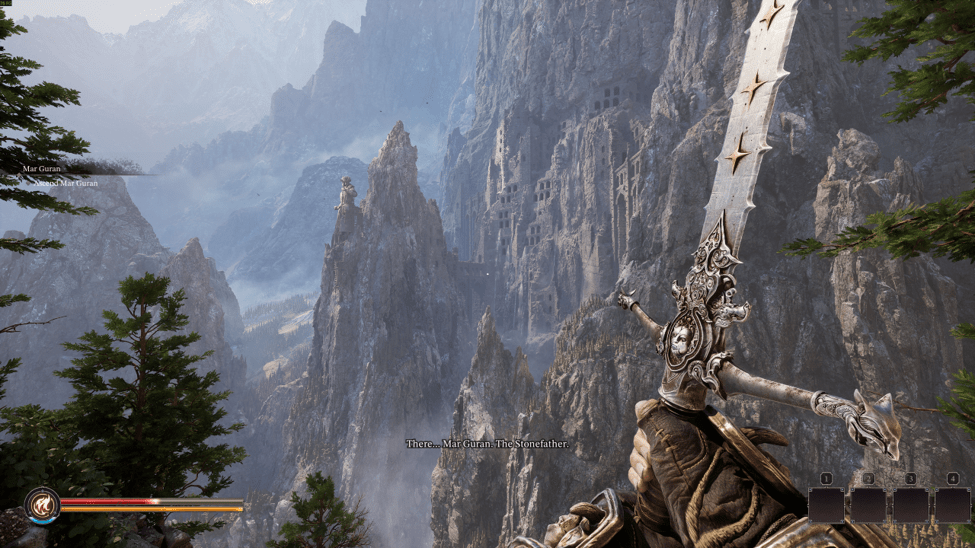
Vistas like this are the true reward in Fatekeeper. The sense of discovery and a worthy achievement. And here, we feel, is the best way to stop. What comes next, should be your eyes only!
Should you play Fatekeeper?
Even in its Early Access state, Fatekeeper delivers a heavy, brutal, and unforgettable ride. Looking back through these captures reminds us exactly how completely we got sucked into the experience. The weighty combat, the gritty world-building, and those massive, beautiful vistas make every single hard-fought victory feel earned. Anyone craving a punishing and highly atmospheric adventure needs to jump in right now, grab a weapon, and start carving a path. It’s not a very long experience and we hit that ending a lot sooner than expected, but every single moment in the game was enjoyed to the fullest. As huge fans of Dark Messiah of Might & Magic, Fatekeeper was just what the doctor ordered. We can’t wait to see where this journey takes us!
Disclosure: A huge thanks to Dead Good PR for granting us a review key for this coverage. You guys are beyond awesome—thank you!
ID Card
- Developer: Paraglacial
- Publisher: THQ Nordic
- Platforms: PC
- Release Date: June 2
- Genre: Action RPG

Leave a comment