

Capcom teased us for years with weird holograms and a sad android girl. There was something clearly special about the game, even though some were extremely doubtful whether Capcom could actually do anything with this new IP. Now that Pragmata is finally out, the long wait makes sense.
Playing two games at once sounds like an impossible mission. And, no, you aren’t just babysitting a kid during a moon apocalypse, like most thought. You are both the kid and the systems engineer at the exact same time. You might think that’s not possible or that it’s poorly executed. You couldn’t be further from the truth.
At first, we needed to adjust to the whole concept. Once we did, we couldn’t stop playing. Pragmata isn’t perfect, but it’s damn close to what we think a perfect game should be. Stick with us. After the trailer jump, we want to tell you why this is quickly becoming one of the best action games of the year.
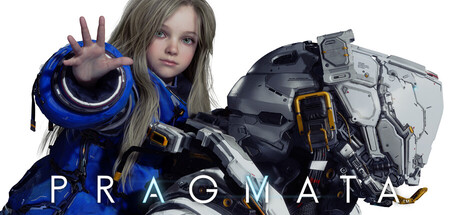

Review code for this title was kindly provided by CD Media.
Playing Two Games At Once
In PRAGMATA, you are playing a fast-paced, third-person shooter while desperately trying to solve a puzzle game that looks like Snake—you know, the classic Nokia mobile game.
Hugh handles the kinetic heavy lifting. The systems engineer is your guy when it comes to running, hovering, or using his suit’s built-in thrusters to double-jump across massive lunar craters. The mobility feels incredible. We never felt like we were out of control, and every mistake that we did make was entirely our fault. The shooting itself is tight, heavy, and very satisfying, much like the latest Resident Evil games. The more we played, the more varied our arsenal of weapons became. There were times we didn’t know what weapon to use and spent an extra second just cycling through a nasty arsenal of shotguns, charge rifles, and grenade launchers.
We were extremely happy campers whenever we came across powerful scavenged weapons. Even though we burned through their ammo incredibly fast, we were always grinning like little boys who finally got their hands on their favorite toy. Once we couldn’t use them anymore, we defaulted to Hugh’s base pistol, the Grip. The gun regenerates rounds automatically, plus you can upgrade it for that extra oomph. Even so, brute force simply won’t save you against heavily armored robotic enemies.

The Diana Factor: Hacking the Moon
That is where Diana steps in. And this is where we struggle with how best to describe her role. You control Hugh; you do all those things that we mentioned above. But, at the same time, by using another set of controls, you also control the little girl. Hugh moves and destroys. Diana plays a hacking minigame. Let’s try again. Remember the Snake game that we mentioned? This is where it comes into play. You hold a trigger to pop up a grid interface. Then, using the face buttons, you steer a continuous path toward a green goal node to break an enemy’s shield.
Best part about Diana is the Overdrive Protocol, a super powerful ability that opens up enemies and exposes them to immobilisation and damage. It’s efective. And it looks super cool.
It works amazingly and feels completely natural, to a point that we can’t believe this is the first game that’s actually introduced such a unique mechanic. You might think that you have to totally rewire how your hands work to pull this off, especially since the game doesn’t pause. Nope, it’s all oh-so-very organically intertwined and satisfying as hell. We have to emphasize it one more time: there’s no cinematic slowdown. You’re doing this in real-time and under heavy fire.
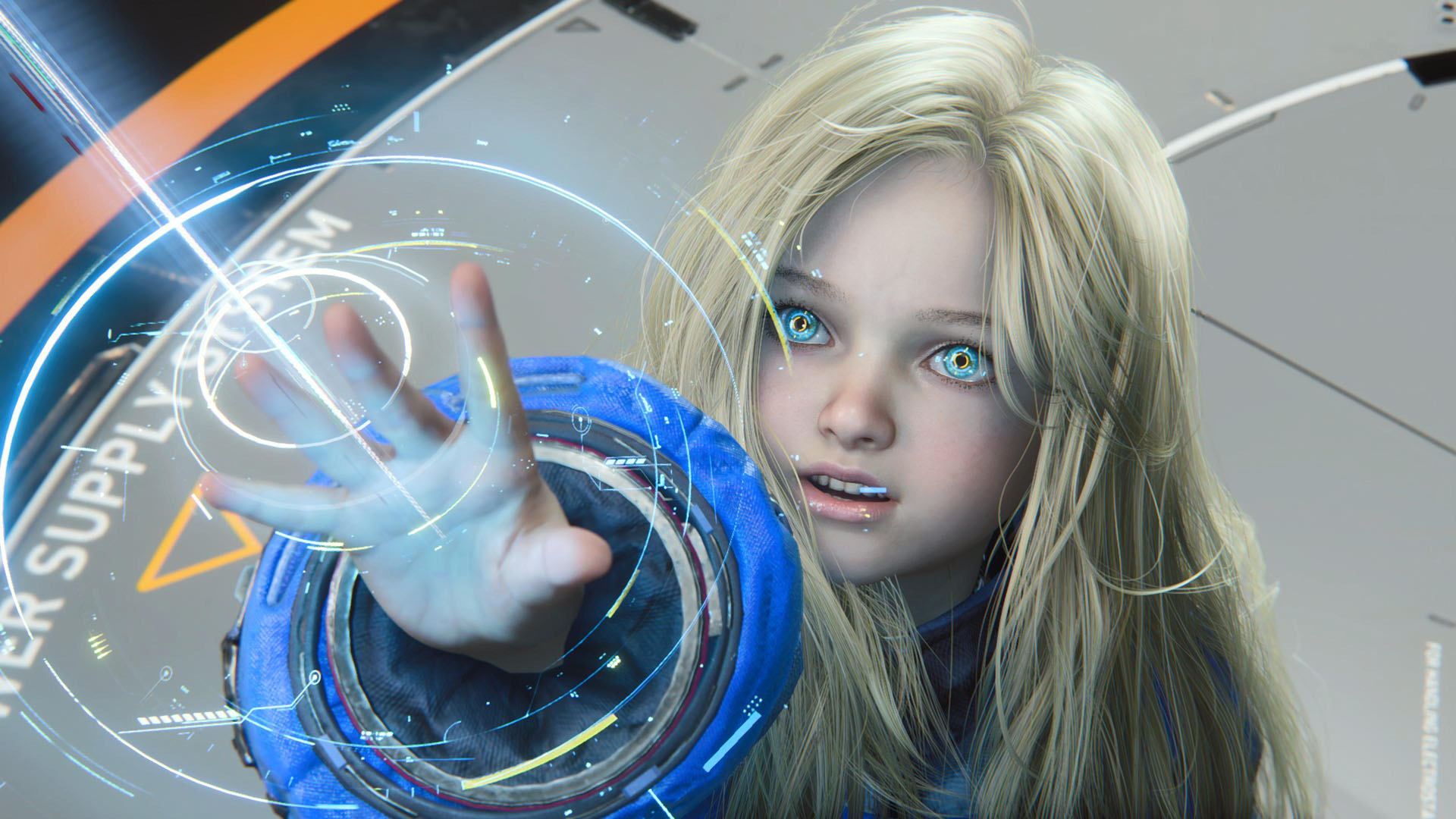
High Stakes in Real-Time
Hitting that green node cracks the enemy wide open. It then exposes a glowing weak point for a massive critical hit. It’s not brutal, but it is challenging. Constantly. We remember many times dying because our thumb slipped trying to grab an optional yellow node on the grid. We are greedy, and we do want those yellow nodes as well.
They are valuable consumable drops that inflict massive status effects. Sometimes, they are heavily boosting weapon damage. At other times, they cause enemy overheating. Oh, there’s also passing through blue “Decode” tiles. That grants you crucial bonus damage for your strikes. Again, it’s 2026. Why are we discovering this just now?

Loot, Loops, and the Unit Printer
The dual-control never leaves you. While exploring, we can have Hugh use a jetpack to reach upper levels. Diana, on the other hand, has a scan ability that analyzes surroundings and marks objectives. She can also hack the station’s security protocols to unlock tramway entrances. Thanks to these fast-travel points, we can use a safe hub to chill for a bit, but also to spend all our hard-earned resources.
The Unit Printer helps us to upgrade our gear. For Diana, you can decorate a playroom with 3D-printed toys. They’re such a cool duo that you’ll want to do stuff for them as well. By the time the credits roll, you will be handling this wild fusion of puzzle-solving and brute force like a pro.
The locations are also well designed, with plenty of collectibles, upgrades, weapons, and resources hiding in the least expected places. We can’t remember how many times we backtracked just to make sure that every corner was explored and we didn’t miss anything.

A Dead Moon and a 3D-Printed Ghost Town
After all of this, you might be wondering why you are actually shooting these robots. We’re not going to tell you much. We feel that that’s one part that you really need to experience yourself. All that we can say is that humanity found a new ore called Lunafilament. They used it to fuel advanced 3D printers and to create complex structures. However, something happened, and half-realized replicas of human civilization are left sprawling across the dead lunar surface.
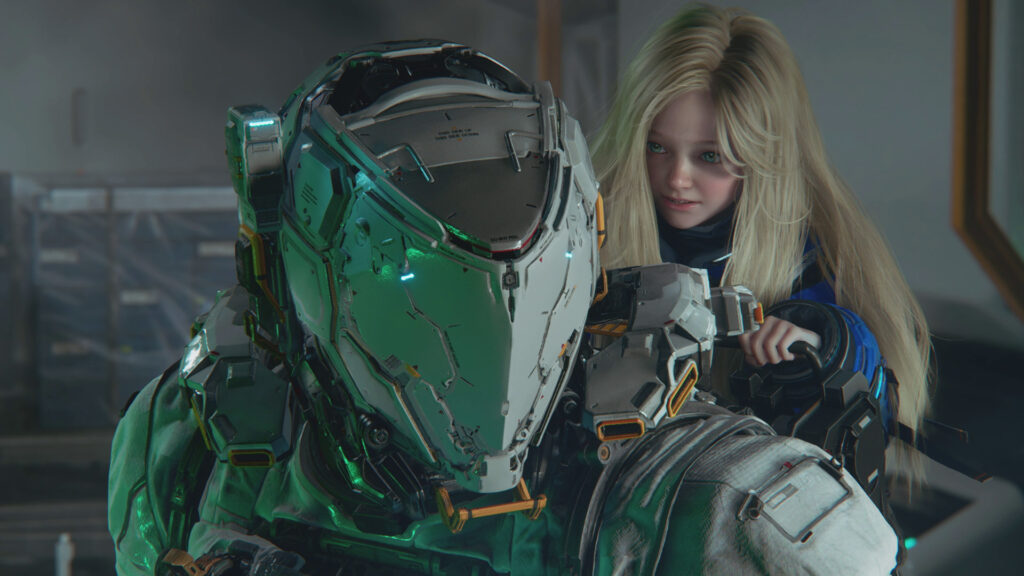
Hugh was part of the ill-fated investigation team dispatched to figure out why. Diana, on the other hand, is there to help Hugh in one very critical moment. That’s all that we’ll say. Well, ok, maybe one more thing: Diana isn’t just cargo. She pulls her own weight. By the end of the game, they learn to love and appreciate each other, in much the same way that you will too.
Technical Wizardry
On PC and PS5, the game runs like a dream. The RE Engine shines here, supporting path tracing and DLSS 4 on PC without melting your hardware. We played the game on a configuration with an RTX 4060ti on the mostly highest settings, on our TV, in 4K, with 60FPS! Granted, we did use all the AI technology to boost the graphics, but even so, the visual fidelity is breathtaking! On a 2K monitor, the game easily achieves well above 80FPS.
A Masterclass in Multi-Tasking Chaos
Capcom took a huge risk and it paid off. They made an action game that breaks all your standard shooter habits. It gave us something fiercely original instead. Pragmata was worth the 6-year wait.
9.5/10
ID Card
- Developer: Capcom
- Publisher: Capcom
- Engine: RE Engine
- Platforms: PlayStation 5, Xbox Series X/S, PC, Nintendo Switch 2
- Release Date: April 17, 2026 (PS5, Xbox, PC) / April 24, 2026 (Switch 2)
- Genre: Sci-Fi Action-Adventure

Leave a Reply