
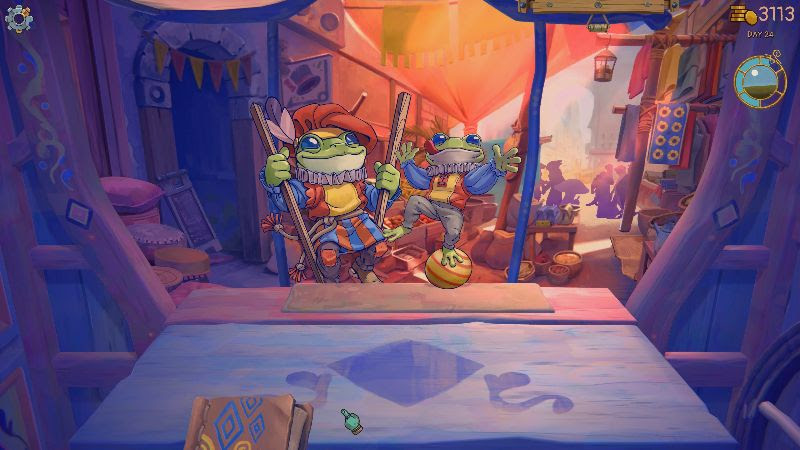
Trash Goblin is a charming, cozy shopkeeping simulator that invites players to unwind, unearth hidden trinkets, and restore them without the burden of time limits. Its unique, stress-free approach has resonated deeply with players, cultivating a dedicated community drawn to its tranquil atmosphere.
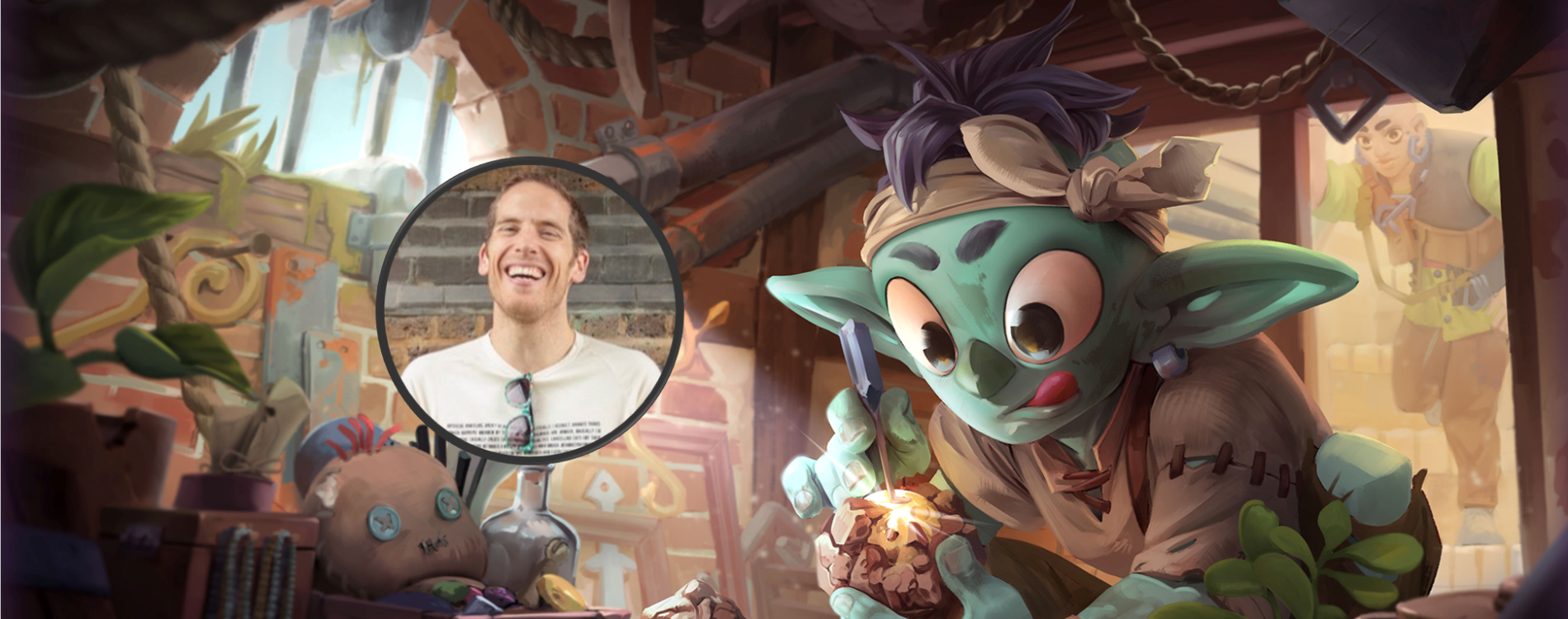
To uncover the creative process behind this standout indie title, we sat down with Andrew Smith, the project’s Creative Director. He shared insights into the game’s origins, the team’s core design philosophy, and what the future holds for the world of Trash Goblin.

This interview was made possible thanks to Plan of Attack.
The Initial Spark: From Archaeology to a Fantasy Realm
Every great project stems from a single idea, and for Trash Goblin, that concept was years in the making. Smith reveals how the initial prototype came to life.
“The idea originated from an old concept of mine that combined nonogram or ‘Picross’ puzzles with archaeology—chipping away dirt to uncover antiquities,” Smith explains. “It felt like the perfect marriage of mechanics and theme.”
This premise found new life years later during a collaboration with student teams at Anglia Ruskin University in the UK. The students delivered an exceptional prototype, leading the studio to hire two of them full-time. “We prototyped the game but set it within a fantasy universe we’d been building for about a decade—and that’s how Trash Goblin was born! It turned out to be an even better fit for the gameplay loop than the original concept, at least once we stripped away the puzzle elements.”

The Vision: Maximum Coziness, Zero Pressure
The ultimate vision for Trash Goblin was clear from the outset: to craft an anti-stress experience. The development team wanted players to feel entirely comfortable and relaxed.
“The entire game is designed to be lovely, cozy, and wholesome—but with a slight twist,” says Smith. “I know it sounds a bit cliché, like ‘oh no, not another cozy game,’ but we fully leaned into the power of gameplay, mechanics, environment, and character design to deliver the most relaxing experience imaginable.“
This approach struck a chord with the community. “Players responded incredibly well to the complete absence of pressure, stress, or fail states. However, that meant we really had to prove our design chops by making the game inherently fun and engaging, without relying on the traditional gameplay hooks developers usually fall back on.”

The Art of Cleaning: Tactile Satisfaction in Every Click
A core pillar of Trash Goblin is the tactile process of unearthing and cleaning trinkets. To achieve that satisfying “game feel,” the team paid meticulous attention to granular details.
“Because we wanted a low-stakes environment, we had to hyper-focus on the tactility and micro-interactions of every single player action,” Smith explains. “It’s crucial that every input feels inherently satisfying, and judging by the community feedback, the team nailed it.”
Early builds featured numerical logic puzzles, but the studio quickly realized they disrupted the cozy atmosphere. “We noticed players were enjoying everything about the game—except when they had to stop and solve number puzzles. It just clashed with the overall vibe.”
Instead of manufacturing depth through risk-and-reward mechanics, the team opted for mechanical breadth. They introduced various types of dirt blocks—some requiring multiple strikes, while others feature hidden weak points. Yet, the true secret to the game’s success lies in its audio-visual feedback.
“The combination of stellar sound design—entirely Foley-recorded by our incredible audio designer Ben Harper—and brilliant VFX is what makes it all ‘pop’. Every player has a favorite interaction in the game, and that’s entirely down to how it sounds and feels.”

Exploration Without Leaving the Shop
While the gameplay is rooted primarily inside a shop, it still evokes a sense of exploration by allowing players to visit three distinct locales and interact with unique NPCs (Non-Playable Characters). An initial concept to manage multiple permanent storefronts was scrapped in favor of something more thematic: temporary pop-up shops.
“Instead of adding to the player’s checklist of responsibilities, why not make these excursions to different areas a bit more unpredictable?” Smith says. This birthed the ‘cart’ mechanic, allowing players to sell whatever inventory they bring along at a premium markup.
The narrative and side-quests are organically designed to guide the player through core mechanics while encouraging self-paced creativity. “One of our foundational goals was to make it feel like the world is coming to your doorstep—delivering the thrill of exploration without ever having to leave the comfort of your own home.”

Early Access Lessons and the Power of Community
The Early Access phase was instrumental in shaping Trash Goblin‘s 1.0 release. According to Smith, the most valuable piece of community feedback was a resounding: “No puzzles in my cozy game, please.” This single insight redefined the studio’s entire design philosophy.
However, transitioning to Version 1.0 wasn’t without its technical hurdles—most notably, save file incompatibility. “The backend tech we use for dialogue and quests meant our progression overhauls broke older save files,” Smith admits. To soften the blow, the developers implemented a system that converted players’ past progression into in-game gold for their new playthroughs. “A lesson well-learned for our next title!”
What surprised the team most was how the game’s internal themes manifested in its player base.
“We built a game about accepting people from all walks of life, helping others, and doing good deeds. We’re absolutely blown away by how that ethos helped foster such a caring, supportive, and kind community.”

The Future of Trash Goblin
The launch of V1.0 is far from the end of the road for Trash Goblin. The indie studio has ambitious post-launch plans.
“We have an extensive roadmap that we’re hoping to unveil very soon! Version 1.1 is slated for July, bringing a new species, fresh NPCs, returning fan-favorites, and, of course, a hoard of new trinkets,” Smith teases. Beyond content updates, the team is actively working on global localization, securing official Steam Deck Verification, and developing console ports.
As a final thought, Smith offers a piece of advice to fellow indie developers looking to break into the cozy genre: “Focus on the breadth of activities and the inherent satisfaction of a given mechanic, rather than trying to manufacture depth through risk, punishment, or stress. Forget what you think you know about traditional game design, and listen closely to your players.”
Ultimately, Trash Goblin succeeds because, as Smith summarizes:
“a) breaking a block of dirt feels absolutely AMAZING,
b) there is no wrong way to break it, so you literally cannot fail, and
c) no matter how fast or slow you do it, you get the exact same reward.”
It’s a simple yet incredibly potent formula—proving that sometimes, the most profound gaming experiences are the quietest ones.
Article originally poblished on it.mk
 Dev & Play Media
Leave a comment