
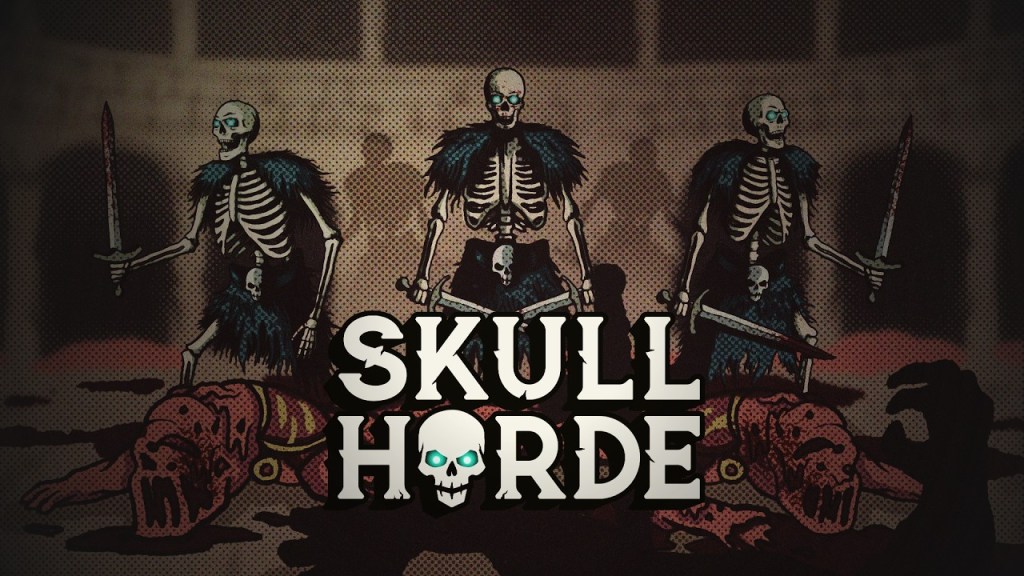
There are way too many auto-battlers right now. It’s a giant pile of cheap games meant to steal your free time. But sometimes, a good game climbs out of the trash. One such game is Skull Horde. Playing as a floating skull, your job is to build an army. And then to kill endless waves of meat. It’s simple and yet it’s very hard to stop playing.
By the Order of the Skull
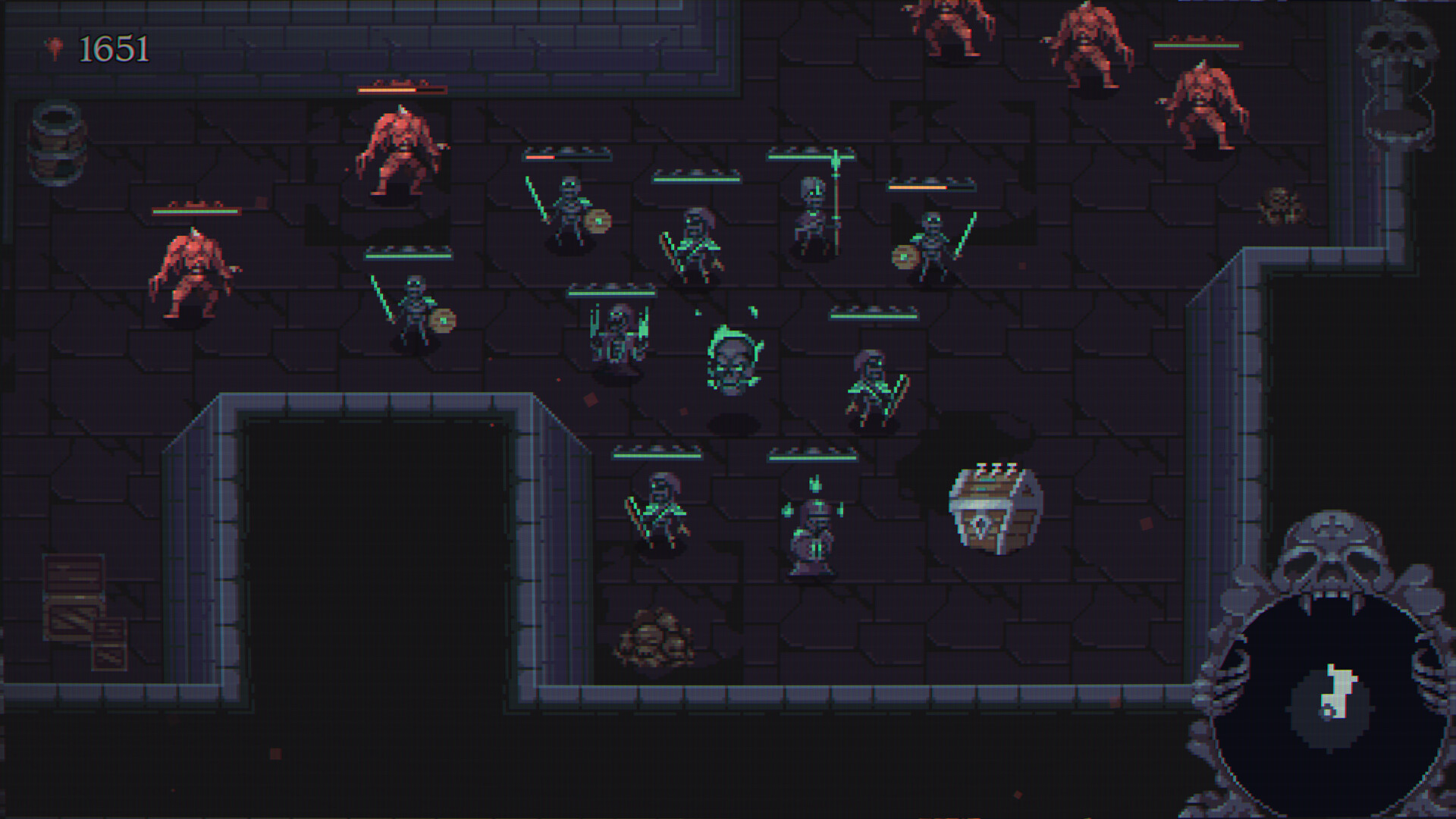
Fly a floating skull through random dungeons while avoiding enemy attacks.
Buy, place, and mix 3 matching computer-controlled units to make them stronger (minion, veteran, champion).
Find permanent upgrades, shrines, and items to make your specific unit types stronger across all your runs.
Manage your money in real-time against a constantly rising threat meter. Choose when to spend gold and when to save it for later waves.
The Bone Market Economy
As we’ve said, Skull Horde is a game of very simple game mechanics. You are flying a skull through tight hallways while trying to manage an army of stupid skeletons. You don’t fight directly. You are the manager.
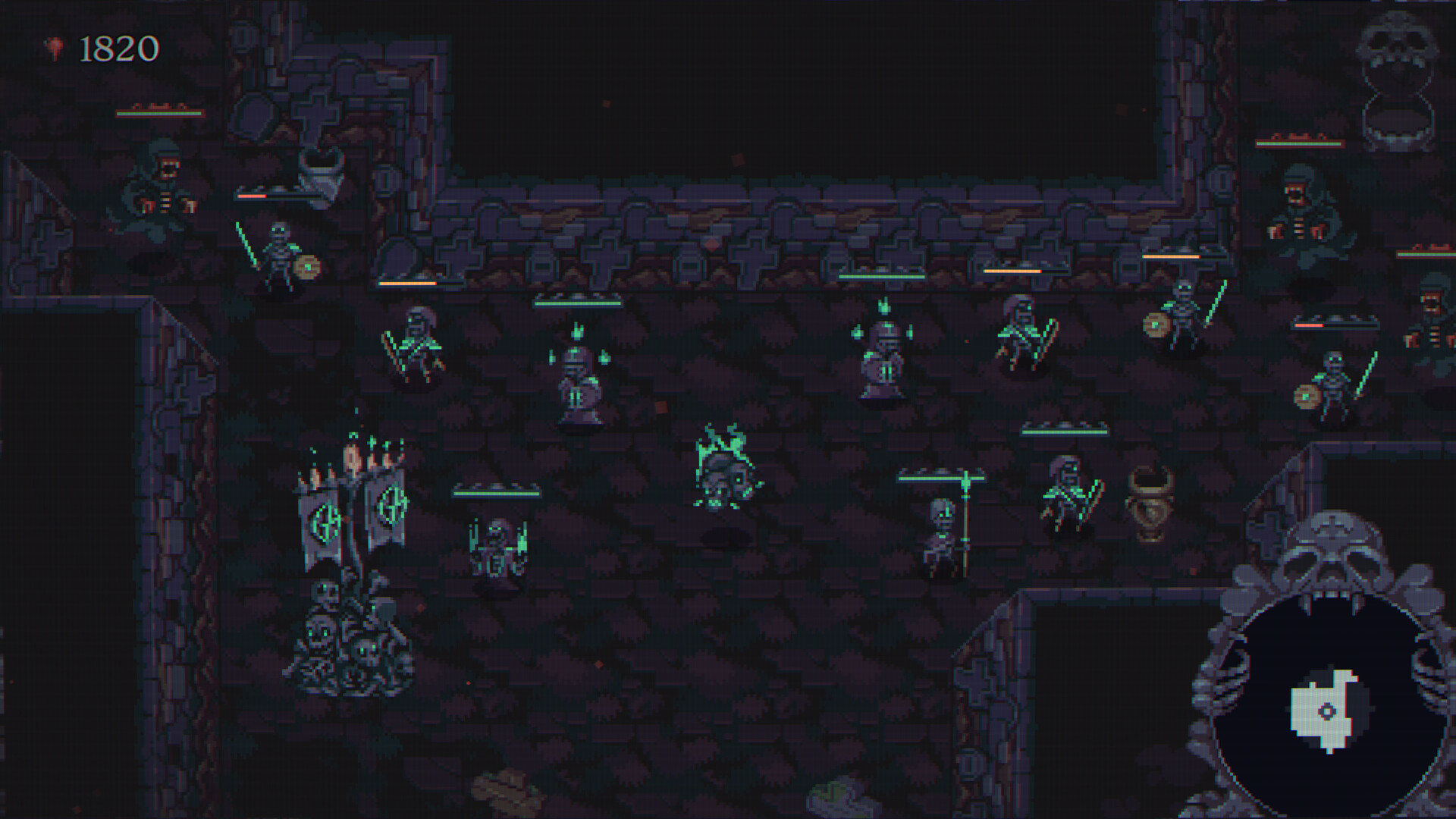
You buy skeletons. You find loot. You mash three identical, weak bone boys together to make one stronger bone boy. It plays like auto-chess, but the catch is the real-time movement.
Your army fights on its own. They are dumb as a doorknob and will gladly walk right into danger if you don’t lead them. It’s easy to think that Skull Horde is a game about fast reflexes, but those reflexes mean nothing if can’t do fast math in your head. Do you spend your gold looking for one specific archer to get a team bonus? Or do you save your cash because a huge group of meat monsters is attacking?
The choices you make matter. To make matters worse interesting, the game never stops. A threat meter keeps ticking up. In Skull Horde, you are always one bad move away from dying.
Riding the Roguelite Wave
Making games in this genre is brutal right now. They do have a bad rep. However, solo developer 8BitSkull (based in Glasgow) looked at slow, tactical games like Teamfight Tactics and fast, mindless shooters, and smashed them together. This is a shift from their older, smaller arcade games like Void Scrappers and BORE BLASTERS. To stand out, they decided to force you to manage your army in real-time while dodging bad guys. It works. Quite well.
Solo developer 8BitSkull is based in Glasgow, Scotland, and built this game after making other well-liked indie games like Void Scrappers and Fates of Ort.
Late-game speed depends heavily on your computer’s CPU power; early test versions had so many enemies that the developer had to patch in a limit to stop the game from breaking.
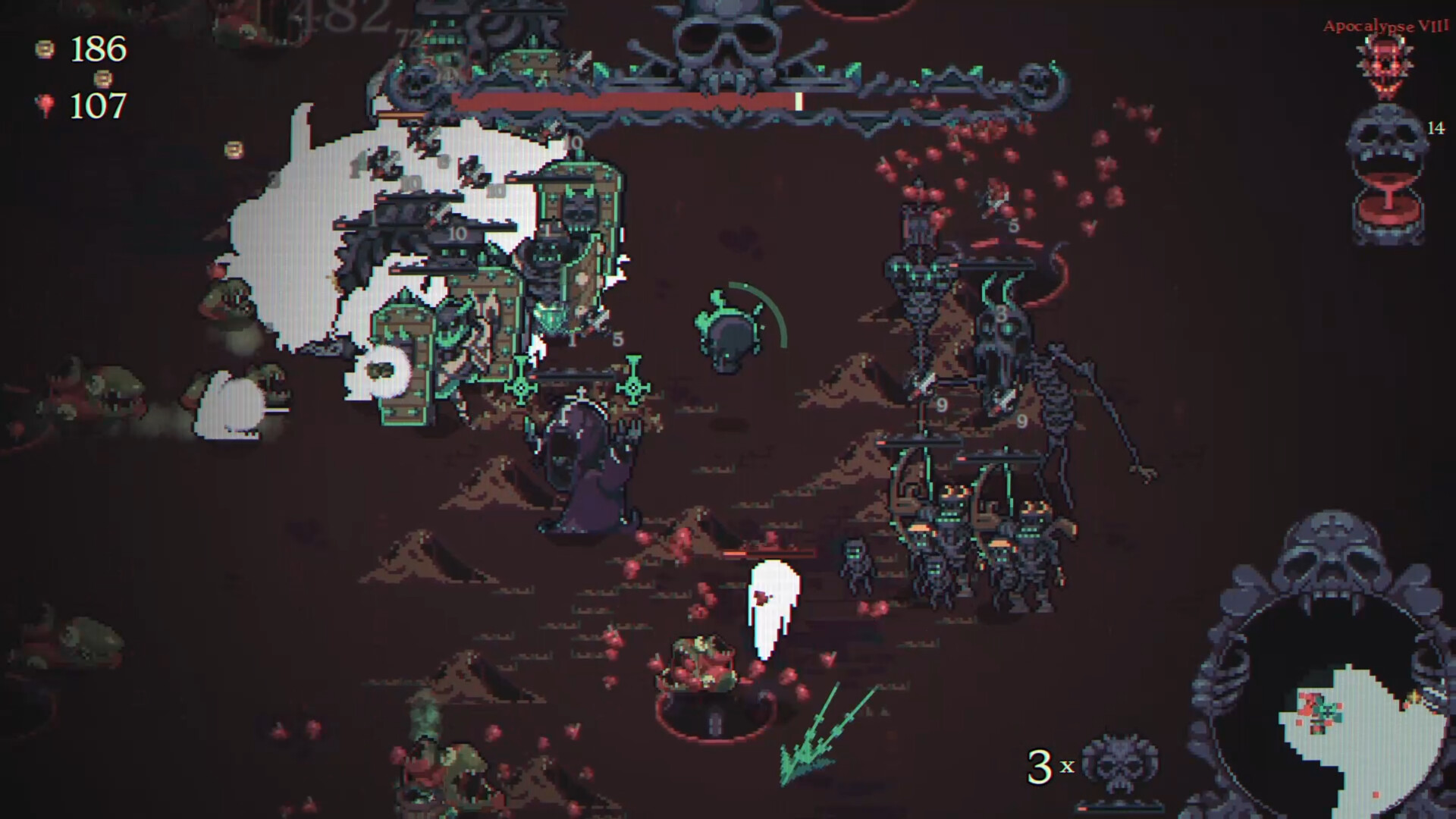
The game mixes the team-building of auto-chess games with the fast movement of a twin-stick shooter, but your skull only has a very weak, basic attack to protect itself.
The Post-Mortem
Skull Horde is a messy but great game about managing chaos. It drops the fake deep story and gives you a math puzzle wrapped up in a skull game. It scratches a very specific, chaotic itch perfectly.
Narrative (2/10) You are a skull whose dead body betrayed it. You hate flesh. That’s the entire story, and honestly, that’s all you need to know.
Gameplay Mechanics (8/10) Combining and moving your units in real-time is very stressful in a fun way, though the random shop choices can feel unfair when you can’t find the exact unit you need.
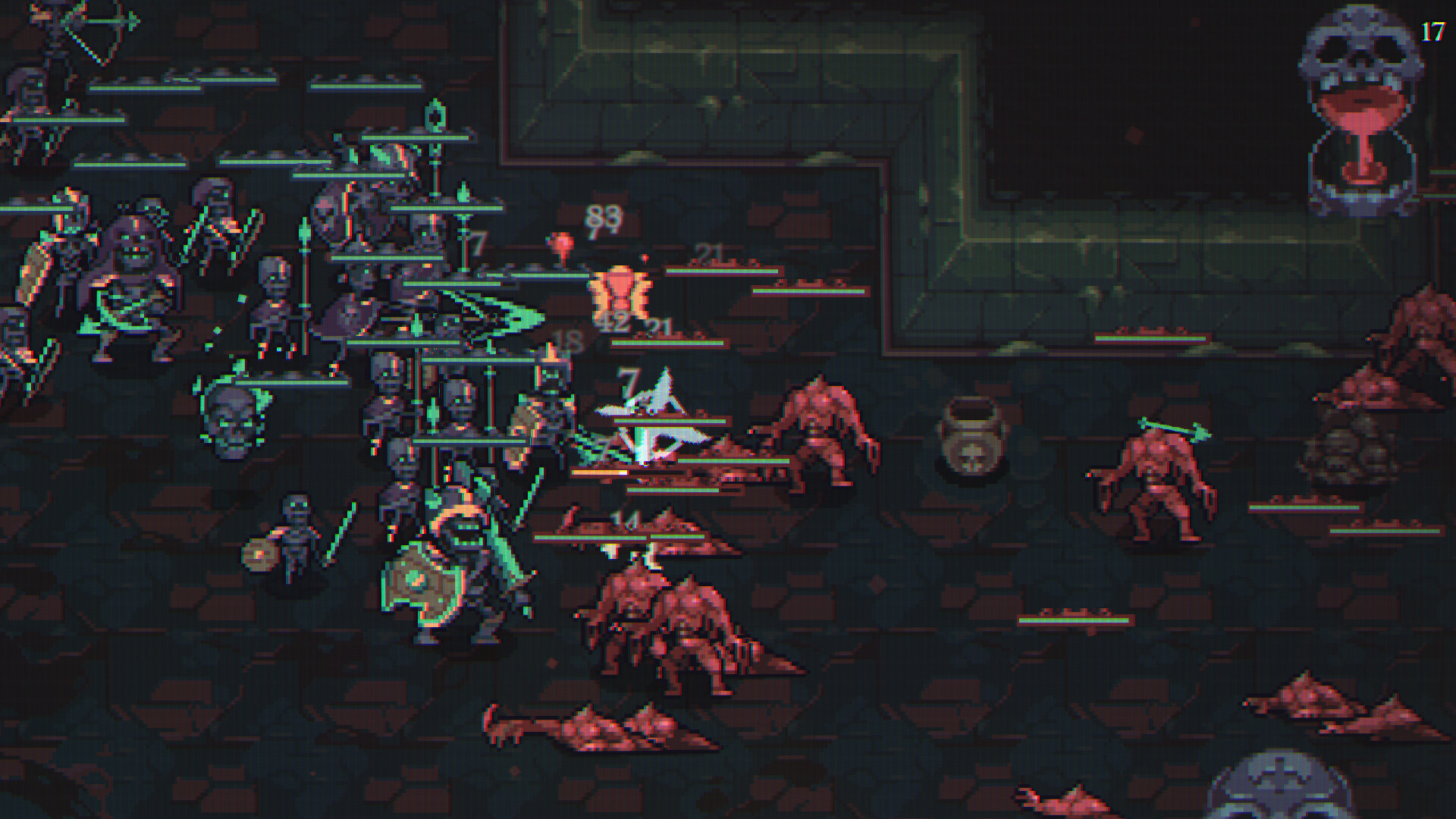
Audio (6/10) The sound of breaking bones and squishing meat is heavy and fun, but the repetitive music will have you turning the volume off to play your own songs by hour two.
Graphics (7/10) The pixel art looks nice and the colors make it easy to tell your bones apart from the enemy meat, but it becomes impossible to see anything during giant late-game fights.
Overall Score (7/10) A flawed but very addictive game that gets the most important part right: the core gameplay loop.
ID Card
- Developer: 8BitSkull
- Publisher: 8BitSkull
- Engine: Commercial Indie Engine
- Platforms: PC (Windows, macOS, Linux)
- Release Date: April 10, 2026
- Genre: Real-Time Roguelite Auto-Battler
 Dev & Play Media
Leave a comment