
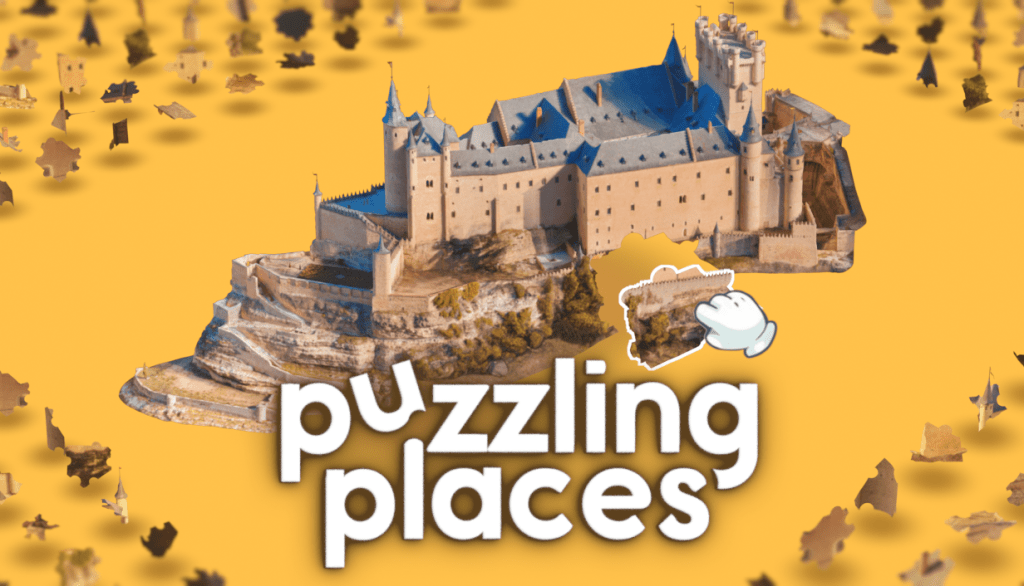
We’ve never liked jigsaw puzzles. They hog the table, you always lose an edge piece, and the sheer mental effort of matching cardboard shapes feels like a chore. We admire the people who have the patience for it, though. So, when we loaded up Puzzling Places—a game strictly about assembling 3D scans of European architecture—we braced ourselves for absolute boredom.
We were wrong.
It turns out that removing the cardboard dust and adding an undo button makes the whole concept terrifyingly addictive. It’s quiet. It’s methodical. Puzzling Places – 3D Jigsaw Sim make quiet a premium commodity.
Piece it together
Players select from 18 base photogrammetry models, choosing piece counts ranging from a breezy 25 to a grueling 1000.
Classic Mode: Dumps all pieces into a 3D space to be sorted manually.
Journey Mode: Segments the puzzle into manageable, sequential batches.
Pieces are manipulated in full 360-degree 3D space, requiring players to match geometry and visual textures.
The Orbiting Debris Field
We still got anxiety attacks. When you boot up a 400-piece puzzle in Classic Mode, it looks like Mont-Saint-Michel exploded in a zero-gravity vacuum. You’re staring at a chaotic cloud of floating roof tiles, disconnected stone steps, and random bushes.
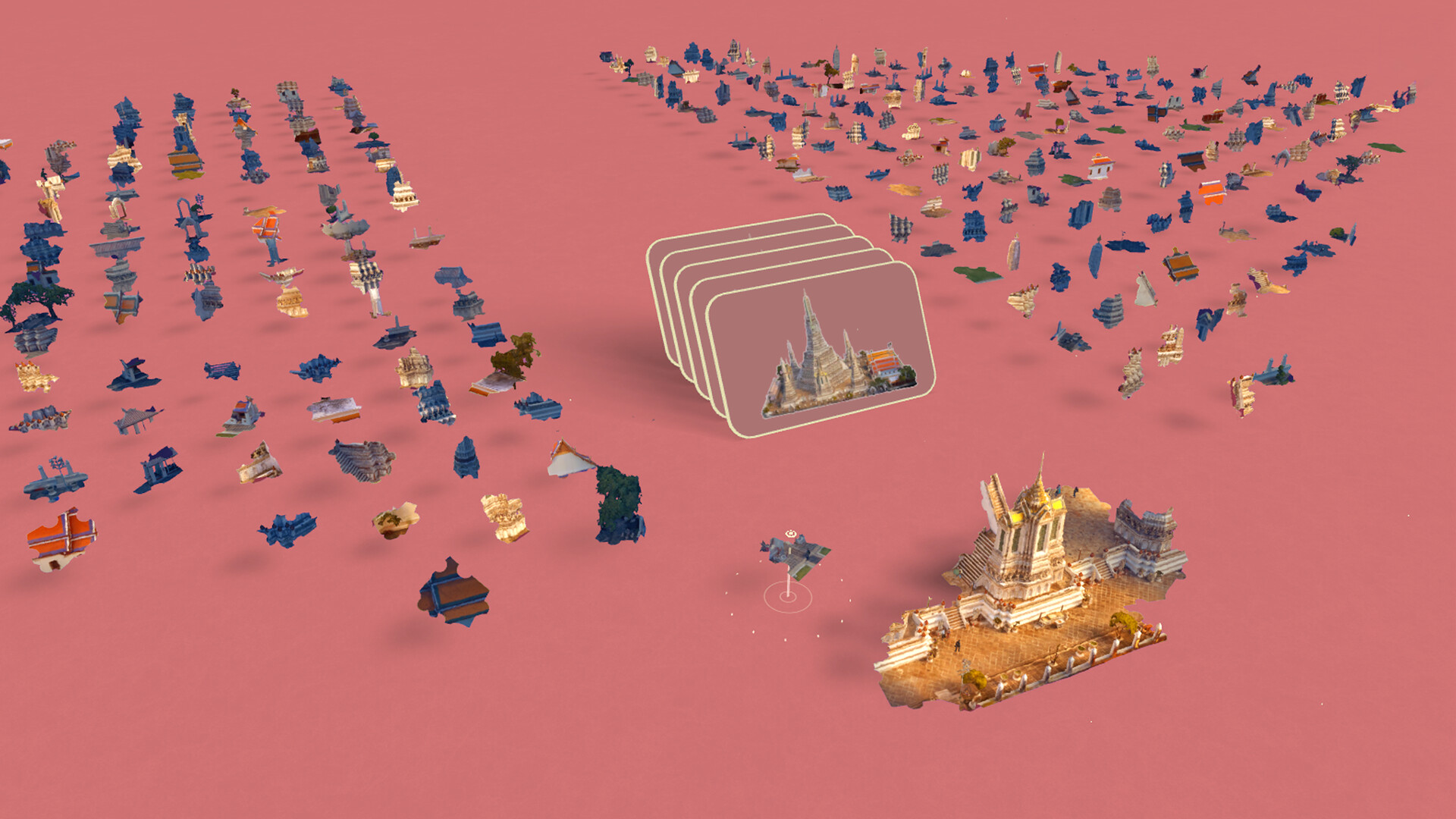
It’s completely overwhelming for the first five minutes.
Then you click two pieces together.
Snick.
That sound is the whole game. That heavy, satisfying snap. You rotate a jagged chunk of plaster, trying to find where a tiny 3D balcony fits. It fundamentally changes how your brain processes spatial awareness.
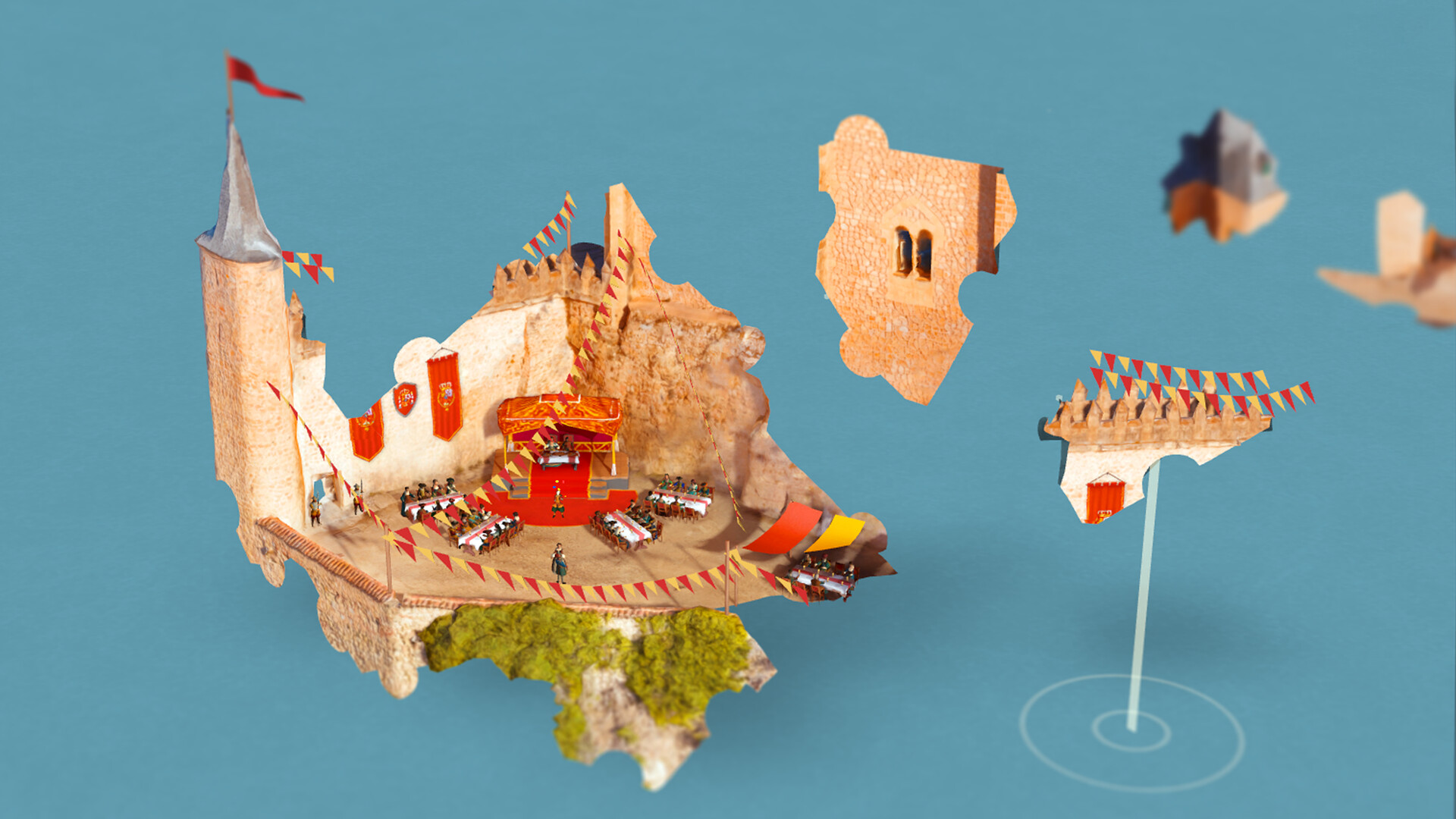
If the big pile makes you anxious (like us), the developers threw in a “Journey Mode” that drip-feeds you chunks of the puzzle. It’s essentially training wheels for your sanity. You build a wall. Then a window. Then you snap the wall to the window. It removes the friction of digging through 300 identical pieces of blue sky, which is a massive quality-of-life upgrade over a physical physical box of cardboard pieces.
Matching colors = Matching geometry
Realities.io are a Berlin-based team of photogrammetry nerds. Their entire original business model was just flying drones around cool places, taking thousands of photos, and stitching them into hyper-realistic 3D environments.
The puzzle idea was a literal mistake. A software bug during the scanning process of an Armenian monastery caused their 3D model to shatter into disjointed blocks. Somebody on the team thought it was fun to put it back together using developer tools. Bam. A game is born.
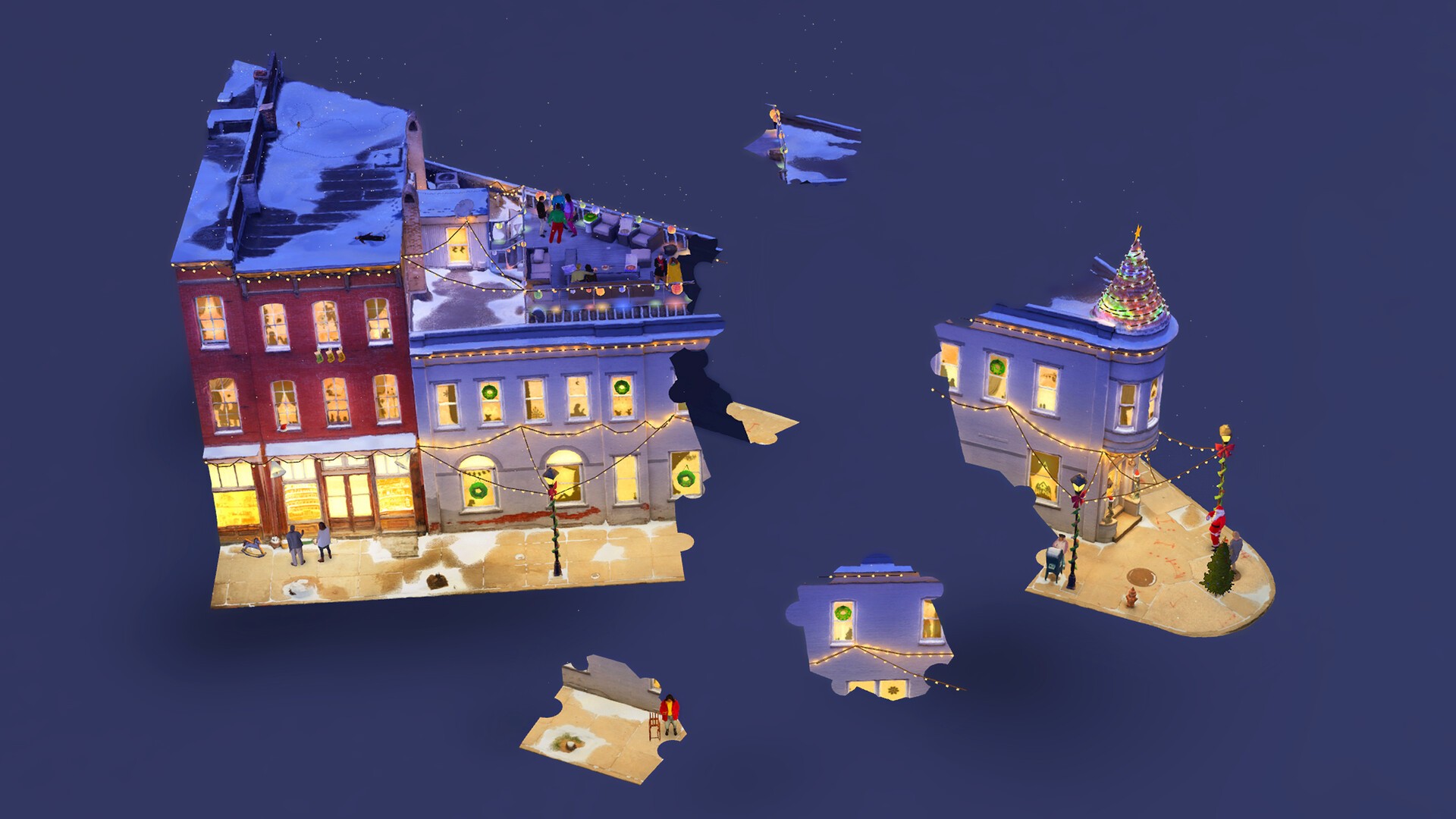
Because of this, they bring zero traditional game design baggage to the table. No arbitrary scoring. No timers. No fail states. They just supply highly detailed 3D scans and get out of your way. Puzzling Places was built specifically for virtual reality. It has been a staple on the Meta Quest and PSVR for years because grabbing 3D objects with your physical hands makes perfect sense.
Hey, did you also know that:
The rendering glitch was of a scan of the Tatev Monastery in Armenia.
The audio isn’t just background noise; it is spatial. Completing a section of a puzzle containing a fountain will actually cause the sound of running water to emit from that exact physical spot on the model.
Before becoming a retail release, the concept survived as a Patreon project where the developers sent experimental test puzzles to early VR adopters.
Mechanical fidget spinner for your brain
The camera controls on a flat screen can be annoying. Sometimes the photogrammetry tech leaves weird, melted-looking textures on the zoomed-in details, making a potted plant look like a green blob. But the gameplay is so relentlessly satisfying that none of that ruins the vibe.
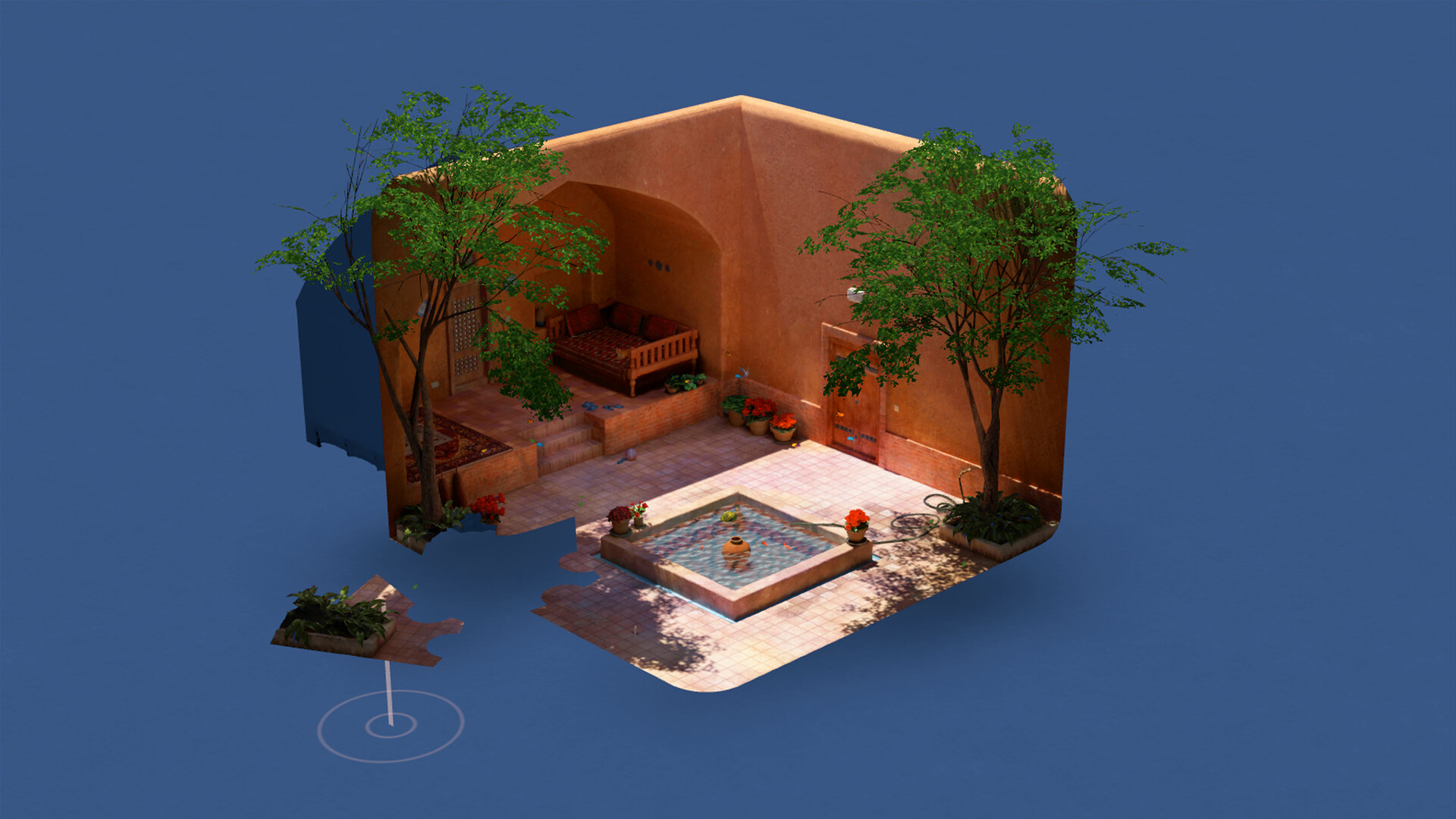
Narrative (2/10) There is no story here. You get some ambient audio cues and tiny visual details, but you’re here to build a wall, not save the princess.
Gameplay Mechanics (8/10) The tactile snap of pieces is perfect and highly addictive. However, manipulating fully 3D objects on a 2D screen using a mouse requires adjusting.
Audio (9/10) The positional audio is brilliant. As you snap pieces of a street corner together, the localized sounds of cafes and stray cats dynamically fade into the mix, rewarding your progress.
Graphics (8/10) The photogrammetry is insanely detailed and visually striking at a distance. Zooming in too close, however, reveals the baked-in lighting and slightly muddy geometry inherent to the scanning technology.
Overall Score (7.5/10) An incredibly satisfying spatial brain-teaser that survived its transition from VR, even if the camera controls got a bit tangled along the way.
ID Card
- Developer: Realities.io
- Publisher: Realities.io
- Platforms: PC, Steam Deck, Meta Quest, PSVR, Pico
- Genre: 3D Jigsaw Puzzle / Simulation
 Dev & Play Media
Leave a comment