
As an ESL teacher, I’ve always loved educational games. I am constantly fascinated by how their gameplay is designed to intrigue young minds and make them think outside the box. I realize not all share my sentiment and most absolutely hate those cursed memories of sitting in a dusty 1998 computer lab, forced to do basic math so a pixelated frog could jump a log.
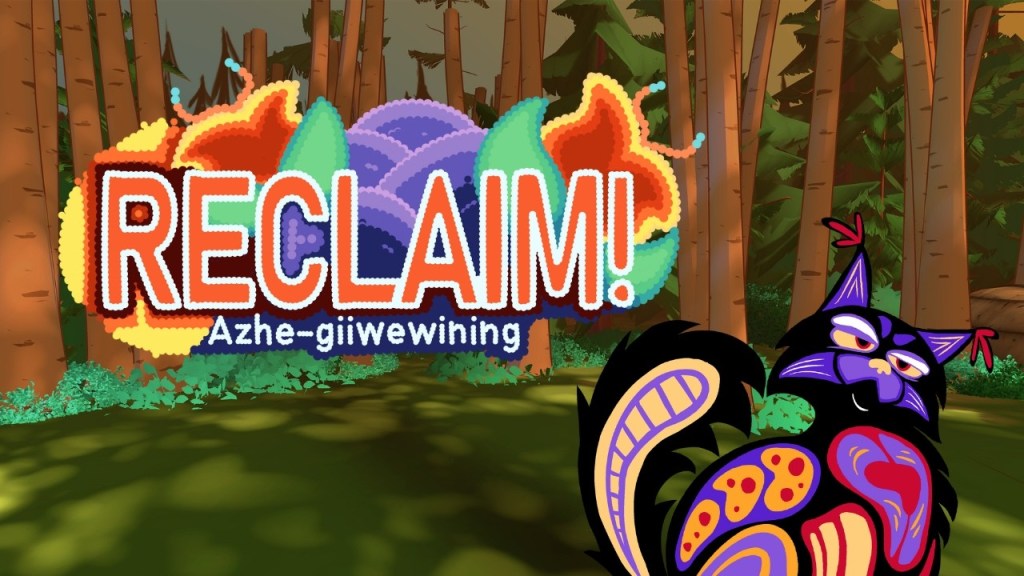
Reclaim! Azhe-giiwewining doesn’t care about your trauma. It drops you into a dense forest, rips away your comfortable English UI, and basically says, “Figure it out.” It’s incredibly alienating. And honestly? It’s brilliant.
Review code for this title was kindly provided by Dead Good PR.
What will you find here?
- Contextual Translation: Deciphering Ojibwemowin dialogue through environmental clues, repetition, and character reactions to progress the narrative.
- Inventory Puzzles: Classic adventure game logic requiring players to combine and use collected items on specific environmental hotspots.
- Exploration: Navigating static, beautifully rendered 2D scenes to find hidden objects and speak with spirits and animals.
- Demo: There’s a demo. It’s great. Please check it!
Language revitalization at its finest!
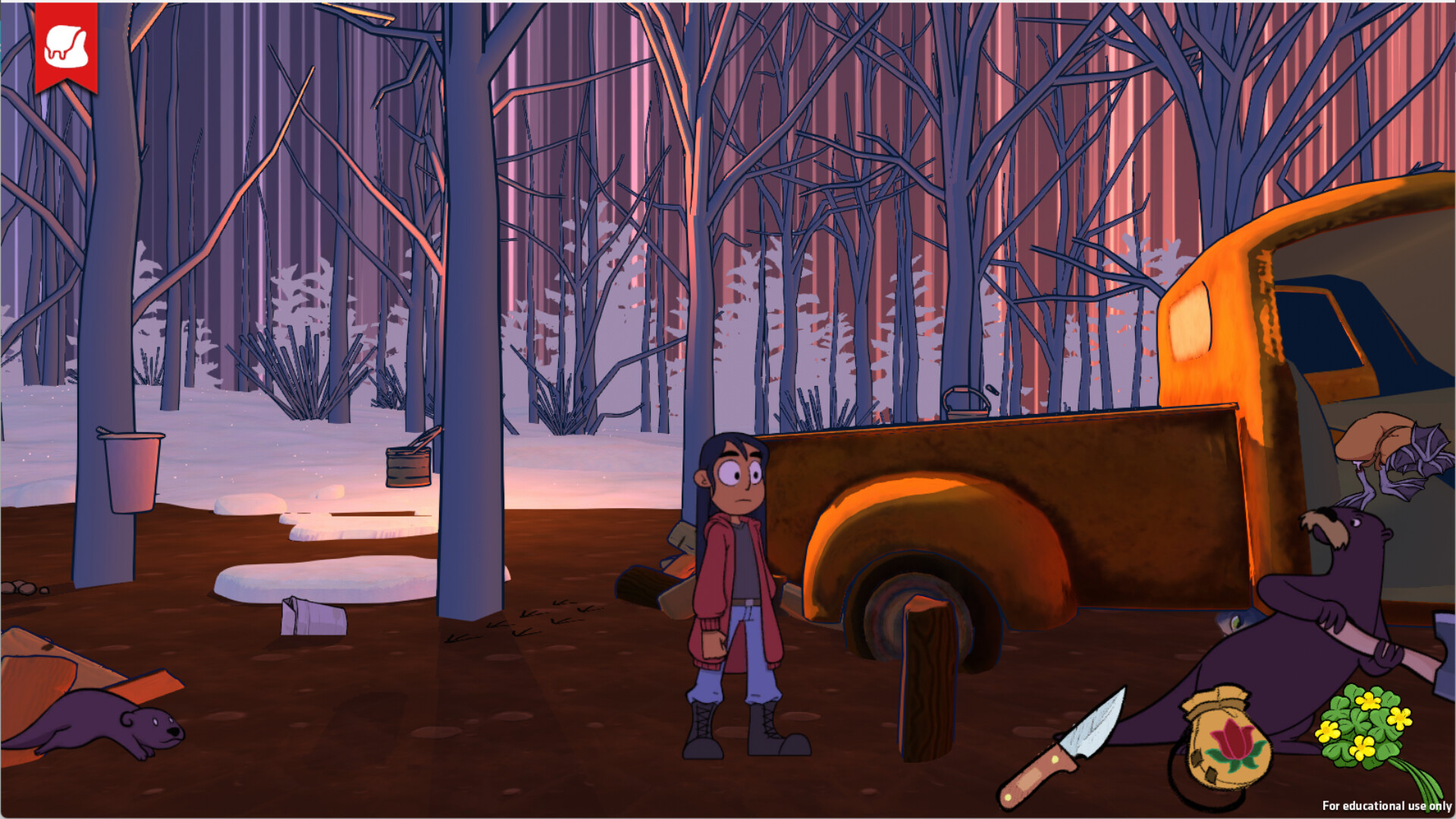
Reclaim! Azhe-giiwewining is a deeply traditional, stubbornly old-school point-and-click adventure. Think Broken Sword. Think Monkey Island.
Surreal second home
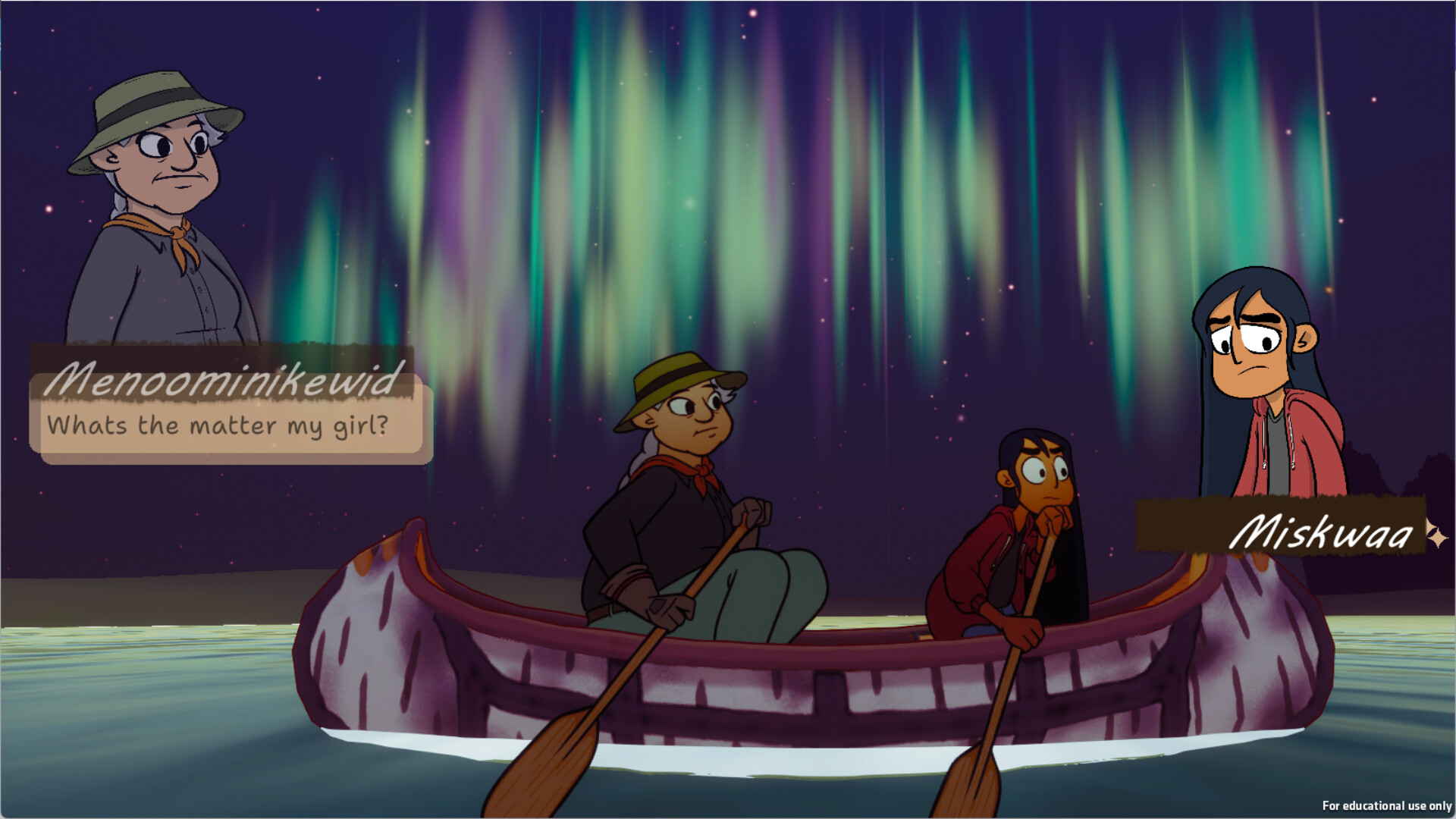
You play as Miskwaa, a city kid lost in the woods trying to find her grandma. You click stuff. You smash inventory items together hoping for a spark. You talk to animals. It’s looks great, it hits all the nostalgic notes just about right. It makes you feel warm and cozy. You’re welcome here. You want to stay a bit longer.
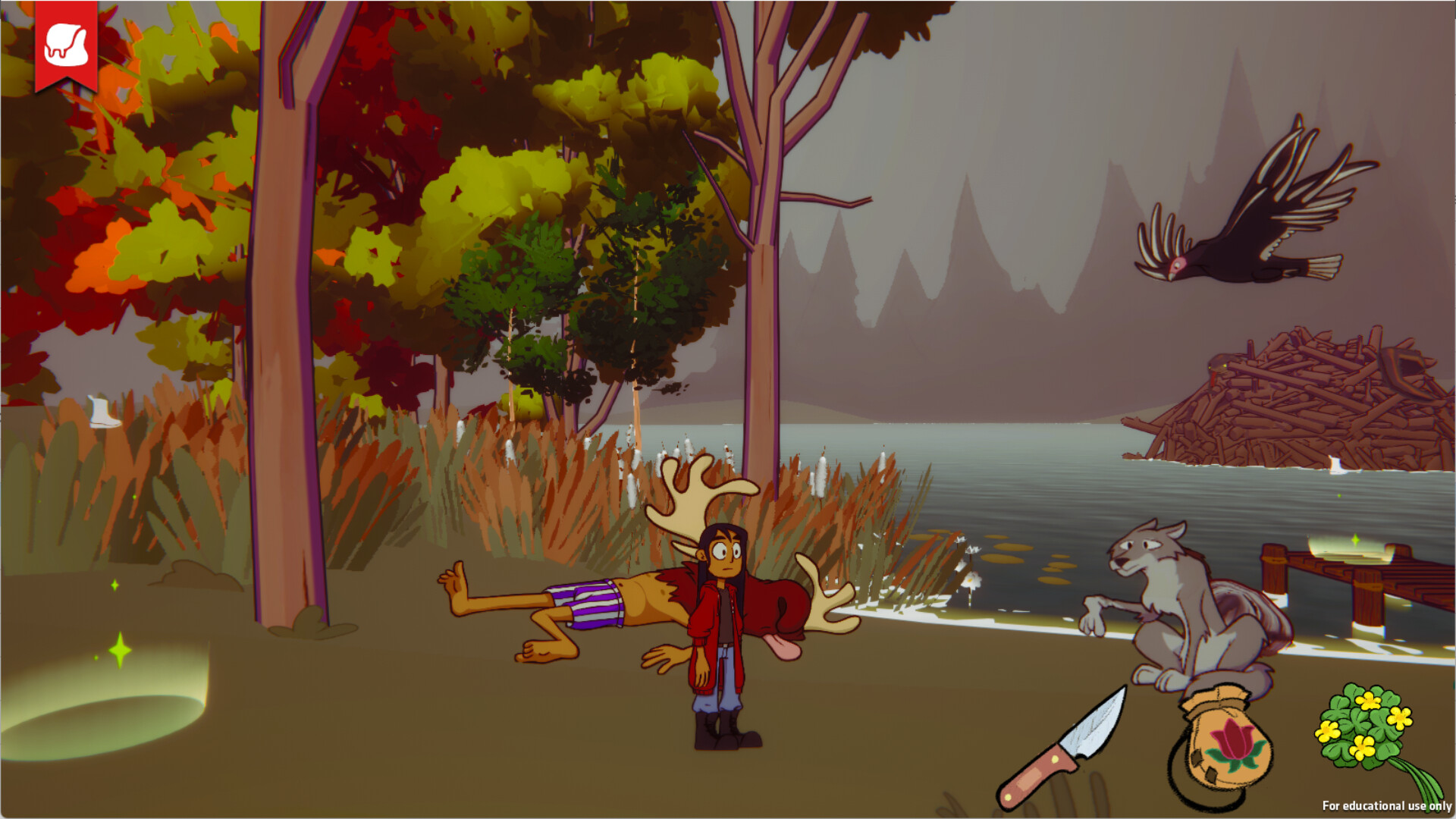
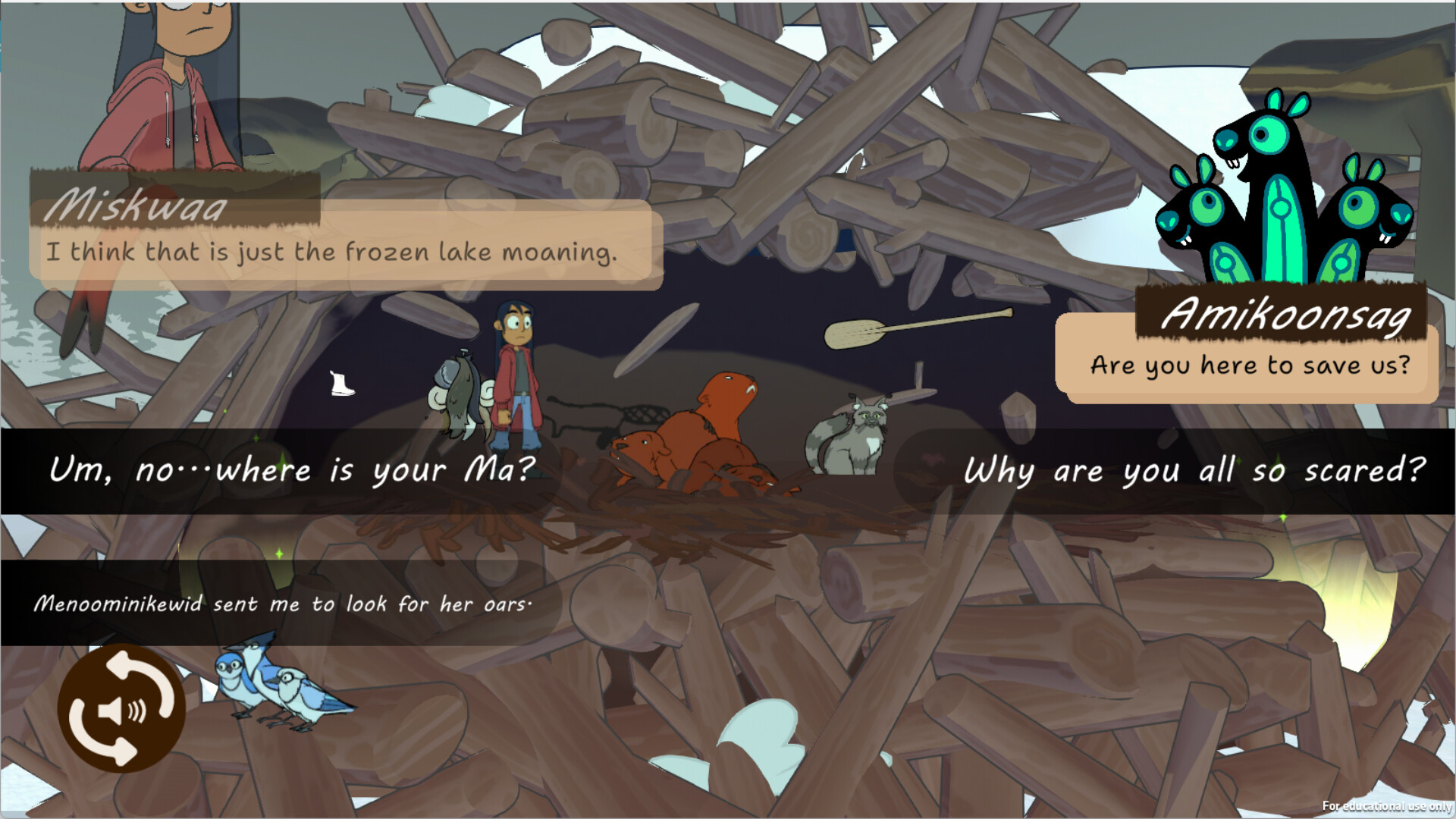
The dialogue in Reclaim! Azhe-giiwewining is 100% Ojibwemowin. No magical, instant English subtitles. None. You have to rely on context clues, body language, and pure guesswork to figure out what anyone wants from you. I wouldn’t change a thing. It adds so much to the whole atmosphere. It makes you feel like you’re part of a new community that’s unlike anything you’ve ever been part of.
It’s frustrating. You will get stuck. You’ll click every single twig on the screen because you completely misunderstood a spirit’s instructions. But then, maybe two hours in, something clicks. You start recognizing words. You stop guessing. You start actually understanding the puzzle logic based on the language itself. The language is the core mechanic. It’s a massive gamble. And it pays off, even if it leaves impatient players totally out in the cold.
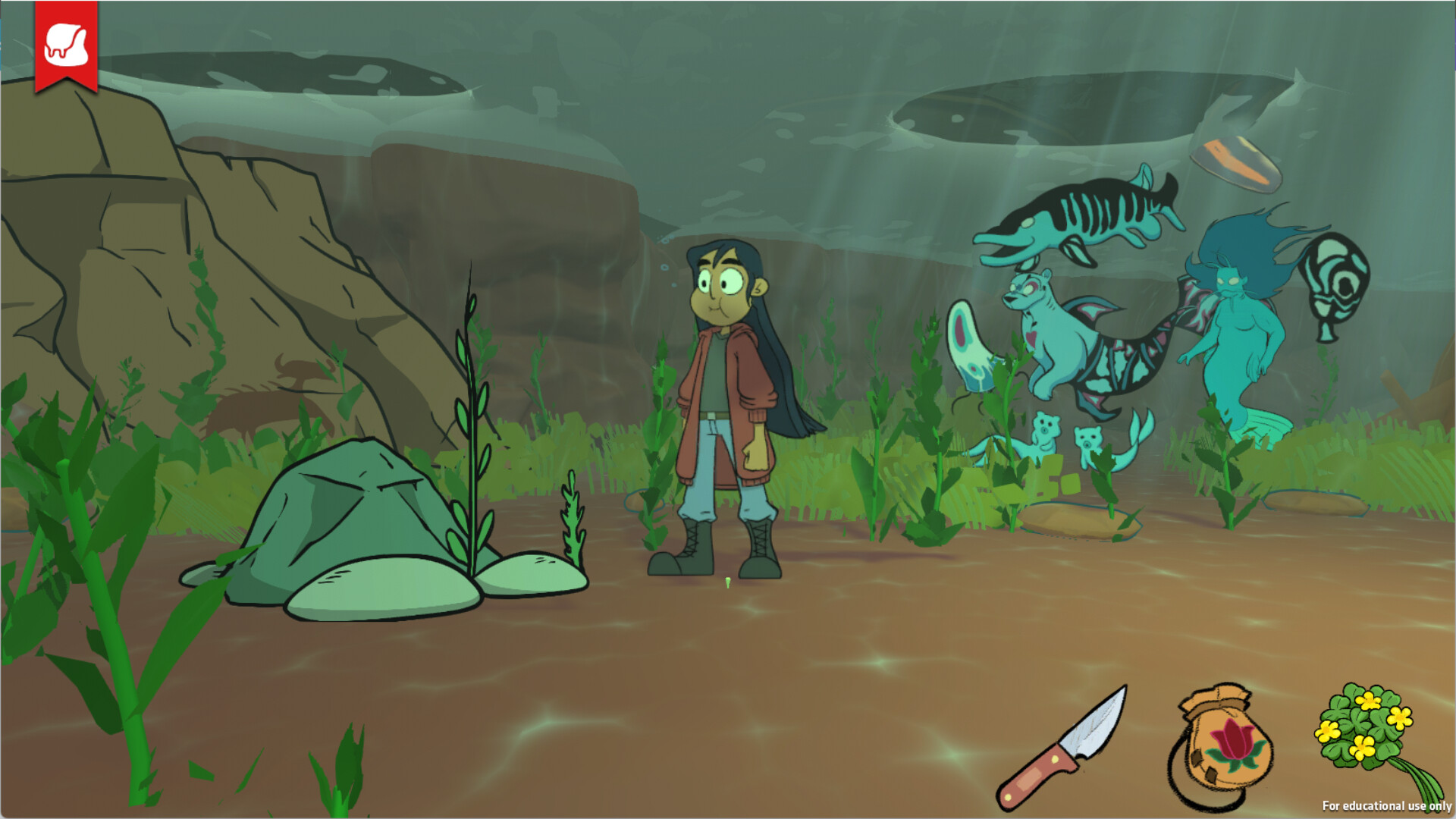
Heavy, uncompromising vibe
This isn’t some mega-publisher checking a diversity box. The pedigree here is genuinely fascinating. Indigenous creatives are running the show, including art leads Renee Nejo (Helskate) and Josh Herron (Bob’s Burgers).
But the real backbone? Community design workshops with the Lac Courte Oreilles band of Ojibwe. Lakota and Ojibwe Elders acting as advisors and voice actors.
They aren’t just trying to entertain us. They’re actively archiving an indigenous language and proving it’s still alive. You can feel that weight in every line of dialogue. It’s a lot for a 2D puzzle game to carry. Surprisingly, they shoulder it well. Sometimes pacing takes a hit for cultural accuracy, but that’s the trade-off.
Did you know that:
- The game is entirely voice-acted in Ojibwemowin by real elders, immersion school graduates, and teachers.
- The project was built directly out of community-based design workshops to ensure the puzzles authentically reflected Anishinaabe tales and traditions rather than standard video game tropes.
Should you play it?
This game demands your full attention. It refuses to hold your hand, hiding an aggressive language-learning tool inside a charming, slightly janky retro adventure. And it works. If you’re intrigued by languages, cultures, and customs, this is a game that’s calling you. I hope you answer the call.
Narrative (8/10) Miskwaa’s journey is simple, but the elder-voiced dialogue gives it a heavy, authentic emotional core.
Gameplay Mechanics (7/10) The language barrier is an incredible mechanic, dragged down by old-school pixel hunting and some obtuse moon logic.
Audio (9/10) The full Ojibwe voice acting is phenomenal. Raw and completely immersive.
Graphics (8/10) Gorgeous hand-drawn art that perfectly channels 90s adventure games, though the UI feels a bit stuck there too.
Overall Score (8/10) A stubborn, rewarding piece of digital preservation that actually remembers how to challenge a player.
ID Card:
- Developer: Independent core team of Indigenous creatives (in collaboration with the Lac Courte Oreilles band)
- Publisher: Self-published / Indie
- Engine: Unity (Standard for 2D Point-and-Click)
- Platforms: PC
- Genre: Point-and-Click Adventure
 Dev & Play Media
Leave a comment